A scrape against a bollard in a Bristol car park. The bumper is dented and scuffed, the garage quotes £400, and you’re wondering whether this is really a job for professionals — or an afternoon’s work with some YouTube guidance. Fixing a dented bumper without visiting a garage is genuinely doable for minor damage, and can save you hundreds. But it’s also easy to make things worse, turning a £150 smart repair into a £400 respray. Here’s what you need to know before you decide: what’s fixable at home, what isn’t, and how to do it right.
First: Assess the Damage Honestly
Not all bumper damage is equal. DIY-suitable: shallow dents where the paint is intact or only lightly scuffed, minor scratches through the clear coat, and small scuffs from low-speed contact. The bumper’s shape is preserved and the damage is cosmetic. Borderline: deeper dents with cracked paint, damage near sensors or number-plate lights, misaligned bumper mounts. Garage-only: cracked or split bumpers (plastic welding or replacement needed), damage affecting parking sensors, cameras, or radar units (recalibration required), sharp edges (an MOT failure and a safety hazard), and any damage where the bumper’s mounting points or the underlying crash structure might be affected.
The critical safety point: modern bumpers are engineered safety components, not decoration. They absorb impact energy and house sensors for autonomous braking and parking systems. If the impact was hard enough to crack mounts or disturb sensors, DIY is off the table — compromised crash protection isn’t worth any saving. When in doubt, get a professional assessment; many body shops quote free.
The DIY Methods: What Actually Works
Hot water + pushing (plastic bumpers): the classic. Pour hot (not boiling — around 60–70°C) water over the dented area to soften the plastic, then push the dent out from behind with your hand or a blunt tool wrapped in cloth. Works surprisingly well on shallow, smooth dents in thermoplastic bumpers. Let it cool naturally to reset the shape.
Hairdryer + compressed air: heat the dent with a hairdryer for a few minutes, then blast it with inverted compressed-air duster (which comes out freezing). The rapid contraction can pop shallow dents out. Less reliable than hot water, but worth trying on small dings.
Plunger method: a clean cup plunger on a smooth, shallow dent — wet the surface, get suction, pull firmly. Crude but occasionally effective on large, shallow depressions.
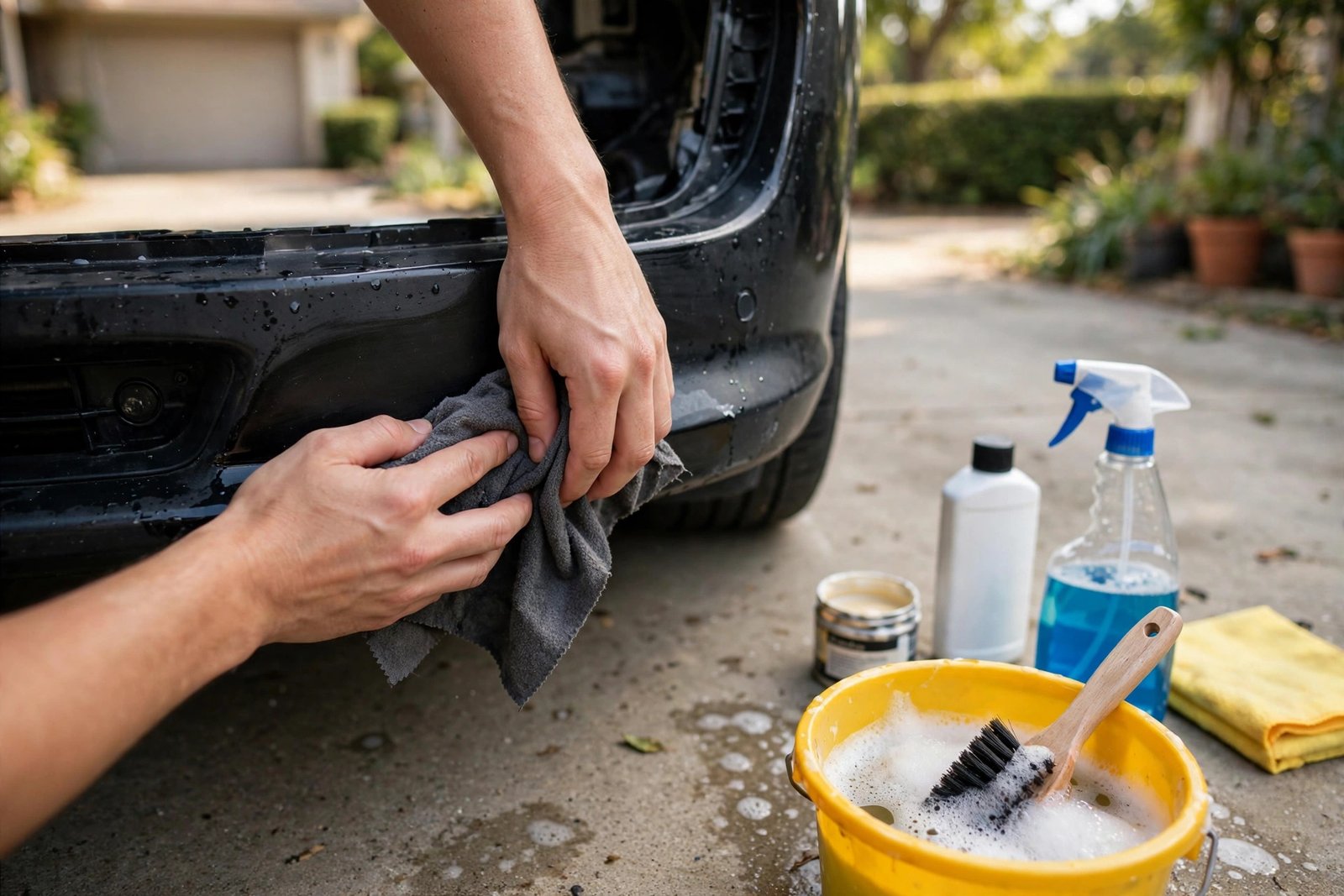
Paint touch-up for scuffs: for scratches through the paint, clean the area, use a colour-matched touch-up pen or kit (your paint code is on the driver’s door jamb sticker), apply thin layers, and finish with clear coat. It won’t be invisible, but from three paces it’s dramatically better. For larger scuffed areas, wet-sanding with fine grit (2000+) followed by polishing compound can restore the finish — but this is where amateurs most often burn through paint, so practise restraint.
Tools and Materials: The Real Cost
A basic DIY bumper repair kit: touch-up paint (£10–£20 colour-matched), clear coat (£8), polishing compound (£10), microfibre cloths, masking tape, 2000-grit wet-and-dry paper (£5), and a heat gun or hairdryer you already own. Total: £30–£50 — versus £150–£250 for a mobile smart repair or £300–£500+ at a body shop.
The economics favour DIY only if your time is cheap and expectations are realistic. A mobile smart-repair technician — who comes to your home and fixes minor bumper damage in an hour — is the great middle option most people don’t know about: professional results for £150–£250, no garage visit, no courtesy-car faff. For many, that’s the actual sweet spot between DIY risk and body-shop cost.
The Mistakes That Make It Worse
Too much heat: boiling water or a heat gun held too close warps plastic permanently or bubbles paint. Keep heat moderate and moving. Aggressive sanding: the number-one DIY disaster — sanding through the paint to primer (or plastic) turns a scuff into a respray job. If you’re sanding, use 2000-grit minimum, keep it wet, and stop early. Wrong paint: “close enough” colour match looks worse than the original scratch in daylight. Get the exact paint code. Ignoring sensors: if your bumper houses parking sensors or radar, even successful cosmetic repair may need recalibration — factor a garage visit for that specifically. Repairing structural damage cosmetically: filling a cracked bumper with filler hides the symptom while the crash protection stays compromised.
The DIY mindset serves well across the home too — fixing a dripping tap yourself follows the same assess-first principles. And the bigger question — when to persist versus when to call it — is universal: should you repair or replace applies the same logic to tech.
Insurance: Should You Claim?
Usually not for minor bumper damage. A £400 repair against a £250 excess nets you £150 — while the claim sits on your record for five years, likely raising premiums by more than you saved. Self-funding minor damage is almost always cheaper long-term. Claim only when damage exceeds roughly 3–4x your excess, or when a third party is liable (their insurance pays, and your no-claims is protected if they’re identified and admit fault — dashcam footage is gold here).
One exception: if the other driver is unknown (car park hit-and-run), check whether your policy includes uninsured-driver protection for property damage — some do, many don’t.
Legal and MOT Considerations
A damaged bumper can fail its MOT if it has sharp edges that could injure pedestrians, if it’s insecurely attached, or if damage obscures lights or number plates. Cosmetic dents and scuffs alone don’t fail. But a bumper held on with cable ties after a DIY attempt absolutely can — and gov.uk’s MOT guidance sets out exactly what’s inspected. The RAC’s maintenance advice is also worth bookmarking for ongoing car care.
Conclusion
Fixing a dented bumper without a garage is realistic for shallow dents and light scuffs: hot water and patience for the dent, colour-matched touch-up for the paint, realistic expectations throughout. Know the boundaries — cracked plastic, disturbed sensors, structural doubts, and sharp edges all mean professional help — and consider the mobile smart-repair middle ground before either extreme. Done right, you’ll save hundreds and gain a skill. Done wrong, you’ll fund a respray. Assess honestly, and you’ll know which outcome is yours.
Frequently Asked Questions
Can I pop out a bumper dent with hot water?
Often yes, for shallow dents in plastic bumpers: hot (not boiling) water softens the plastic, then push the dent out from behind. It works best on smooth, uncreased dents where the paint is intact.
How much does a professional bumper repair cost in the UK?
Mobile smart repairs: £150–£250. Body shops: £300–£500+ for minor damage, more for replacement. DIY materials run £30–£50. Get quotes before deciding — the middle option is often the best value.
Will a dented bumper fail its MOT?
Only if it’s dangerous: sharp edges, insecure attachment, or obscured lights/plates. Cosmetic dents and scuffs alone don’t fail. But a botched DIY repair that leaves sharp edges or loose fittings absolutely can.
Should I claim on insurance for bumper damage?
Usually no for minor damage — the excess plus future premium increases typically exceed the repair cost. Claim only for major damage or when a liable third party’s insurance pays.
Can I drive with a cracked bumper?
Short-term, if it’s secure with no sharp edges and lights/plates are visible — but get it assessed promptly. Cracked bumpers may have compromised crash protection and disturbed sensors, and they can deteriorate quickly.