Use beef tallow exactly as you would butter, lard or cooking oil — for roasting, frying, searing and baking — with one difference: it brings a deep, savoury richness and a high smoke point of around 200–220°C. Melt a spoonful for the crispiest roast potatoes of your life, sear steaks in it, fry eggs, or use it in place of butter in Yorkshire pudding batter and savoury pastry.
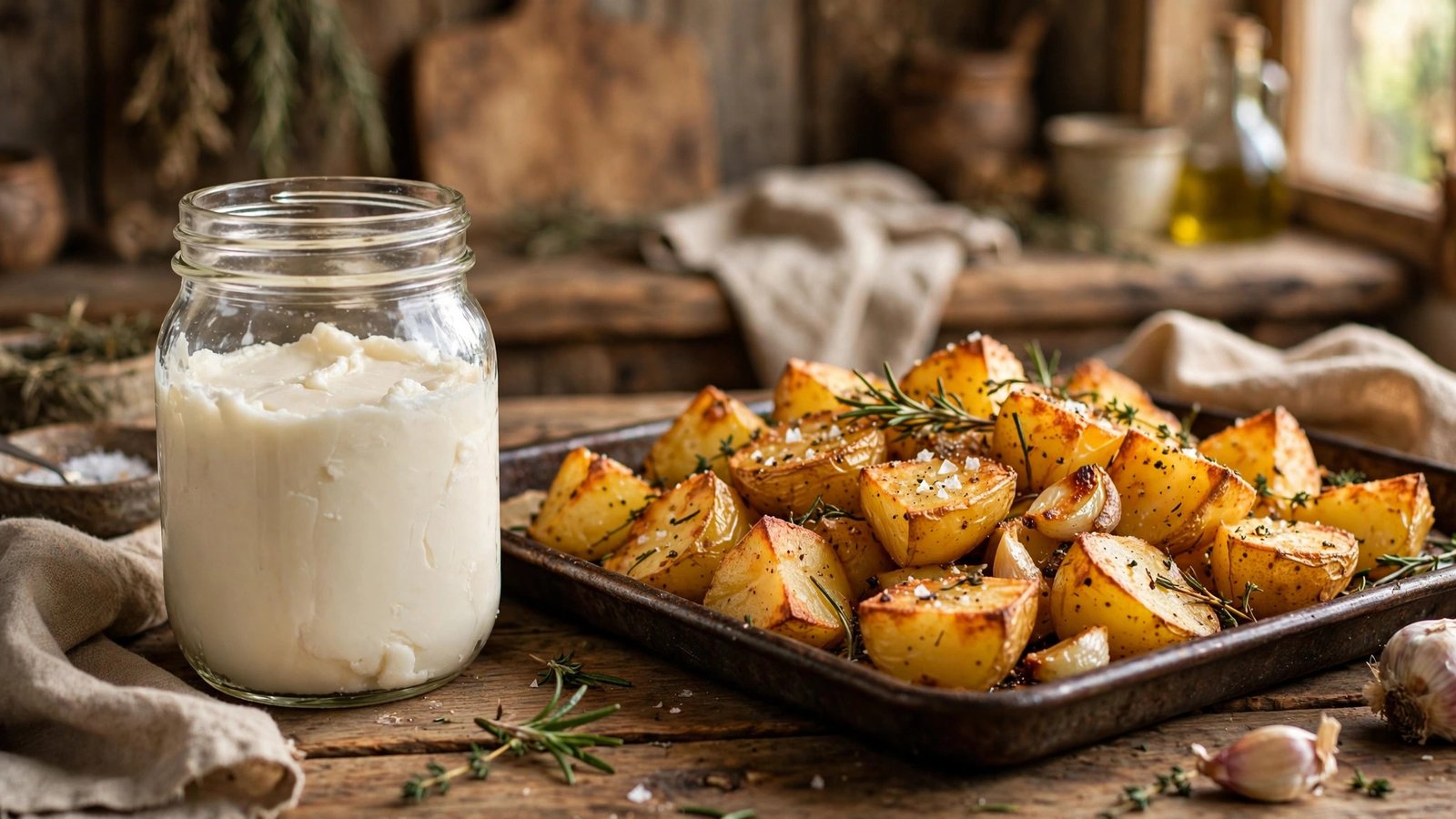
What actually is beef tallow?
Tallow is simply rendered beef fat — usually from suet around the kidneys — that has been slowly melted, strained and cooled into a firm, creamy-white solid. It is the beef equivalent of lard (which comes from pork), and it was the everyday cooking fat in British kitchens for generations before vegetable oils took over. Thanks to the nose-to-tail movement and a renewed love of traditional cooking, it is back on butcher’s shelves and in farm shops across the UK.
The best ways to use it
Roast potatoes (the classic)
This is tallow’s greatest hit. Heat 2–3 tablespoons in a roasting tin at 200°C until shimmering, tip in parboiled, roughed-up potatoes, turn to coat, and roast for 45–60 minutes, turning once. The result is a shattering, golden crust with a fluffy centre that vegetable oil simply cannot match.
Searing steak and meat
Tallow’s high smoke point makes it ideal for getting a hard, fast sear on steak without the fat breaking down and smoking out the kitchen. Add a spoonful to a ripping-hot cast-iron pan just before the steak goes in. For more on getting steak right, see our guide to how to warm up steak without ruining it.
Frying and shallow-frying
Chips, fried eggs, hash browns, bubble and squeak — anything you would fry in oil or butter works in tallow, with a richer flavour. Because it is solid at room temperature, it is also excellent for deep-frying: traditional chip-shop chips were fried in beef dripping, tallow’s close cousin, for good reason. Planning a fried feast? Check our guide to how long to bake hot wings for the oven-baked alternative.
Yorkshire puddings and pastry
Swap the oil in your Yorkshire pudding tin for tallow for extra-crisp, beefy puddings. It also makes superb savoury pastry — the flaky crust on a proper steak and ale pie traditionally relies on beef fat. Use it in a 1:1 swap for butter or lard in pastry recipes.
Seasoning cast iron
A thin wiped layer of tallow, heated past its smoke point in the oven, builds a hard, non-stick seasoning on cast-iron pans and griddles. Many cast-iron enthusiasts consider it superior to flaxseed or vegetable oil for this job.
Tallow vs lard, dripping and vegetable oil
How does tallow stack up against the other fats in a British kitchen? Lard (pork fat) is milder and softer, making it the better choice for sweet pastry and biscuits where you don’t want a beefy note. Dripping is tallow’s closest relative — in practice the two are interchangeable for roasting and frying, though dripping from a Sunday roast carries extra meaty flavour. Vegetable and rapeseed oils are neutral and convenient, but they can’t match the flavour tallow brings to roast potatoes or Yorkshire puddings, and most have lower smoke points than tallow’s 200–220°C. Butter tastes wonderful but burns at high heat (smoke point ~150°C), so for searing and roasting, tallow wins.
On nutrition: tallow is roughly 50% saturated fat, so the NHS advice on saturated fat applies — enjoy it as part of a balanced diet rather than as an everyday replacement for unsaturated oils. Its fans value it as a natural, single-ingredient, minimally processed fat with no additives.
How to render your own tallow
Ask your butcher for beef suet or fat trimmings — many give them away or sell them cheaply. Chop the fat small, place it in a heavy pan with a splash of water, and melt gently over the lowest heat for 2–3 hours, stirring occasionally. Strain through muslin into a clean jar. It keeps for months in a cool, dark cupboard and up to a year in the fridge.
Buying and storing tallow
Ready-rendered tallow is sold in tubs by butchers, farm shops and online, typically £5–£10 per 500g. Look for 100% grass-fed tallow if that matters to you. Store it sealed in a cool, dark cupboard for up to 6 months, or refrigerate for a year. It should smell clean and faintly beefy — any rancid or sour smell means it has turned.
As with all animal fats, the Food Standards Agency advises storing rendered fats correctly and discarding any that smell off, and the BBC Good Food glossary covers dripping, tallow’s traditional British relative.
FAQs
Is beef tallow the same as beef dripping?
Almost, but not quite. Tallow is rendered from suet (hard fat around the kidneys); dripping is rendered from general fat trimmings and roast juices. In cooking they are largely interchangeable.
Can you use beef tallow instead of butter?
Yes, in savoury cooking — roasting, frying and pastry — use it 1:1. It has a distinct beefy flavour, so it is not suited to sweet baking or spreading on toast (unless you are feeling adventurous).
What is the smoke point of beef tallow?
Around 200–220°C, higher than butter (150°C) and olive oil (160–190°C). That makes it excellent for searing, roasting and frying at high heat.
How long does beef tallow last?
Up to 6 months in a cool, dark cupboard in a sealed jar, or up to a year refrigerated. Discard it if it smells rancid or sour.