It takes under 60 seconds: a thief slides under your car with a battery-powered saw, cuts out the catalytic converter, and melts away into the night — leaving you with a repair bill of £1,000–£3,000 and a car that sounds like a tractor. Catalytic converter theft exploded across England in recent years, driven by the precious metals inside (palladium, rhodium, platinum), and certain models — hybrids especially — are prime targets. Understanding catalytic converter theft protection isn’t paranoia; it’s basic car ownership in 2026. Here’s what works, what doesn’t, and what’s worth your money.
Why Thieves Want Your Catalytic Converter
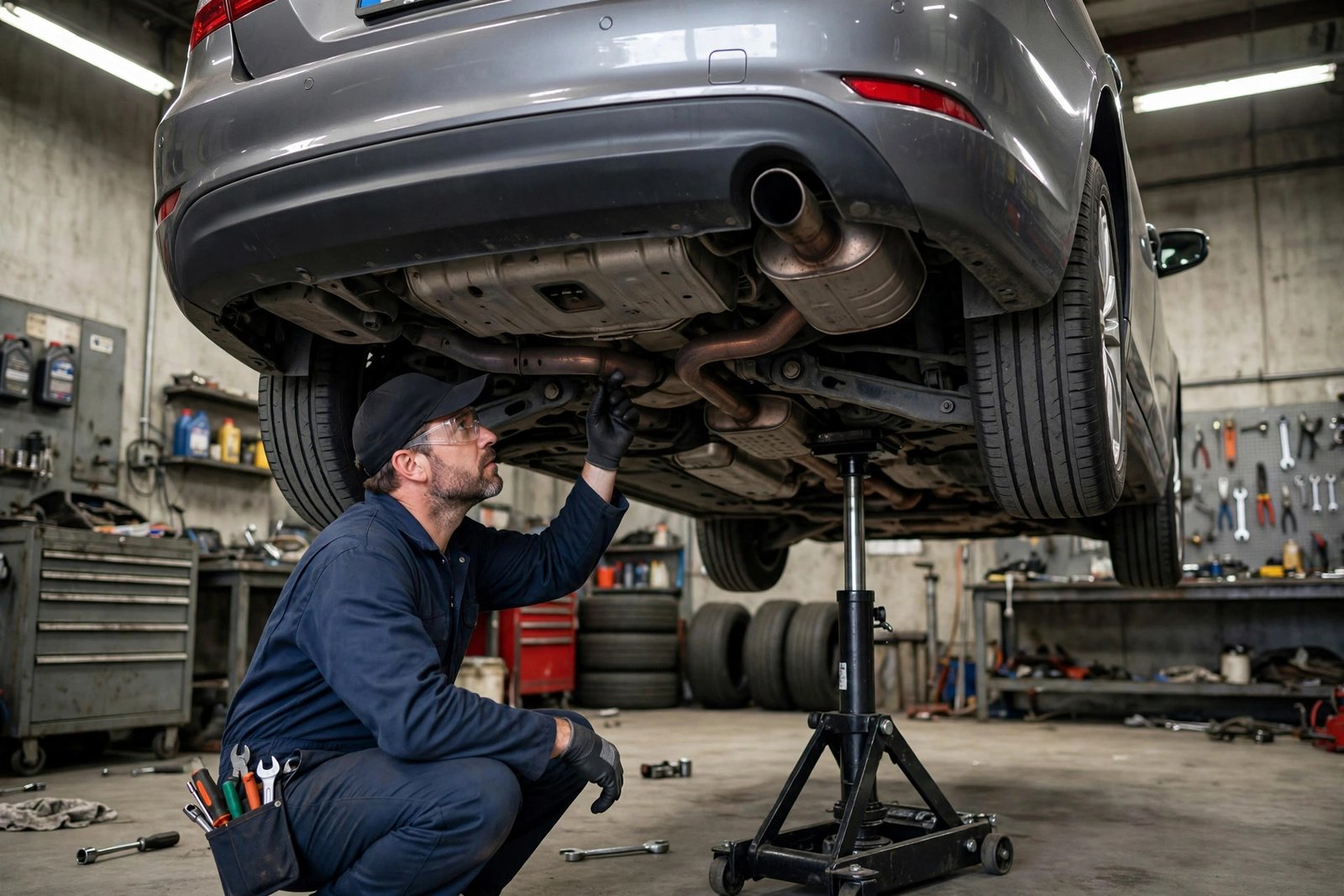
A catalytic converter scrubs pollutants from exhaust gases using a ceramic honeycomb coated with precious metals. Rhodium and palladium prices have spent years at extraordinary highs — a single converter can contain metals worth £200–£500+ on the black market. Hybrids (Toyota Prius, Auris, Honda Jazz hybrids) are targeted most because their converters are less corroded (the petrol engine runs less) and contain richer metal loadings — and they’re easier to access, sitting exposed under the car.
The theft itself is brutally quick: two cuts with a reciprocating saw, and the unit drops out. It happens in driveways, station car parks, supermarket car parks, and residential streets — anywhere a car sits unattended, day or night. The rise of cordless power tools turned what was once a workshop job into a 60-second street crime.
Parking: Your First and Cheapest Defence
Most thefts are opportunistic — thieves cruise for easy targets. Make yours hard: park in a garage whenever possible (the single best protection); park close to walls or kerbs on the exhaust side to block under-car access; choose well-lit, busy areas over dark side streets; and use secure car parks with CCTV and barriers rather than open lots when you have the choice.
At home, driveway security matters enormously — motion-sensor lighting, gravel (noisy underfoot), and CCTV or video doorbells all raise the thief’s risk calculus. See how to improve home security on a budget for practical, cheap measures that protect your car as well as your house.
Physical Protection Devices: What’s Worth Buying
Catalytic converter locks and shields: steel cables, clamps, or full cover plates that make cutting the unit out slow and noisy. Prices run £150–£400 fitted. They’re the most effective aftermarket defence — thieves want 60-second jobs, not 10-minute wrestling matches under a car with an angle grinder screaming. Look for devices specifically designed for your model (Toyota hybrids have the best-developed options).
Etching/marking: having your registration or a unique code etched onto the converter and registered on a database. It doesn’t prevent theft, but it makes the unit harder to sell to legitimate recyclers — and some police forces run free marking events. Marginal as a standalone defence; useful layered with physical protection.
Alarms with tilt sensors: standard car alarms often don’t trigger when a car is jacked — tilt sensors do. If your alarm supports it, enable it; aftermarket tilt sensors cost £100–£200 fitted.
When buying any of these online, buy from reputable specialists — and apply the same caution as any online purchase: checking if a website is safe to buy from before entering card details.
What Doesn’t Work (Save Your Money)
Painting the converter bright colours: widely suggested, minimally effective — thieves cut first and look later, and scrap dealers buying stolen units don’t care about paint. Parking “strategy” alone in high-risk areas: helps, but determined thieves work in well-lit streets too. Aftermarket “cat delete” pipes: removing the converter entirely is illegal for road use in the UK, will fail your MOT catastrophically, and can invalidate insurance — never do this.
Cheap universal “cages” that don’t fit your model properly: a determined thief defeats a loose-fitting guard in seconds. If you buy physical protection, buy model-specific and have it fitted properly.
If It Happens: The Aftermath
You’ll know: the car suddenly roars like a racing car, the exhaust note is deafening, and there may be a warning light. Don’t drive it beyond getting somewhere safe — exhaust gases (including carbon monoxide) can enter the cabin, and it’s illegal to drive a car that fails emissions/noise standards.
Report to the police immediately (you’ll need a crime reference number for insurance), photograph everything, and contact your insurer — most comprehensive policies cover theft of the converter, though you’ll pay the excess and it may affect your no-claims. Get quotes from both main dealers and independent exhaust specialists; independents are often 30–50% cheaper for the same type-approved replacement. And check whether your policy covers a courtesy car — you’ll need transport while it’s repaired.
The gov.uk motoring guidance covers your legal obligations around vehicle condition, and the RAC publishes up-to-date advice on this specific crime wave.
The Bigger Picture: Is It Getting Better?
There’s cautious good news. Tougher Scrap Metal Dealers Act enforcement (cash payments for scrap banned, sellers must show ID), police operations targeting organised theft rings, and manufacturers fitting more protected designs have all helped. Some forces report significant falls from peak levels. But precious metal prices remain the underlying driver — while rhodium and palladium command these prices, the incentive persists. Protection remains sensible, especially for high-risk models.
Conclusion
Catalytic converter theft protection comes down to layers: park defensively, secure your driveway, fit a model-specific physical lock or shield, mark the unit, and ensure your alarm actually detects jacking. No single measure is bulletproof, but stacked together they move you from “easy target” to “not worth the hassle” — which is all you need, because thieves always choose the easier car. Sixty seconds of their work shouldn’t cost you £2,000. Make it someone else’s problem — the unprotected car down the street.
Frequently Asked Questions
Which cars are most at risk of catalytic converter theft?
Hybrids top the list — Toyota Prius, Auris, Yaris Hybrid, Honda Jazz Hybrid — because their converters are cleaner, richer in precious metals, and easily accessible. Higher-clearance vehicles (SUVs, vans) are also easier to slide under.
How much does it cost to replace a stolen catalytic converter?
Typically £1,000–£3,000 depending on the model — main dealers charge most, independents often 30–50% less. Type-approved replacements are legally required; cheap non-approved units will fail the MOT.
Does car insurance cover catalytic converter theft?
Comprehensive policies usually do, subject to your excess. Third-party-only policies don’t. Check your policy wording and consider whether the excess makes claiming worthwhile for your situation.
Are catalytic converter locks worth it?
Yes — model-specific locks and shields are the most effective aftermarket defence. They turn a 60-second theft into a long, noisy job, and thieves overwhelmingly move on to easier targets. Expect £150–£400 fitted.
Is it illegal to drive without a catalytic converter?
Yes, effectively — your car will fail its MOT on emissions and noise, driving it risks a fine, and your insurance may be invalidated. Never remove one deliberately (“de-cat” pipes are for off-road/track use only).
Will a stolen converter affect my no-claims bonus?
Usually yes, unless you have protected no-claims — a theft claim counts as a claim. Weigh the repair cost against your excess and the premium impact; for older cars near the repair cost, some owners self-fund to protect their record.