Smell it. That’s the single most reliable test: fresh steak smells faintly meaty and mild, almost sweet, while steak that’s turned smells sour, tangy, or distinctly like ammonia — and you’ll know it the moment the packet opens. Your nose evolved for exactly this job. Back it up with two more checks: the surface should feel moist but not slimy, and the colour should be red to dark red (vacuum-packed steak often looks dark purple, which is completely normal). If any of the three — smell, texture, colour — is clearly off, don’t eat it.
The smell test: trust your nose
Open the packaging and take a proper sniff before anything else. Fresh beef has a mild, slightly metallic, clean smell. Spoiled beef announces itself: sour milk notes, a sharp tang, or an eggy, ammonia-like odour mean bacterial spoilage, and no amount of cooking makes it safe — heat kills bacteria but doesn’t remove the toxins some leave behind.
One important exception: vacuum-packed steak often smells a bit odd — slightly sulphurous or “eggy” — for the first few minutes after opening. This is the confined packaging gases, not spoilage, and it should dissipate within 10–15 minutes in the air. If the off smell is still there after airing, the steak is past it.
The touch test: slime means stop
Run a finger across the surface. Fresh steak feels damp and slightly tacky — that’s normal. Bad steak feels distinctly slimy or sticky, with a filmy layer that rinses off but leaves the surface still feeling slick. Sliminess signals bacterial colonies at work, and it’s a firm bin-it criterion even if the smell seems borderline. Also reject steak that feels mushy or falls apart unusually easily; fresh beef has spring and structure.
The colour test: what the shades mean
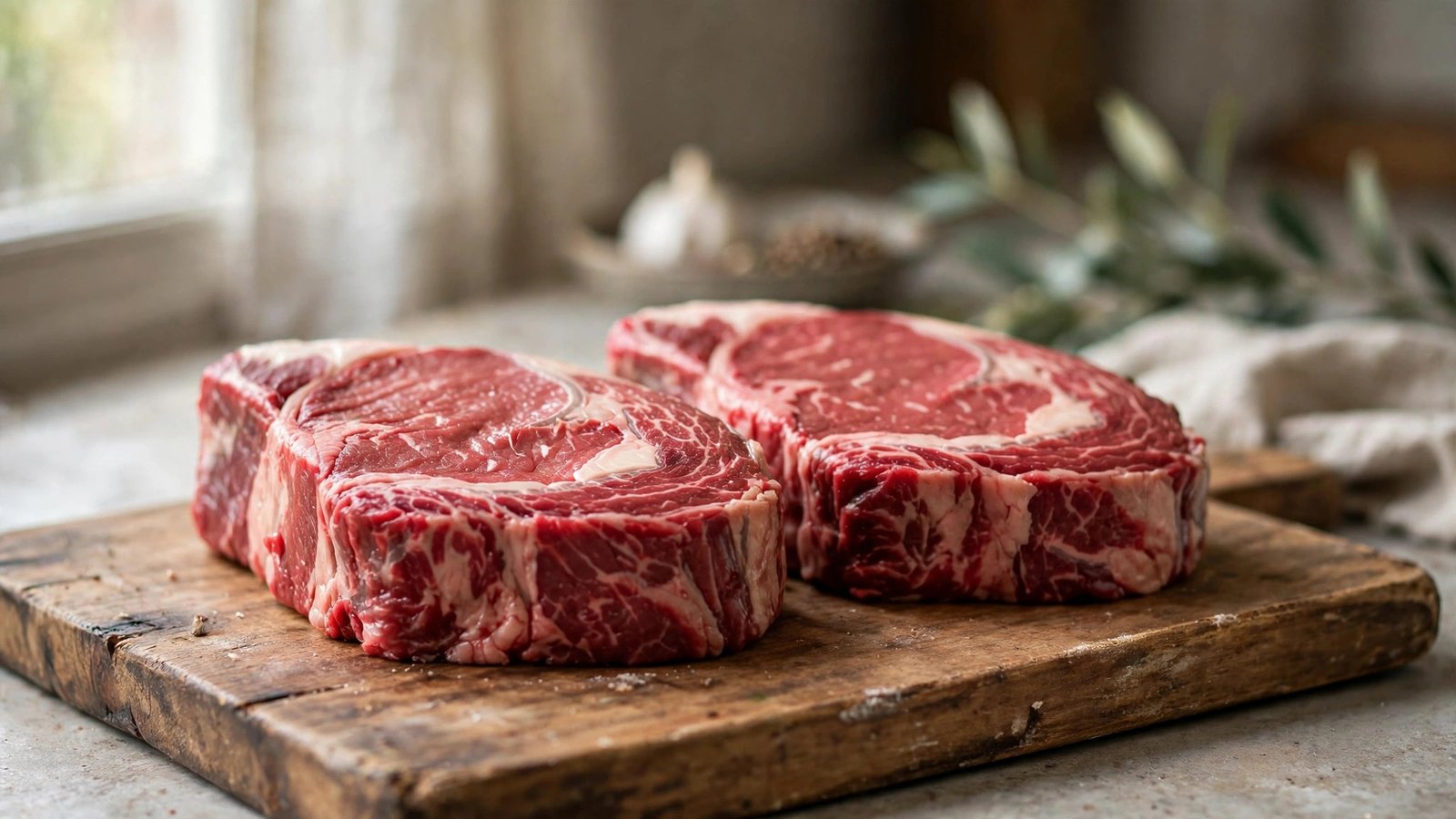
- Cherry red to dark red: fresh and fine — this is oxygenated myoglobin doing its job
- Dark purple or brownish: normal for vacuum-packed or just-opened steak; it “blooms” back to red within 30 minutes in air
- Grey throughout: oxidised and stale — safe if the smell and texture are fine, but past its best; cook it today or freeze it
- Green or iridescent patches: bacterial spoilage — throw it away
- White or pale spots: could be freezer burn on frozen steak (safe but poor texture) — on fresh steak, treat with suspicion
Colour alone is the weakest of the three tests, because perfectly good beef changes shade with air exposure. Judge colour together with smell and touch, never on its own.
Dates, storage, and the rules that matter
In the UK, the use-by date on fresh meat is a safety deadline, not a suggestion — unlike best-before dates, which are about quality. Don’t eat steak past its use-by date even if it seems fine, and don’t cook-and-serve it hoping heat fixes things. Fresh steak keeps 3–5 days refrigerated at 0–5°C; mince, with its vastly greater surface area, only 1–2 days.
Frozen properly at -18°C, steak keeps well for 6–12 months. Thaw it in the fridge (never on the counter — the Food Standards Agency is explicit about this), and cook within 24 hours of defrosting. Once cooked, eat leftovers within two days, reheated until steaming throughout.
Buying steak that lasts
Spoilage starts at the shop. Choose steaks with bright, even colouring and packaging that’s intact, with no excess liquid pooling in the tray. Buy meat last on your supermarket run so it spends minimal time out of refrigeration, and get it into the fridge within two hours — faster on a hot day. If you’re not cooking it within a couple of days, freeze it on the day of purchase rather than waiting: freezing pauses the clock, but it can’t rewind meat that’s already ageing. A vacuum-sealed steak from the butcher will typically keep a day or two longer than tray-packed supermarket steak, thanks to the reduced oxygen.
More from the kitchen: how to warm up steak, how much brisket per person, and how long to smoke pork tenderloin. The Food Standards Agency publishes the UK’s official food safety guidance.
FAQs
My vacuum-packed steak smells funny — is it bad?
Probably not. Vacuum-packed beef commonly smells slightly sulphurous for the first few minutes after opening. Leave it exposed to air for 10–15 minutes; if the smell clears and the meat blooms red, it’s fine. A persistent sour or ammonia smell means it’s spoiled.
Can you cook the bad smell out of steak?
No. Cooking kills live bacteria but doesn’t destroy all the toxins they produce, and it won’t fix rancid fats. If steak smells sour or of ammonia, bin it — no marinade or high heat makes it safe.
Is grey steak safe to eat?
Often, yes. Grey colour alone usually means oxidation from air exposure, not spoilage. If it smells normal and feels fine, it’s safe — though it may be less tender and flavourful. Cook it the same day.
How long does raw steak last in the fridge?
Three to five days at 0–5°C, provided it’s within its use-by date. Keep it on the bottom shelf in its packaging (or loosely covered) so juices can’t drip onto other food.
What’s the white stuff on my frozen steak?
That’s freezer burn — dehydration where air reached the meat’s surface. It’s harmless but gives a dry, leathery texture. Trim it off; the rest of the steak is safe to eat.