Pork tenderloin takes 2½ to 3½ hours in the smoker at 110–120°C (225–250°F), and it’s done when the thickest part reads 71–75°C on a meat thermometer. That’s dramatically quicker than a pork shoulder, which is exactly the point — tenderloin is the weeknight-friendly end of barbecue. But it’s also very lean, which means the margin between juicy and chalky is narrow. Temperature, not time, is your true finish line.
If you’re new to smoking in the UK, tenderloin is a forgiving first project: it’s affordable, widely available, and doesn’t demand the 12-hour commitment of brisket or pulled pork. A kettle barbecue with a lid, a bag of charcoal and some wood chunks are all the equipment you need.
Smoking times at a glance
- At 110°C (225°F): 3–3½ hours.
- At 120°C (250°F): 2½–3 hours.
- At 135°C (275°F): 2–2½ hours — faster, slightly less smoke penetration.
Tenderloins vary in thickness, wind affects your smoker’s temperature, and every cook is a little different. Start checking the internal temperature after two hours and pull the meat the moment it hits your target — carryover cooking will add another 2–3°C during the rest.
The target temperature
The Food Standards Agency advises cooking pork until steaming hot throughout with no pink meat — for tenderloin, that means a core temperature of at least 71°C, and many UK cooks aim for 73–75°C for complete confidence. Because tenderloin is so lean, don’t overshoot: every degree past 75°C costs you juiciness. A quick-read digital thermometer is the most important tool in this whole cook.
Prep: the steps that matter
- Remove the silver skin. That tough, silvery membrane on the tenderloin won’t render or soften — slide a thin knife under it and strip it off. Leave the fat; there’s barely any.
- Brine or don’t. A simple brine (60g salt per litre of water, 2–4 hours in the fridge) is the best insurance against dryness in such a lean cut. Rinse and pat dry afterwards.
- Rub generously. Tenderloin loves bold flavour. A classic mix: brown sugar, smoked paprika, garlic powder, onion powder, salt, black pepper and a pinch of cayenne. Apply an hour before smoking, or the night before.
- Consider a wrap. Streaky bacon wrapped around the tenderloin adds fat, flavour and a certain showmanship — secure with butcher’s twine or cocktail sticks.
The smoking method
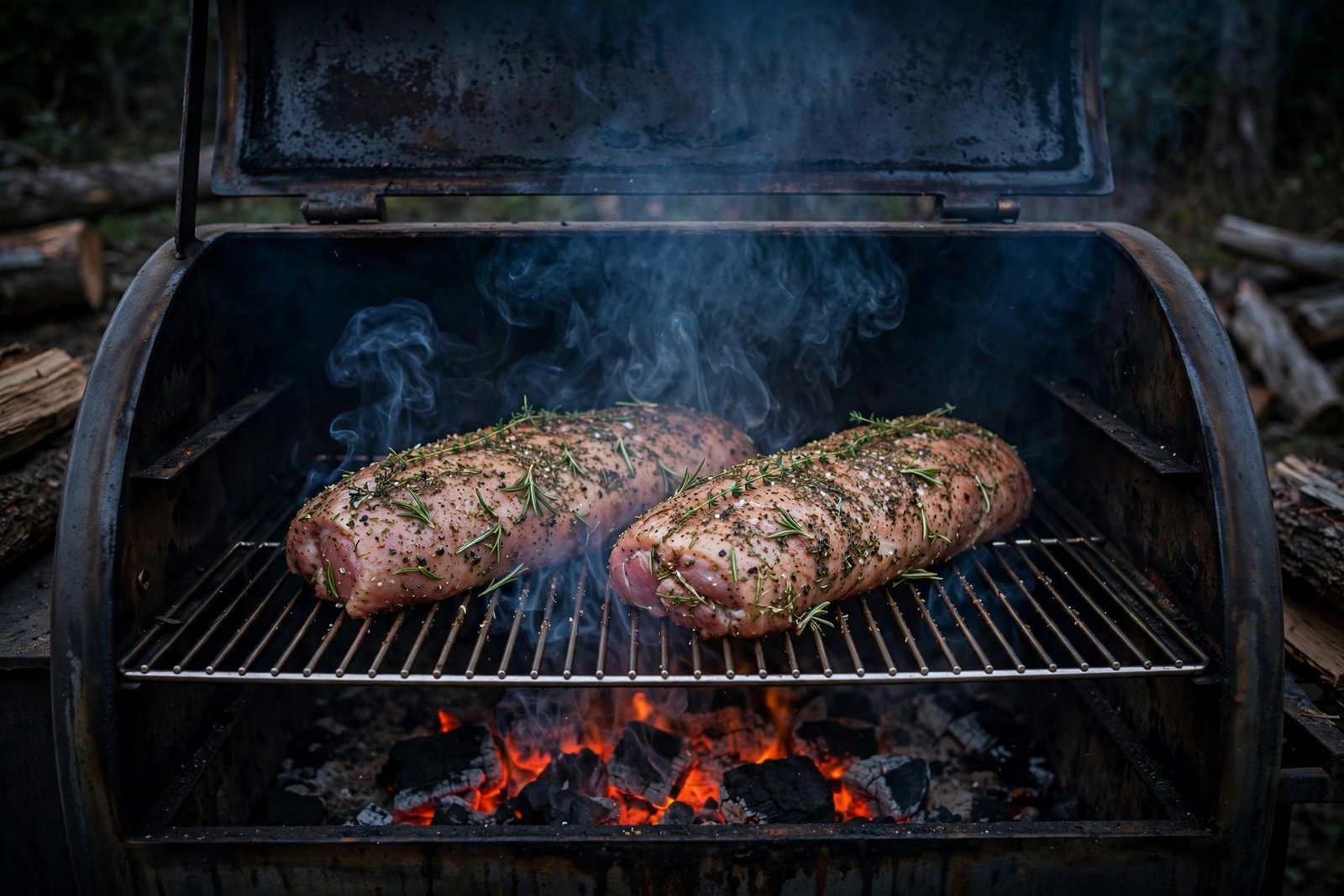
Set your smoker or kettle barbecue up for indirect heat at 110–120°C, with a water pan if you have one — the humid air helps the lean meat stay moist. Add two or three chunks of apple, cherry or oak wood; pork takes beautifully to fruit woods. Lay the tenderloin on the cool side, close the lid, and leave it alone. Resist peeking: every look costs heat and adds time.
At around the two-hour mark, start probing. When the thickest part reads 71°C, pull it — or at 68°C if you want a blushing finish and you’re confident in your thermometer and sourcing (the FSA’s guidance remains 71°C+ for pork, so this is your call). Tent loosely with foil and rest for 10–15 minutes. Then slice into 1–2cm medallions against the grain.
Should you sear it?
A reverse sear — 60–90 seconds per side over direct heat after smoking — adds colour and a caramelised crust. It’s optional but recommended, especially for bacon-wrapped tenderloins where you want the bacon crisped. Do it after the rest, right before slicing.
Choosing your wood
Pork is a blank canvas for smoke, and tenderloin — being mild — shows off the wood choice clearly. Fruit woods are the classic pairing: apple gives a gentle sweetness, cherry adds a rosy colour to the exterior as well as a mild fruity note. Oak is the all-rounder — a little stronger, thoroughly traditional, and hard to get wrong. Hickory works but can overpower such a lean, quick-smoking cut, so use it sparingly if at all. Mesquite is best avoided here; it’s too aggressive for tenderloin.
Whatever you choose, two or three fist-sized chunks are plenty for a three-hour cook. More wood doesn’t mean more flavour past a certain point — it means bitterness. Thin, pale-blue smoke is what you’re after; thick white smoke will make the meat taste acrid. If you’re using a kettle barbecue, wood chunks beat chips: they smoulder longer and need less babysitting.
Serving and leftovers
Smoked tenderloin is superb with sharp, sweet accompaniments that cut the richness: apple sauce, pickled red cabbage, a mustardy slaw. For a crowd, slice it and pile it onto soft rolls with barbecue sauce — it makes a lighter alternative to pulled pork (for which, see our guide to how many pounds of pulled pork per person).
Leftovers keep three days refrigerated and are excellent cold in salads or gently warmed — our guide to warming up meat gently applies here too: low heat, never the microwave on full blast.
FAQs
Can you smoke pork tenderloin at 225°F?
Yes — 225°F (110°C) is the classic low-and-slow temperature. Expect 3–3½ hours. It’s the best choice for maximum smoke flavour.
Why is my smoked tenderloin dry?
Almost always overcooking. Even 5°C past your target dries out this lean cut. Brining helps, but the thermometer is the real fix — pull the meat on temperature, not on time.
Do you wrap pork tenderloin in foil?
You can, but unlike brisket it rarely needs it — the cook is short enough that the “stall” barely registers. If the exterior is darkening too fast, a loose foil tent for the final 30 minutes is plenty.
What’s the difference between pork tenderloin and pork fillet?
Nothing — they’re the same cut. “Fillet” is simply the more common name in UK butchers and supermarkets.