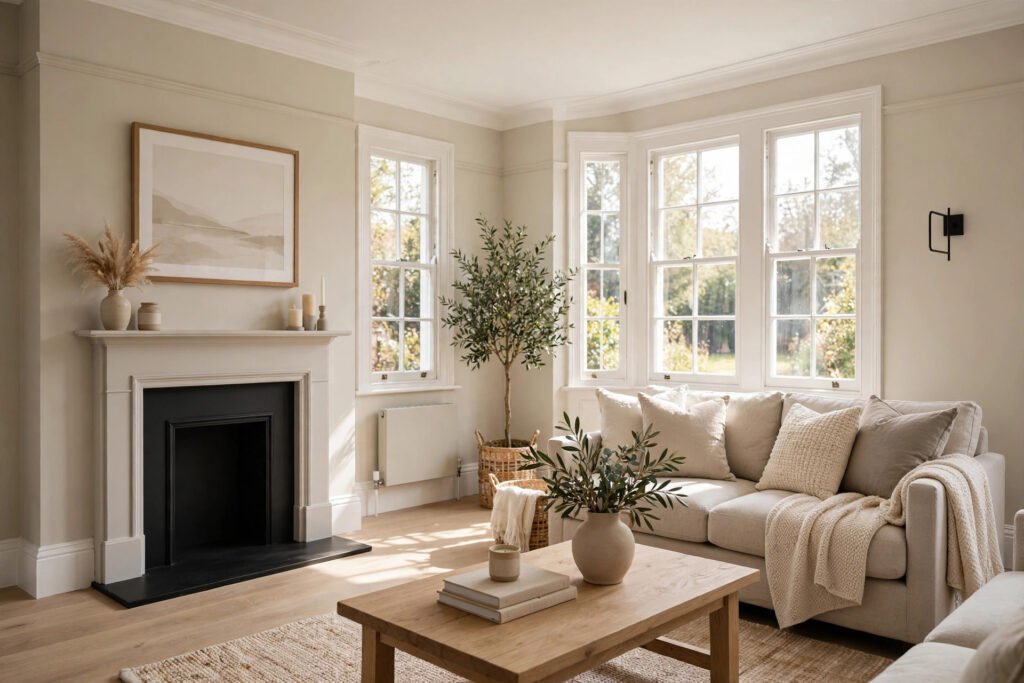
How do I make my home feel cosy on a budget in the UK? When the nights draw in at 4pm and the rain is horizontal, home becomes everything — and a cold, bare, harshly-lit flat can genuinely drag your mood down. But cosiness isn’t about expensive interiors; it’s about warmth, light, texture and the feeling of being held by a room. I’ve made rented flats, box rooms and draughty terraces feel like sanctuaries on tiny budgets, and the principles are consistent. Here’s how to do it for pounds, not thousands.
What actually creates “cosy”? Research and experience agree on the ingredients: warm light (not overhead glare), soft textures (things you want to touch), warmth (actual temperature + visual warmth), enclosure (defined, intimate spaces rather than vast emptiness), personal touches (things with meaning), and sensory comfort (scent, sound, warmth). Every tip below serves one of these — cosiness is a formula, not a shopping list.
How to make your home feel cosy on a budget UK: the big wins
1. Fix the lighting (the number one transformation). Overhead “big light” is the enemy of cosy — it flattens rooms and feels institutional. Instead: lamps at different heights (floor lamp + table lamp + fairy lights = the classic trio), warm bulbs only (2700K “warm white” — check the box; daylight bulbs feel clinical), fairy lights (£3–£8 — the cheapest cosiness per pound in existence; drape over shelves, headboards, windows), and candles (real or LED — £1 shop tea lights in jars are transformative). Total cost for a lighting revolution: £20–£40. Nothing changes a room’s feel faster.
2. Add soft textures. Cosiness is tactile: throws (£10–£20 at Primark, IKEA, Aldi specials — drape over sofas and beds), cushions (£5–£10 each; mix sizes and textures), a rug (the biggest single softener for hard floors — IKEA and Rugs Direct do large ones £30–£60; charity shops often have them), curtains (heavier curtains = warmer-looking windows + actual insulation — thermal linings cut heat loss). Texture layering is the interior equivalent of the clothing layering in how do i layer clothes for cold uk winters — same principle, same comfort.
3. Warm it up properly. A cold room can’t feel cosy whatever you do. Draught-proofing is the budget hero: draught excluder tape (£5), door snakes (£8), chimney balloons (£20), thermal curtains. Then heat the person, not the room: hot water bottles (£8), heated throws (£30–£40 — pennies to run versus central heating), thick socks and blankets for sofa evenings. The energy-bill-friendly approach to winter warmth.
The £50 cosy room makeover (a shopping list)
- Fairy lights × 2: £8
- Warm table lamp (charity shop/IKEA): £12
- Throw: £12
- 2 cushions: £12
- Candles/tea lights: £3
- Small rug or draught excluder: £15–£25
Total: ~£50–£65 for a room that feels completely different. Charity shops, IKEA, Aldi/Lidl specials, Facebook Marketplace and B&M/Home Bargains are the budget cosiness suppliers — the same piece costs 3x at designer home stores.
The sensory details (free or nearly free)
- Scent: simmer a pan of water with orange peel, cinnamon and cloves (£1 of ingredients — the whole house smells like Christmas); or budget reed diffusers (£5). Scent is the fastest mood-changer there is.
- Sound: a “cosy” playlist, rain sounds, or just the radio — silence can feel stark; gentle background sound warms a room psychologically.
- Declutter the surfaces: cosiness needs some clear space — clutter reads as chaos, not comfort. You don’t need minimalism; you need “everything has a home”. (The wardrobe decluttering method in how do i declutter my wardrobe without regret works for rooms too.)
- Personal touches: photos, books, the mug collection — things with stories. A room full of your things feels cosy; a showroom doesn’t, however expensive.
- Plants: one or two easy plants (£3–£8 — pothos, spider plants, snake plants survive anything) add life and softness. Greenery is nature’s cosiness.
Room-by-room quick wins
Living room: lamps + throw + cushions + rug + fairy lights = done. Arrange seating to face each other (conversation) not just the TV — intimate layouts feel cosier. Bedroom: warm bedside lamp, extra blanket at the foot of the bed, fairy lights round the headboard, decluttered nightstand. The bedroom should feel like a nest — cool, dark and soft. Kitchen: the hardest room to cosify — a rug runner, under-cabinet fairy lights, a plant on the windowsill, and good smells (bake something, or simmer the orange-cinnamon pot). Bathroom: warm towels (heated rail or just the radiator), a candle, decluttered surfaces — spa cosiness for pennies.
Renters: everything above is renter-friendly — no drilling, no painting, all portable. Command hooks (£5) for fairy lights and art, freestanding lamps, rugs over ugly floors, curtains on tension rods. Your deposit stays safe and your home feels yours.
Cosiness and wellbeing (the deeper point)
This isn’t just aesthetics. A cosy home in winter genuinely supports mental health — the darker months are hard (see how do i deal with seasonal affective disorder in the uk), and your environment is one of the levers you control. Warm light in the evening supports sleep; a comfortable nest makes rest actually restful; a space you love coming home to is a buffer against the grey. The Danish have a word for it — hygge — and a whole culture built on the idea that cosiness is a wellbeing strategy, not a luxury. They’re onto something.
Cosy on a schedule (the 30-minute version)
Guests coming in an hour? The emergency cosy protocol: lights low, lamps and fairy lights on (2 minutes), throw over the sofa, plump cushions (3 minutes), simmer the orange-cinnamon pot (5 minutes to fragrance), declutter surfaces into a basket (10 minutes — hidden, not solved, but effective), light candles (1 minute), put on background music (1 minute). Twenty minutes, and the house feels like a hug.
The deeper truth: cosiness is 80% lighting and 20% everything else. If you do nothing else from this guide, do the lighting — warm lamps instead of the big light. It’s the highest-impact, lowest-cost change in home comfort, and it works tonight.
For help with energy bills and draught-proofing support, see Citizens Advice on energy.
The takeaway
How do you make your home feel cosy on a budget in the UK? Warm lighting at multiple heights (lamps + fairy lights + candles), soft textures (throws, cushions, rugs), draught-proofing and targeted warmth, sensory details (scent, sound, plants), and personal touches — for around £50–£65 a room from budget and second-hand sources. Cosiness is warm light, soft things, and the feeling of being held by a room. Build it deliberately this autumn, and the dark months become something to savour, not endure.