Frank Sinatra profile: net worth, age, height, partner and career
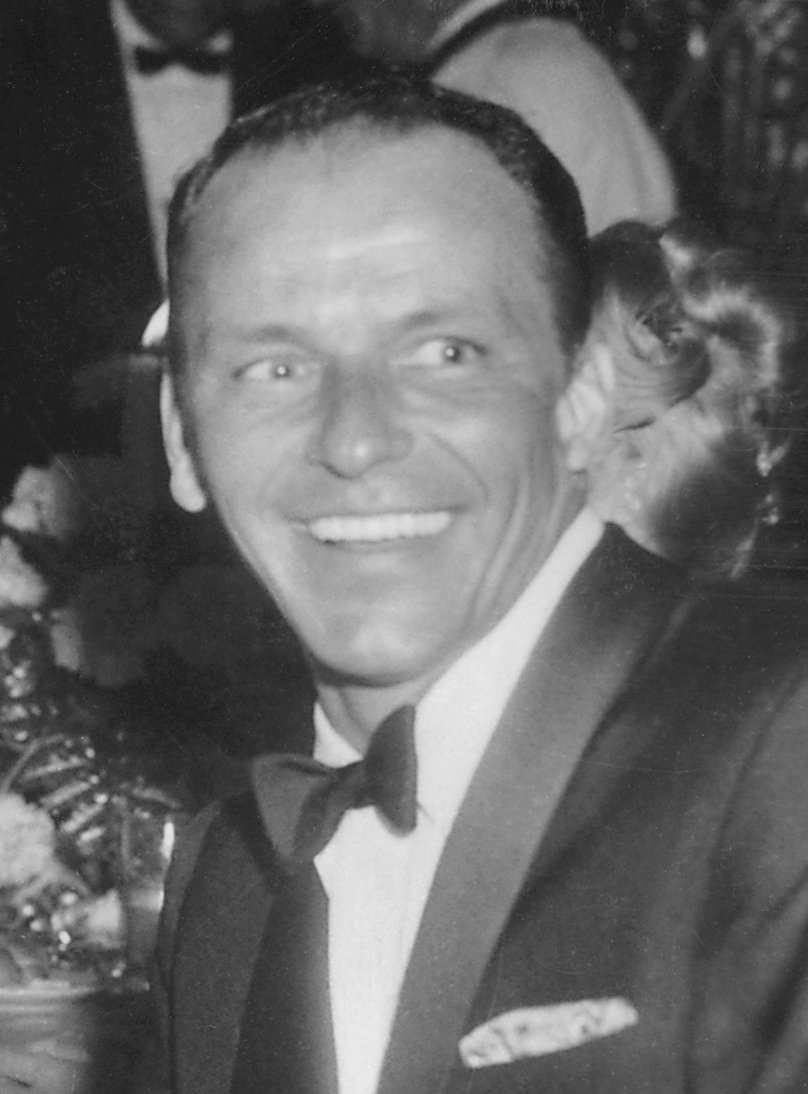
Frank Sinatra profile: net worth, age, height, partner and career
Frank Sinatra was the defining popular singer of the middle of the twentieth century, a performer whose recording career ran from the big-band era to the age of the compact disc and whose phrasing set the standard against which every successor was measured. He died on 14 May 1998, aged 82, and this is a posthumous profile: everything in it is written of a completed life. Celebrity Net Worth puts his net worth at the time of his death at $200 million, the headline figure used here. As Celebrity Net Worth itself records, contemporary estimates of his estate ranged from $200 million to $600 million, and the exact total was never publicly established — a disagreement set out in full below, with estate values kept distinct from the figure at death.
$200 Million at His Death in 1998
Celebrity Net Worth puts Sinatra’s net worth at the time of his death at $200 million, and that is the headline figure in this profile. The disagreement that surrounds it is printed by Celebrity Net Worth itself and is reproduced here in full: contemporary estimates of his estate ranged from $200 million to $600 million, and the exact amount was never publicly established, because much of his wealth was held in a living trust that sat outside the probate process by which such totals are usually documented. Estate values and net worth at death are related but distinct measures, and the range of $200 million to $600 million is an estate range, reported here as such; it is not a rival personal fortune that he spent during his life, and it should not be quoted as one.
One firmer document exists from his lifetime. In 1981, in connection with his Nevada gaming licence, a financial statement put his net worth at just over $14 million. That figure, from a regulatory filing seventeen years before his death, is strikingly lower than the estimates at death, and the gap is a useful warning about the whole field: figures for performers of his era rest on partial records, and the $200 million headline is an estimate, not an audited total. No Forbes or Sunday Times Rich List total for him exists.
The composition of the fortune, so far as it can be described, rested on three foundations: recording income across five decades, including the albums that have never stopped selling; ownership, through Reprise Records and his other companies, of a share of the business built on his own work; and property, covered in the next section. One later transaction belongs to the estate’s history rather than to his wealth at death: in 2007, nine years after he died, Warner Music Group paid $50 million for a 50 per cent interest in Frank Sinatra Enterprises, the company holding rights in his work. That was a posthumous estate transaction, and it is not counted in the figure at death.
A Hoboken Birth as an Only Child
Francis Albert Sinatra was born on 12 December 1915 in Hoboken, New Jersey. His birthday fell in mid-December, and he was 82 when he died in May 1998. He was an only child. His father, Anthony Martin Sinatra, was a captain in the Hoboken fire service who died in 1969. His mother, Natalina “Dolly” Sinatra, worked as a midwife and was a figure in local politics in Hoboken; she was killed in a light aircraft accident in January 1977. The household was a working one, and the young Sinatra’s route out of it was singing: he performed with local groups as a teenager, worked as a singing waiter, and took the succession of small engagements available to an ambitious vocalist in the New York area in the 1930s.
The turning point of the early years was a talent contest won with a vocal group, the Hoboken Four, in 1935, which led to touring work and, in time, to the attention of bandleaders. Nothing in that apprenticeship suggested the scale of what followed. He was a slight, intense young singer in an era when the band, not the vocalist, was the attraction, and the transformation of the singer into the star of the show was, in large part, his own doing over the decade that followed.
Harry James, Capitol and My Way
1939–1942: Harry James, Tommy Dorsey and the Band Years
Sinatra’s professional breakthrough came in 1939 when the trumpeter and bandleader Harry James hired him as his featured vocalist; the first commercial recording of his career, “All or Nothing at All”, was made that year, though it became a hit only when reissued later. In 1940 he moved to Tommy Dorsey’s orchestra, then one of the most successful bands in the country, and it was with Dorsey that he became a star. Records such as “I’ll Never Smile Again” topped the charts, and Dorsey’s discipline — breath control learned from listening to the trombone lines around him — shaped the technique he kept for life. When he left Dorsey in 1942 to work as a solo singer, the departure was contentious and closely watched; it marked the moment the vocalist stepped in front of the band for good.
1943–1952: Columbia, Sinatramania and the Lean Years
Signed to Columbia Records as a solo artist, Sinatra became the centre of a phenomenon that had no real precedent in popular music: the mass adulation of teenage fans, the bobby-soxers, whose devotion filled theatres and, in October 1944, brought thousands onto the streets of New York for his opening at the Paramount. Through the 1940s he recorded a body of ballads — among them “Nancy (with the Laughing Face)”, written for his daughter — that established the intimate, conversational style of his singing. The decade ended less well. His voice and his public standing both faltered in the early 1950s, his recording contract was not renewed, and for a period the career that had defined popular singing looked finished.
1953–1962: Capitol and the Great Albums
The revival, when it came, produced the records on which his reputation principally rests. Signed to Capitol Records in 1953, and working principally with the arranger Nelson Riddle, Sinatra made a sequence of albums conceived as unified works rather than collections of singles: Songs for Young Lovers (1954), In the Wee Small Hours (1955), Songs for Swingin’ Lovers! (1956), Come Fly with Me (1958) and Only the Lonely (1958). The first group perfected the buoyant, swinging style; the second, the late-night ballad of loss, sung with a control that made In the Wee Small Hours and Only the Lonely permanent reference points for singers after him. In the same years he rebuilt his standing as a performer in every medium open to him, and by the end of the decade he was, once again, the central figure in popular singing.
1960–1971: Reprise, “My Way” and Retirement
In 1960 he founded his own label, Reprise Records, an act of business independence unusual for a performer of his generation and a foundation of his later wealth: the singer now owned a share of the enterprise that sold his records. The 1960s brought “Strangers in the Night” (1966), a number-one single, “Somethin’ Stupid” (1967), a number-one duet with his daughter Nancy, and, in 1969, “My Way”, the song that became his signature whether he wished it or not. His Las Vegas engagements of the period, and the circle of performers around them, fixed his public image for a generation. In June 1971, at a benefit concert in Los Angeles, he announced his retirement, closing — so it appeared — a career of more than three decades.
1973–1998: Comeback, Duets and the Final Years
The retirement lasted two years. He returned in 1973 with the album Ol’ Blue Eyes Is Back and resumed recording and performing, including “New York, New York” (1980), which became a second signature song in his sixties. His final studio recordings, Duets (1993) and Duets II (1994), paired him with singers of later generations and became the biggest-selling albums of his career. He performed in public into his late seventies. A fuller account of the same life is given in Snap News 24’s profile of Frank Sinatra’s net worth and career, which covers the same record in its own words. He died on 14 May 1998 at Cedars-Sinai Medical Center, Los Angeles, after a heart attack, with his wife Barbara at his side, as the obituaries published by the BBC and The New York Times recorded at the time.
| Harry James, Capitol and My Way | Details |
|---|---|
| Net Worth | Estimated $200 million at the time of his death (Celebrity Net Worth) |
| Born | 12 December 1915, Hoboken, New Jersey |
| Age | 82 at his death on 14 May 1998 |
| Height | 5 ft 8 in (1.73 m) |
| Weight | No reliable published figure exists |
| Wife | Barbara Marx, married July 1976 until his death in 1998 |
| Children | Three: Nancy (b. 1940), Frank Jr. (b. 1944, d. 2016) and Tina (b. 1948) |
| Parents | Anthony Martin Sinatra (d. 1969) and Natalina “Dolly” Sinatra (d. 1977) |
| House | Twin Palms, Palm Springs, commissioned in 1947; also homes at Rancho Mirage, Beverly Hills and Malibu |
Four Marriages and Three Children
Sinatra was married four times. His first marriage, to Nancy Barbato, began on 4 February 1939, before fame arrived, and ended in divorce in 1951; she was the mother of his three children and remained a figure in his life long after the marriage ended. His second marriage, to Ava Gardner, began in November 1951 and ended in divorce in 1957; it was the most turbulent and the most written-about of the four. His third, to Mia Farrow, began in July 1966 and ended in divorce in 1968. His fourth marriage, to Barbara Marx, began in July 1976 and lasted for the remaining twenty-two years of his life. Barbara was his wife until his death in 1998 and his widow thereafter; she died in 2017. The table records her in those terms, as his late wife, and not as a current wife.
His three children were all born to Nancy Barbato. Nancy, born in 1940, became a singer in her own right and recorded the duet “Somethin’ Stupid” with her father. Frank Jr., born in 1944, also became a singer and conductor; in December 1963, at the age of nineteen, he was kidnapped and held until a ransom of $240,000 was paid, and was released unharmed, an episode that drew worldwide attention at the time. He died in 2016. Tina, born in 1948, worked as a producer and as a guardian of her father’s legacy. The family record is completed by his parents, set out above: the fire captain and the midwife of Hoboken, whose only child’s career outlasted them both by decades.
His height was listed at 5 ft 8 in (1.73 m). No reliable published figure for his weight exists, and none is offered here.
Twin Palms and the Palm Springs Years
The best documented of his homes was Twin Palms in Palm Springs, commissioned in 1947, as his career reached its first peak, for a reported $150,000. The property, named for the two palm trees on the plot, became closely associated with his Palm Springs years and has remained a landmark of the town’s architectural history. It was the first of a succession of California properties held across the following half-century.
He later kept a compound at Rancho Mirage, in the same desert valley, which served as his principal base in his later years, and homes in Beverly Hills and Malibu at different periods of his life. The pattern was consistent with the rest of the financial record: property bought in established locations and held for long periods rather than traded. His will made property provisions for Barbara, his widow, among its arrangements for the family, as was reported at the time of his death. Taken together, the Palm Springs commission of 1947 and the desert compound of his old age frame the domestic geography of a life spent largely in California from the 1940s onwards.
The Voice That Set the Standard for a Century
Frank Sinatra was born on 12 December 1915 and died on 14 May 1998, aged 82. He stood 5 ft 8 in tall, was married four times — lastly to Barbara Marx, his wife from 1976 until his death — and had three children. Celebrity Net Worth puts his net worth at his death at $200 million, with contemporary estate estimates ranging from $200 million to $600 million and the exact total never established, for the probate reasons set out above. From the Dorsey band through the Capitol albums to Duets, the career remains the standard by which popular singing is judged, and the fortune, however precisely it is counted, was built on the same foundation: the records, and the ownership of them.