How wealthy is Daniel Day-Lewis? Net worth, property and earnings
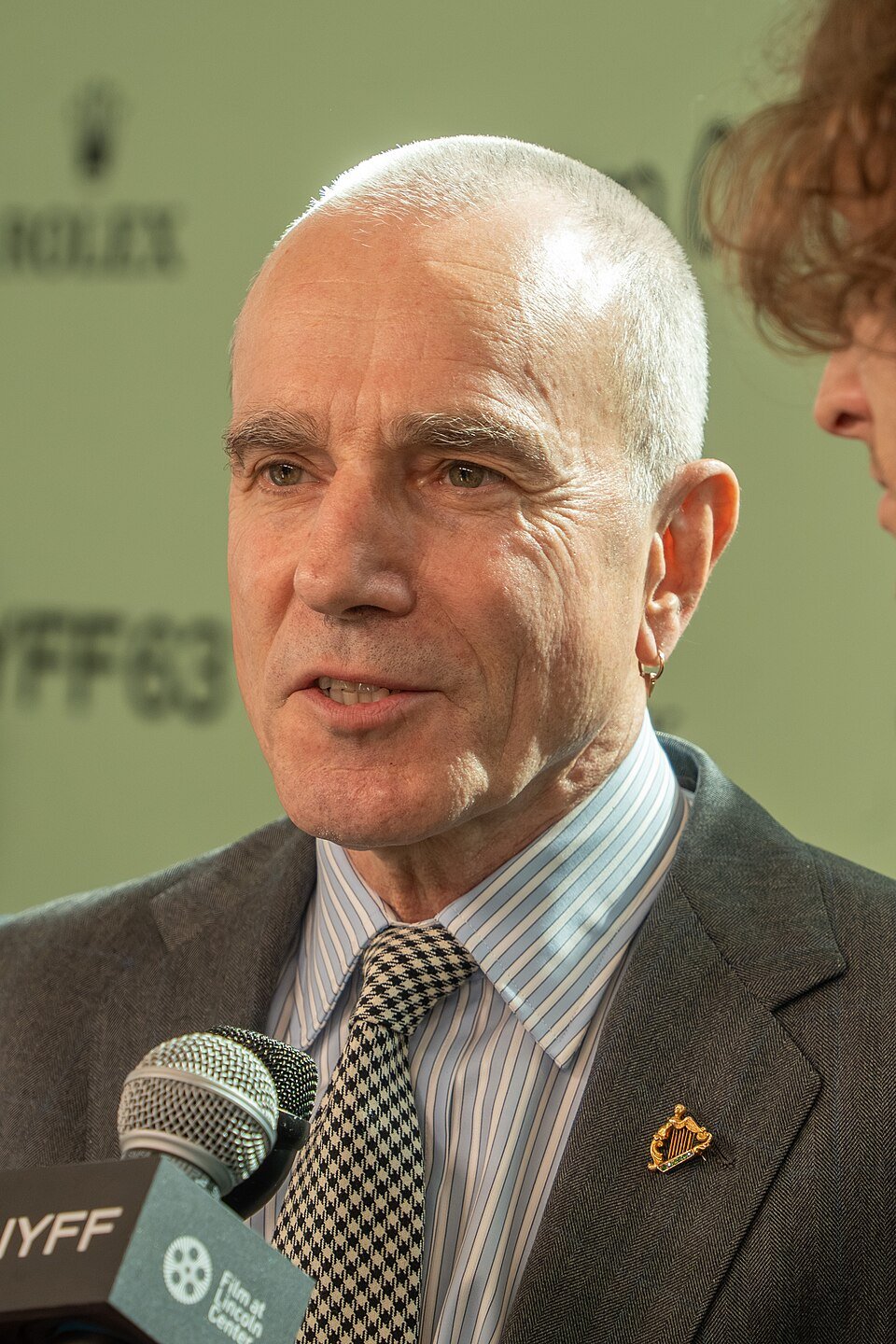
How wealthy is Daniel Day-Lewis? Net worth, property and earnings
Daniel Day-Lewis is the only actor in history to have won the Academy Award for Best Actor three times, and for two decades he was regarded, almost without argument, as the finest screen actor of his generation. Celebrity Net Worth puts his fortune at $40 million on its current page, updated on 6 October 2025, and that is the headline figure used in this profile; other trackers put the total higher, at $50 million to $60 million, and that disagreement is recorded below rather than resolved. He is 69, has been married to the writer and director Rebecca Miller since 1996, and has three sons. Having announced his retirement in 2017, he returned to the screen in Anemone, released in October 2025, and told Rolling Stone the previous month that he had never intended to retire at all.
Three Oscars, No Equal: Laundrette to Lincoln
1985–1989: My Beautiful Laundrette, A Room with a View and My Left Foot
Two films released in the same period announced him. In My Beautiful Laundrette (1985) he played a former skinhead in a London launderette drama written by Hanif Kureishi, and in A Room with a View (1985) he played the fastidious Cecil Vyse in the Merchant Ivory production — two performances so unlike each other that their near-simultaneous release in the United States became a story in itself. The Unbearable Lightness of Being (1988) followed, and then My Left Foot (1989), in which he played the writer and artist Christy Brown, who had cerebral palsy and painted with his left foot. Day-Lewis remained in character and in a wheelchair throughout the production. The performance won him his first Academy Award for Best Actor, at 32.
1992–1997: The Last of the Mohicans, In the Name of the Father and The Boxer
The Last of the Mohicans (1992) made him a leading man in the full commercial sense: he trained in wilderness skills and carried a long rifle through months of location work in North Carolina. The Age of Innocence (1993), for Martin Scorsese, was its opposite — a study in restraint. In the Name of the Father (1993) cast him as Gerry Conlon, one of the Guildford Four, and brought a second Oscar nomination. The Crucible (1996) adapted Arthur Miller’s play, and it was at Miller’s home during that production that he met Rebecca Miller, the playwright’s daughter, whom he married that year. The Boxer (1997) reunited him with the director Jim Sheridan. Then, at the height of his standing, he stopped: he moved to Florence and worked for a period as an apprentice shoemaker, an episode that lasted from about 1997 to 2000 and that he has never treated as anything other than a genuine change of life.
2002–2012: Gangs of New York, There Will Be Blood and Lincoln
Scorsese persuaded him back for Gangs of New York (2002), in which his Bill the Butcher — moustached, courteous and terrifying in the same breath — dominated a film full of incident and brought another Oscar nomination. The preparation was characteristic: he trained as a butcher and worked in a butcher’s shop, and stayed in the character’s accent and manner through the shoot, as he had stayed in Christy Brown’s wheelchair and would later stay in Abraham Lincoln’s voice. Directors who have worked with him describe the method less as a technique than as a refusal to commute between the part and ordinary life for the duration of a production. The Ballad of Jack and Rose (2005) was written and directed by Rebecca Miller. There Will Be Blood (2007), directed by Paul Thomas Anderson, gave him the oil prospector Daniel Plainview, a performance regularly placed among the greatest in screen history, and won him his second Academy Award. The musical Nine (2009) was a rare venture into lighter material. Lincoln (2012), directed by Steven Spielberg, required a year of preparation and produced a portrayal of Abraham Lincoln — quiet, stooped, with a reedy voice drawn from the historical record — that won him his third Best Actor Oscar, a record no other man has matched.
2017–2026: Phantom Thread, Retirement and the Return in Anemone
Phantom Thread (2017), his second film with Anderson, cast him as a couturier in 1950s London. Before its release, in June 2017, his spokeswoman announced that he would no longer work as an actor. The decision was treated as final, and for eight years it held. It did not, in the end, prove to be final. Anemone, co-written by Day-Lewis with his son Ronan Day-Lewis, who also directed it, received its world premiere at the New York Film Festival in 2025 and was released in October 2025. In a Rolling Stone interview in September 2025 he addressed the retirement directly: he said he never intended to retire, and described his 2017 remarks as grandiose. The return is therefore recorded here exactly as the record stands — a retirement announced, observed for eight years, and then withdrawn by the man himself, on a project made with his son.
| Three Oscars, No Equal: Laundrette to Lincoln | Details |
|---|---|
| Net Worth | Estimated $40 million (Celebrity Net Worth) |
| Born | 29 April 1957, Kensington, London |
| Age | 69 years old |
| Height | 6 ft 1 in (1.86 m) |
| Weight | No reliable published figure exists |
| Wife | Rebecca Miller, married 13 November 1996 |
| Children | Three sons: Gabriel-Kane, born 1995; Ronan Cal, born 1998; Cashel Blake, born 2002 |
| Parents | Cecil Day-Lewis and Jill Balcon |
| Nationality | Dual British and Irish citizenship; Irish citizenship taken in 1993 |
| No verified personal account |
Rebecca Miller and a Marriage Since 1996
Day-Lewis married Rebecca Miller on 13 November 1996. They had met at the home of her father, the playwright Arthur Miller, during the production of The Crucible, in which Day-Lewis starred and which Miller had written decades earlier. The marriage has lasted thirty years and has been conducted almost entirely out of public view, in keeping with a privacy he has guarded throughout his career: he gives few interviews, attends few events beyond those his work requires, and has never cultivated a public persona separate from the roles. Before the marriage, he was in a relationship with the French actress Isabelle Adjani from 1989 to 1994.
He has three sons. Gabriel-Kane Day-Lewis, his son with Adjani, was born on 9 April 1995 and works as an actor and model. Ronan Cal Day-Lewis, born on 14 June 1998 to Day-Lewis and Miller, is the director of Anemone — the film that brought his father back to the screen was, in the most literal sense, a family production, written by father and son together. Cashel Blake Day-Lewis, born in May 2002, also to Day-Lewis and Miller, is a violinist and composer. His parents complete the family picture: Cecil Day-Lewis, the Poet Laureate whose death in 1972 came when his son was fifteen, and Jill Balcon, the actress who died in 2002.
His nationality is a matter of record rather than inference: he holds dual British and Irish citizenship, having taken Irish citizenship in 1993, and his family bases have long been divided between Manhattan and Annamoe, in County Wicklow. His height is listed at 6 ft 1 in (1.86 m), with sources ranging up to 6 ft 2 in; the figure in the table is the one used here. He has no verified personal Instagram account and maintains no public social media presence, which is consistent with everything else in this section.
Readers can compare this account with UK News Bureau’s profile of Daniel Day-Lewis’s net worth and career, which sets out the same record in its own way.
A Kensington Birth and a Greenwich Boyhood
Daniel Michael Blake Day-Lewis was born on 29 April 1957 in Kensington, London. His birthday falls in late April, and he turned 69 in April 2026. He was brought up in Greenwich, in south-east London. His father, Cecil Day-Lewis, was a poet of standing who became Poet Laureate in 1968 and also wrote detective novels; he died in 1972, when his son was fifteen. His mother, Jill Balcon, was an actress from a family already established in the theatre and in the early years of the screen industry; she died in 2002. The family background was literary and theatrical in equal measure, and the young Day-Lewis was sent to boarding schools in Kent, where, by his own later account, he was unhappy and where he first took to acting partly as an escape from the discipline of the place.
He applied to train as a cabinet maker before deciding on acting, and was accepted by the Bristol Old Vic Theatre School. The classical training there — verse, movement, long runs in repertory — is the foundation on which the later, famous method was built. He spent several years in the theatre after graduating, including work with the Royal Shakespeare Company, before screen parts began to arrive in the early 1980s.
The Finest Actor of His Generation, Worth $40 Million
Celebrity Net Worth estimates Daniel Day-Lewis’s fortune at $40 million on its current page, updated on 6 October 2025, and that is the figure used in this profile. The disagreement is recorded without being adopted: trackers outside the sources relied on here put the figure at $50 million to $60 million. No Forbes or Sunday Times Rich List wealth total for him was found. Readers who meet the higher figures elsewhere should know that they do not come from the source used above, and that no public filing exists by which either number could be settled.
The interesting question about his money is why the figure is not larger, and the answer is in the shape of the career. Day-Lewis made roughly twenty films in forty years. He took long gaps between productions — a year of preparation for Lincoln alone, years away for the Florence shoemaking period, eight years for the retirement that turned out not to be one — and he worked almost entirely in serious drama, where salaries are respectable but franchise economics do not apply. There were no sequels, no merchandising, no production company built to monetise a persona. A fortune of $40 million is what that pattern produces at the very top of the profession: the highest acting honours ever recorded, accumulated at a deliberately slow pace, with the earnings of perhaps twenty productions spread across four decades. The estimate, as always, is an estimate; but its scale is exactly what the filmography would lead one to expect.
The Only Actor With Three Best Actor Oscars
Daniel Day-Lewis is 69, stands 6 ft 1 in tall, holds dual British and Irish citizenship, has been married to Rebecca Miller since 1996, and has three sons. Celebrity Net Worth puts his fortune at $40 million, with other trackers placing it between $50 million and $60 million and no Forbes total available. Three Academy Awards for Best Actor, a shoemaking apprenticeship in Florence, a retirement announced and then withdrawn in his own words as grandiose, and a return in a film written with his son: the career has no real parallel, and the fortune, by the standards of his fame, is the least remarkable thing about it.