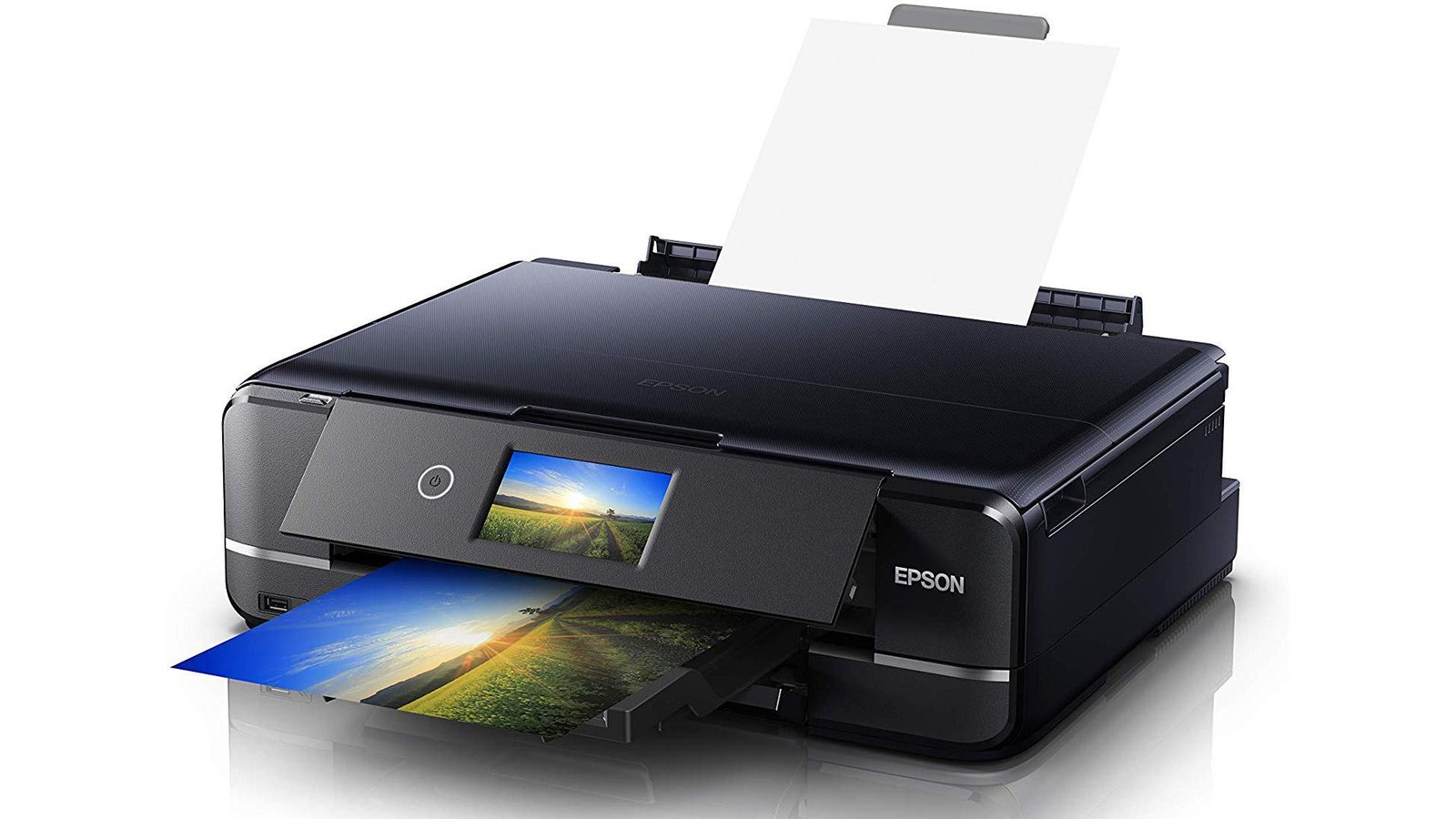
Buying a printer feels like navigating a minefield of deliberately confusing choices — and that’s because it is. If you’re asking what the best printer for home use in the UK is, the most important decision isn’t the brand or the model. It’s the type: inkjet vs laser, and within inkjet, cartridge vs refillable tank. Get that right and the rest is easy. Get it wrong and you’ll spend years feeding an ink-hungry monster.
I’ve owned (and cursed) printers across the spectrum, and helped countless family members choose. Here’s the straight-talking guide.
The decision that matters: inkjet vs laser vs tank
Refillable tank inkjets (EcoTank, Smart Tank) — best for most homes
Printers like Epson’s EcoTank and HP’s Smart Tank ditch cartridges for large refillable ink bottles. The printer costs more upfront (£180–£300), but ink costs collapse — a £30 bottle set prints thousands of pages, working out under 1p per page. If you print regularly (school homework, home office documents, photos), this is the most economical choice by a huge margin, and the one I recommend to most families.
Laser printers — best for text-heavy home offices
Monochrome laser printers (£100–£180, Brother dominates) are the workhorses: fast, sharp text, toner cartridges that last 1,000+ pages, and — crucially — toner doesn’t dry out. If you print documents but never photos, and your printer sometimes sits unused for weeks, laser wins. Inkjet nozzles clog when idle; laser toner doesn’t care.
Cartridge inkjets — only for very light users
The £40–£80 cheap printers are a trap for anyone who prints regularly — the cartridges cost more per page than the printer did (see why printers run out of ink so fast). They only make sense if you print a handful of pages a month and want the lowest upfront cost. Even then, do the maths first.
What is the best printer for home use in the UK? Top picks
Best for families: Epson EcoTank ET-2850 (~£220–£260)
The sweet spot of the EcoTank range: print, scan, copy, Wi-Fi, duplex printing, and ink bottles that last years for typical family use. Epson includes enough ink for ~3,600 black pages in the box. Homework, boarding passes, the occasional photo — it handles everything cheaply. The slightly pricier ET-3850 adds a bigger screen and faster printing if that’s worth £50 to you.
Best for home office documents: Brother HL-L2440DW (~£120–£150)
A no-nonsense monochrome laser: fast, reliable, duplex, Wi-Fi, and toner that lasts 1,200 pages (£40 for a replacement). Brother’s reputation for reliability is well-earned — these things run for a decade. If you never print colour, stop reading and buy this.
Best budget all-rounder: HP Smart Tank 5105 (~£180–£220)
HP’s tank alternative to the EcoTank, often discounted aggressively. Comparable running costs, decent print quality, and HP’s Smart app is genuinely good for phone printing. Watch out for HP’s Instant Ink subscription nudges — with a tank printer you don’t need them.
Best for photos: Canon PIXMA G550 (~£200–£250)
A six-ink tank system (adding grey and red to the standard CMYK) that produces genuinely lovely photo prints. If printing family photos at home matters to you, this is the one — pair it with proper photo paper and the results rival high-street printing.
Features worth paying for (and ones that aren’t)
- Duplex (double-sided) printing: worth it — halves paper use, standard on most models above £150.
- Wi-Fi + phone printing: essential in 2026. AirPrint (iPhone) and Mopria (Android) support means printing from phones without faff.
- Scanner/copier: all-in-ones cost barely more than print-only — get the all-in-one unless you have zero use for scanning.
- Don’t overpay for speed: home users don’t need 30ppm. Print quality and running costs matter; speed doesn’t.
- Ignore “free months of Instant Ink”: subscription ink services make sense for cartridge printers you’ll replace anyway; they’re irrelevant for tank and laser owners.
Keeping running costs down
Whichever printer you buy, a few habits save money: print in draft/greyscale for everyday documents (fine for homework and drafts); use print preview to avoid printing 47 pages when you wanted one; buy paper in bulk (500-sheet reams are far cheaper per sheet); and don’t let inkjets sit idle for months — print a test page monthly to prevent nozzle clogs, the most common (and most avoidable) inkjet problem.
Need to digitise paperwork too? Our guide to scanning documents with your phone for free covers the jobs where the scanner bed isn’t needed. And if your current printer is driving you mad with ink costs, read why printers run out of ink so fast — it might be time to switch types entirely.
Second-hand printers: worth considering?
Printers are among the safer second-hand tech buys — no batteries, no personal data (usually), and easy to test before paying. Business-grade laser printers (ex-commercial Brother, HP, Lexmark) flood the second-hand market when offices upgrade, often at £40–£80 for machines built to last a decade. The catch: check the page count (most lasers report lifetime pages in the menu — under 20,000 is barely broken in for a business machine rated for 100,000+), factor in a new toner cartridge (£30–£50), and collect in person so you can print a test page. For inkjets, second-hand is riskier — dried-out print heads from months of disuse are common — so stick to lasers on the used market. A £60 ex-office laser with a fresh toner cartridge will outlive and outperform any £60 new inkjet, and it’s the greenest choice too.
Timing your purchase saves money too: printers are heavily discounted during Black Friday, January sales, and back-to-school periods (August–September). The model you want at £250 in June is often £180 in November. And don’t be swayed by bundled “free” ink or extended warranties at checkout — the former is usually starter cartridges anyway, and the latter is rarely worth it on sub-£300 printers with standard one-year warranties.
The takeaway: most homes should buy a refillable tank inkjet (Epson EcoTank ET-2850) or, for text-only use, a Brother monochrome laser. Avoid cheap cartridge inkjets unless you barely print. The printer’s price is irrelevant — it’s the cost per page over five years that matters, and tanks win by a mile.