
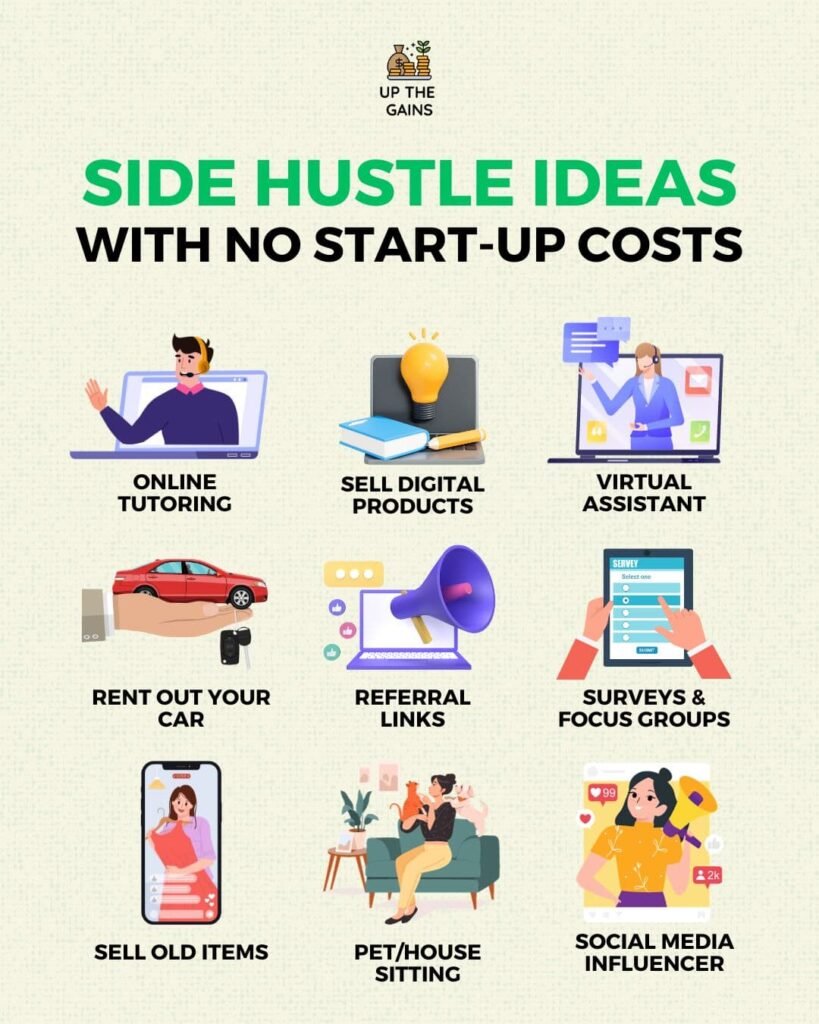
Whether it’s covering rising bills, building savings, or testing a business idea, extra income has real appeal. But what are the best side hustles to earn extra income in the UK? The internet is full of hype (“make £10k/month dropshipping!”) and short on honesty. This guide ranks realistic side hustles by earning potential, startup cost, and time required — with the honest numbers nobody else gives you.
The best side hustles in the UK, honestly ranked
1. Freelancing your existing skills (best overall)
Writing, design, programming, bookkeeping, marketing, admin — whatever you do at your day job is sellable. Earnings: £20–£75+/hour once established; £200–£1,000+/month part-time is realistic within months. Startup cost: near zero. Why it wins: you’re monetising skills you already have, with no learning curve and premium rates from day one. See our guides to starting freelancing and finding your first clients.
2. Selling handmade/digital products
Etsy, craft fairs, digital downloads. Earnings: £100–£1,500/month once established; digital products scale best (create once, sell forever). Startup cost: £50–£500. See whether Etsy is worth it and pricing for profit — pricing correctly is the difference between a hustle and an expensive hobby.
3. Reselling (flipping)
Buy undervalued items (charity shops, car boots, Facebook Marketplace, clearance sales) and resell on eBay, Vinted, or Depop. Earnings: £200–£1,000/month with knowledge and effort; specialists in categories like vintage clothing, Lego, or electronics do more. Startup cost: £50–£200 stock. Key: expertise in a niche beats general flipping — learn one category deeply.
4. Tutoring and coaching
Academic tutoring (£25–£60/hour), music lessons, fitness coaching, language teaching. Earnings: £300–£1,500/month part-time. Startup cost: minimal. Demand is strong and growing, especially online — geography no longer limits you.
5. Delivery and gig driving
Deliveroo, Uber Eats, Amazon Flex, Evri. Earnings: £10–£18/hour typically, highly variable by area and time. Startup cost: a bike, car, or van plus insurance. Honest note: flexible and immediate, but the hourly rate after costs (fuel, insurance, wear) is modest, and it’s physically demanding. Good for short-term cash; poor as a long-term plan.
6. Content creation (slow burn)
YouTube, blogging, newsletters, digital courses. Earnings: £0 for months, then potentially £500–£5,000+/month — but most never reach meaningful income. Startup cost: minimal. Honest note: treat as a long-term project alongside a reliable hustle, not as the plan itself. The survivorship bias in “creator economy” advice is extreme.
7. Pet sitting and dog walking
Rover, Tailster, or independent. Earnings: £25–£60/day per dog for sitting; £10–£15/walk. Startup cost: minimal (insurance recommended). Genuinely enjoyable if you like animals, and demand in cities is strong.
8. Renting assets
Spare room ( Airbnb or lodger — see the Rent-a-Room scheme: £7,500/year tax-free), driveway parking (JustPark), car (Hiyacar), equipment. Earnings: £100–£800/month depending on asset and location. Key: check insurance and mortgage/tenancy terms first.
Side hustles to approach with caution
- Dropshipping: the hype far exceeds the reality — saturated, thin margins, customer service nightmares. Possible but far harder than gurus claim. (If curious, see dropshipping legally.)
- Matched betting: genuinely profitable for a few months (£500–£1,000 possible), then bookmakers restrict you. A short-term boost, not a hustle.
- Surveys and microtasks: £2–£5/hour realistically. Only worthwhile if you’d otherwise be scrolling — never as a plan.
- Multi-level marketing: the maths shows ~99% of participants lose money. Just don’t.
- Crypto/day trading: speculation, not income. The consistent winners are the platforms taking fees.
Making it work alongside a job
Tax: register with HMRC as self-employed (see do you need to register) — the £1,000 trading allowance means tiny hustles may not need registration, but check. Time: be realistic — 5–10 hours/week is sustainable alongside full-time work; more leads to burnout. Employer rules: check your contract for restrictions on outside work. Track everything from day one (see DIY bookkeeping) — untracked hustles leak money.
Wondering what the numbers look like in practice? Our side hustle earnings guide breaks down realistic monthly figures by hustle type.
Choosing the right hustle for you
The “best” side hustle is personal. Run through this filter: What skills do you already have? Monetising existing skills (freelancing, tutoring, consulting) is always fastest — no learning curve, premium rates immediately. How much time do you really have? Be brutally honest: 5 hours/week sustains one hustle; 15 hours sustains an ambitious one. Overcommitting leads to burnout and abandonment. What do you enjoy? You’ll do it for months before meaningful income arrives — pick something you don’t hate at 9pm on a Tuesday. What assets do you own? Spare room, car, equipment, audience — assets generate income with less time input.
What does your area support? Dog walking thrives in cities; craft fairs need footfall; delivery driving needs density. And what’s your risk tolerance? Product businesses need upfront investment; service businesses need only time. Match the hustle to your constraints, not someone else’s success story — the guru selling a course made their money from the course, not the hustle.
Protecting yourself: the admin nobody mentions
Every side hustle needs the boring foundations: register with HMRC once you pass the £1,000 trading allowance (see our registration guide); separate your money — a dedicated account prevents the tax-time nightmare of untangling personal and hustle spending; track everything from day one with simple bookkeeping (see DIY bookkeeping); check your insurance — standard home contents may not cover business stock or equipment, and some hustles need public liability cover; and tell your mortgage lender/landlord if the hustle operates from home — most are fine, but some contracts have clauses. Thirty minutes of admin at the start saves thirty hours of pain later.
One last thought on mindset: the most successful side hustlers treat month one as an experiment, not a verdict. Pick the hustle that best fits your skills and constraints, commit to 90 days of genuine effort, track everything, then review honestly. Most people don’t fail at side hustles — they quit during the awkward learning phase, right before traction arrives. Give it the full 90 days; the data you collect is valuable even if you pivot afterwards.
The takeaway: the best side hustle monetises skills you already have (freelancing), sells something with real margins (handmade/digital/reselling), or rents assets you own. Avoid anything promising passive income with no effort — the reliable hustles all require real work, but they pay real money. Start with one, give it six months, and track everything.