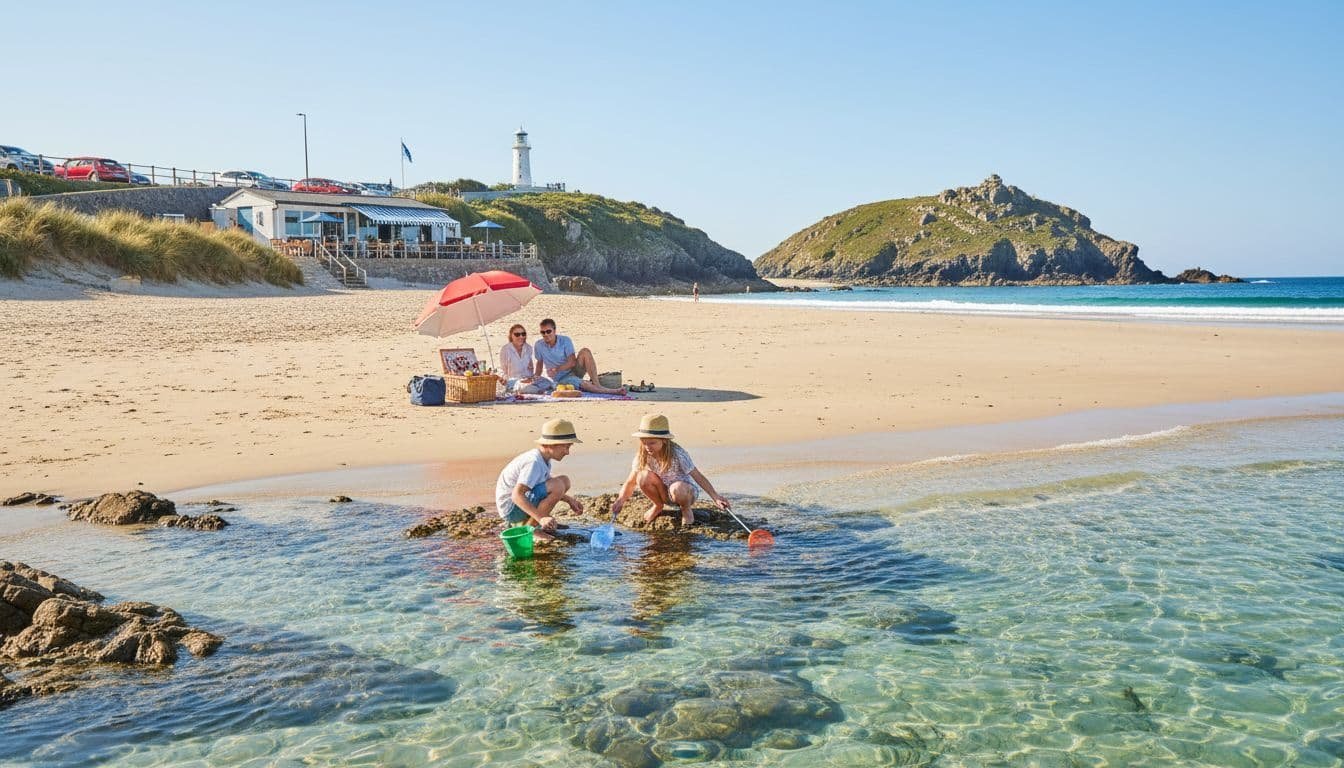
Picking the best family friendly beaches in cornwall means balancing what kids want (sand, rock pools, ice cream) with what parents want (lifeguards, parking, toilets, somewhere to sit). Cornwall has 300+ beaches, and they’re not remotely equal for families — I’ve been to the glorious and the grim, often on the same day thanks to the tide.
Here are the beaches that deliver for families — safe swimming, sand at all tides, facilities nearby — plus the practical knowledge that makes Cornish beach days work.
The best family-friendly beaches in Cornwall
Porthmeor, St Ives: the classic — golden sand, lifeguards in season, Tate St Ives and the town’s food scene steps away. Busy in August, glorious in June. Among the reliable all-rounders: Perranporth — 2 miles of flat golden sand at low tide, lifeguarded, dunes for exploring, and the Watering Hole pub right on the beach. Widemouth Bay, Bude: huge sandy beach, lifeguards, rock pools at the south end, and some of Cornwall’s most consistent beginner surf. Praa Sands: white sand, clear water, lifeguarded in summer, and a village with everything you need. For smaller kids: Porthcurno (stunning, turquoise water, but limited facilities — go prepared), Readymoney Cove in Fowey (sheltered, calm, perfect for toddlers, with the town behind), and the many sheltered coves of the Roseland Peninsula. Avoid with young kids: the north coast’s big surf beaches at high tide (little sand, strong currents) unless you’re confident — check the RNLI’s beach pages for lifeguard cover and flags. The beach safety advice is the authority on beach safety — read it before you go, especially with children.
Cornish beach days, done right
Tides rule everything: check tide times before choosing a beach — many Cornish beaches vanish at high tide (Harlyn, Porthcurnick) while others are best at low tide for rock pooling. Arrive before 10:30am in school holidays for parking; the popular beach car parks fill fast and the lanes are not built for turning around. Pack the windbreak — Cornwall’s beaches are breezy even in August, and the windbreak is the difference between a pleasant day and a sandblasted retreat. Facilities check: toilets, café, lifeguards (look for the red-and-yellow flags — swim between them), and phone signal for emergencies. Teach kids the basics: never turn your back on the sea, float to live if caught by a current, and call 999 for the coastguard in genuine emergencies. And the food: Cornish beach days run on pasties, ice cream and fish and chips eaten with sandy fingers — the local bakeries and chippies are part of the experience, not an afterthought. For the underrated seaside towns to base yourself in, the most underrated UK seaside towns to visit has the list; for the journey down, keeping kids entertained on long car journeys keeps the kids sane.
Family beach day checklist
- Perranporth: 2 miles of flat sand, lifeguards, dunes, beach pub. The reliable all-rounder.
- Widemouth Bay: huge beach, rock pools, beginner surf. Great for mixed-age families.
- Readymoney Cove, Fowey: sheltered, calm, toddler-perfect, with the town behind for food and toilets.
- Check tides first: many beaches vanish at high tide. Low tide doubles the sand and reveals rock pools.
- Arrive before 10:30 in holidays: car parks fill fast and Cornish lanes don’t forgive latecomers.
- Swim between the flags: red-and-yellow means lifeguarded. Teach kids “float to live” for currents.
- Pack the windbreak: breezy even in August. It’s the difference between pleasant and sandblasted.
Cornish beach mistakes
- Ignoring the tide times. Arriving at high tide to find your chosen beach underwater is a classic, avoidable disappointment.
- Swimming outside the flags. The currents at unlifeguarded spots catch confident swimmers — always swim patrolled water with kids.
- No windbreak or layers. Cornwall’s microclimate means sunshine and sideways hail in the same afternoon — pack for both.
Beyond the beach: Cornwall’s other half
The beaches are the headline, but Cornwall’s other half is worth the trip alone. The gardens: Trebah, Glendurgan (with its maze), and the Lost Gardens of Heligan — subtropical valleys that feel like another country. The art: Tate St Ives and the Barbara Hepworth Garden, the Newlyn school legacy, galleries in every fishing village. The food: Cornwall’s food scene is genuinely world-class now — Rick Stein’s empire in Padstow, the hidden gems in Porthleven, the pasty shops that locals argue about with religious fervour.
The walks: the South West Coast Path’s Cornish sections are the finest coastal walking in England — the Lizard’s wild cliffs, the St Agnes headland, the Roseland’s hidden coves. The history: Tintagel’s Arthurian drama, the engine houses of the mining coast (UNESCO-listed, hauntingly beautiful), the Isles of Scilly for the truly adventurous (day trips from Penzance in summer). A Cornwall holiday that’s only beaches is half a holiday — build in the gardens, the galleries, the coast path and the food, and you’ll understand why people return for decades. The beach days and the other days balance each other: sand in the morning, Heligan in the afternoon, the pub in the evening. That’s the full Cornwall, and it’s magnificent.
Frequently asked questions
What is the safest beach in Cornwall for kids?
Sheltered, lifeguarded beaches like Perranporth, Widemouth Bay and Readymoney Cove. Always swim between the red-and-yellow flags in season.
Do I need to book parking at Cornish beaches?
Most beach car parks are first-come, first-served — arrive before 10:30am in school holidays. Some popular spots now offer pre-booking; check ahead in August.
Are Cornish beaches good for surfing beginners?
Some of the best in the UK: Widemouth Bay, Perranporth and Praa Sands have gentle beach breaks and several surf schools. Book a lesson rather than winging it — two hours with an instructor teaches more than a week of struggling, and the schools know the safe spots and tides.
Cornwall’s family beaches are world-class when you pick right: lifeguarded, sandy at all tides, facilities nearby — Perranporth, Widemouth, Readymoney and Praa Sands lead the list. Check the tides, arrive early, swim between the flags, pack the windbreak. Do that and you’ll understand why families return to Cornwall for generations. For where to stay, the most underrated UK seaside towns to visit rates the seaside towns.