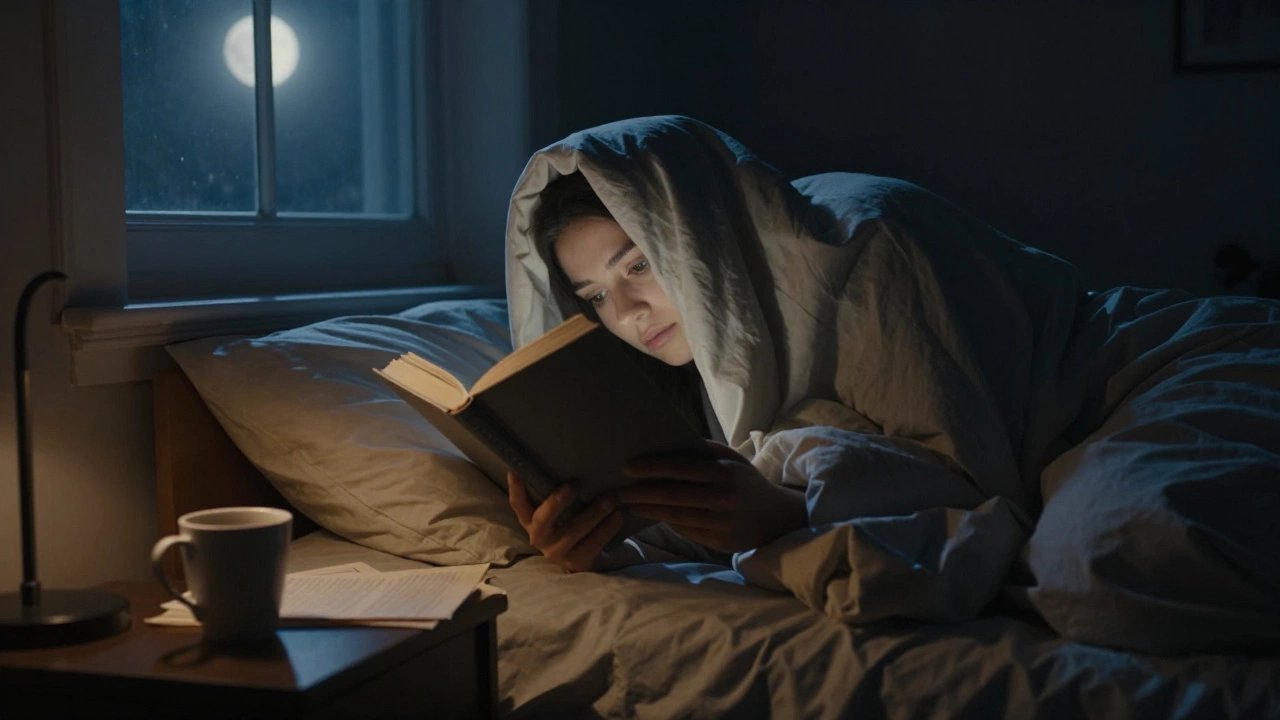
Reading before bed is one of the best sleep habits there is — the NHS and sleep scientists agree it beats scrolling. But not all books are equal at 11pm: the wrong choice leaves you wired at 1am (‘just one more chapter’), while the right one eases you toward sleep. Choosing good books to read before bed is a specific skill.
Here’s what makes a book bedtime-suitable, the genres that work, specific recommendations, and the page-turners to save for daylight.
What makes good books to read before bed
The ideal bedtime book has three qualities: engaging enough that you look forward to it, gentle enough that it doesn’t spike adrenaline, and structured in a way that lets you stop. Short chapters or episodic structure are the unsung hero — a 600-page novel in 5-page chapters is more bedtime-friendly than a 200-page thriller with cliffhangers every 20 pages.
The neuroscience is straightforward: reading relaxes you (lower heart rate, reduced muscle tension) provided the content isn’t activating your fight-or-flight. A murder described in graphic detail at midnight does the opposite of winding you down. The book should be a warm bath, not a cold shower.
- The ‘one more chapter’ test: if you consistently can’t stop, it’s a great book and a terrible bedtime book. Save it for weekends. Bedtime books should be easy to put down — that’s a feature, not a flaw.
The best genres for bedtime reading
Genres that work:
- Gentle non-fiction: nature writing (Robert Macfarlane, Nan Shepherd), popular science (Bill Bryson), history (The Rest Is History in book form). Interesting without urgency.
- Cozy mysteries: Agatha Christie, Richard Osman, Alexander McCall Smith — puzzles without gore. The stakes are low and the world is orderly.
- Literary comfort reads: P.G. Wodehouse (the ultimate bedtime author — nothing bad ever really happens), Alexander McCall Smith’s No. 1 Ladies’ Detective Agency, Maeve Binchy.
- Short stories: the perfect bedtime form — complete in 20 minutes, no cliffhanger. Saki, Roald Dahl’s adult stories, Alice Munro.
- Poetry: a few poems before sleep is an underrated ritual — calming, beautiful, finite.
Genres to avoid at night
Hard thrillers, horror, true crime, intense literary fiction about terrible things, work-related books, and anything that makes you angry (news-adjacent non-fiction, polemics). Save them for daylight — they’re not bad books, they’re bad bedtime books.
Specific recommendations
Bedtime-tested picks:
- The Rosie Project (Graeme Simsion): warm, funny, gentle — the platonic ideal of a bedtime novel.
- Anything by P.G. Wodehouse: start with Right Ho, Jeeves. Pure comic sunshine; medically incapable of causing stress.
- The Salt Path (Raynor Winn): beautiful, moving, calm — nature and resilience without melodrama.
- Norwegian Wood? No — Murakami’s gentler works (Colorless Tsukuru) over his stranger ones.
- The Thursday Murder Club (Richard Osman): cozy crime with heart — engaging but never distressing.
- Rebecca Solnit’s essays or Robert Macfarlane’s The Old Ways: thoughtful, beautiful, sleep-friendly non-fiction.
The routine matters as much as the book
Sleep scientists emphasise the ritual: same time, same place, 20–30 minutes, screens off. The book is the anchor for a wind-down routine that tells your brain sleep is coming. Physical books or e-ink readers (Kindle) beat phones and tablets — the NHS sleep guidance specifically recommends against screens before bed, and backlit screens suppress melatonin.
Practical setup: a decent reading light (warm colour temperature, not the overhead big light), a comfortable position, and the book within arm’s reach so there’s no faff. Some people find a warm drink helps (caffeine-free, obviously). The goal is making bedtime reading the path of least resistance — easier than reaching for the phone.
- E-readers: a Kindle Paperwhite (warm light, no notifications) is the ideal bedtime device — all the books, none of the doomscrolling temptation.
Getting back into the habit
If you’ve fallen out of reading entirely, bedtime is the perfect re-entry point — low pressure, built into the day, no ‘finding time’ required. Start with short, easy books (not the 800-page classic you’ve been meaning to read for a decade), aim for 15 minutes rather than an hour, and let the habit build.
Our guide to getting back into reading as an adult covers the wider re-entry strategy, and free audiobooks are the alternative for people who find reading itself tiring — listening in bed with a sleep timer counts as a wind-down too. The format matters less than the ritual.
Bedtime reading with a partner
Reading aloud to each other is an underrated couples’ ritual — one reads, both wind down. It sounds old-fashioned because it is, and it works beautifully: the reader gets the pleasure of performance, the listener gets stories without the effort, and it’s genuinely connecting in a way that parallel scrolling isn’t.
Good read-aloud picks: P.G. Wodehouse (the comic timing rewards reading aloud), Bill Bryson (the asides land better spoken), and short-story collections (natural stopping points). Take turns nightly or by chapter. It’s the cheapest date night there is, and couples who’ve tried it tend to become evangelists.
What the research says about reading and sleep
The evidence for bedtime reading is solid: studies show just six minutes of reading reduces stress by up to 68%, slowing heart rate and easing muscle tension more effectively than music or walking. The mechanism is straightforward — reading demands enough cognitive focus to displace anxious rumination, but not so much that it activates you.
The caveats from sleep researchers: it needs to be a book, not a screen (backlit devices suppress melatonin), and the content matters — engaging-calm beats thrilling. The NHS includes reading in its sleep hygiene advice for good reason. It’s one of the few health interventions that’s also a pleasure — which is why people actually stick with it.
The bottom line: Good books to read before bed are engaging but gentle, with short chapters, calming subject matter and no cliffhangers: Wodehouse, cozy mysteries, nature writing, short stories and gentle poetry. Avoid thrillers and horror at night, build a 20-minute screen-free ritual, and let bedtime be your gentle way back into a lifelong reading habit.