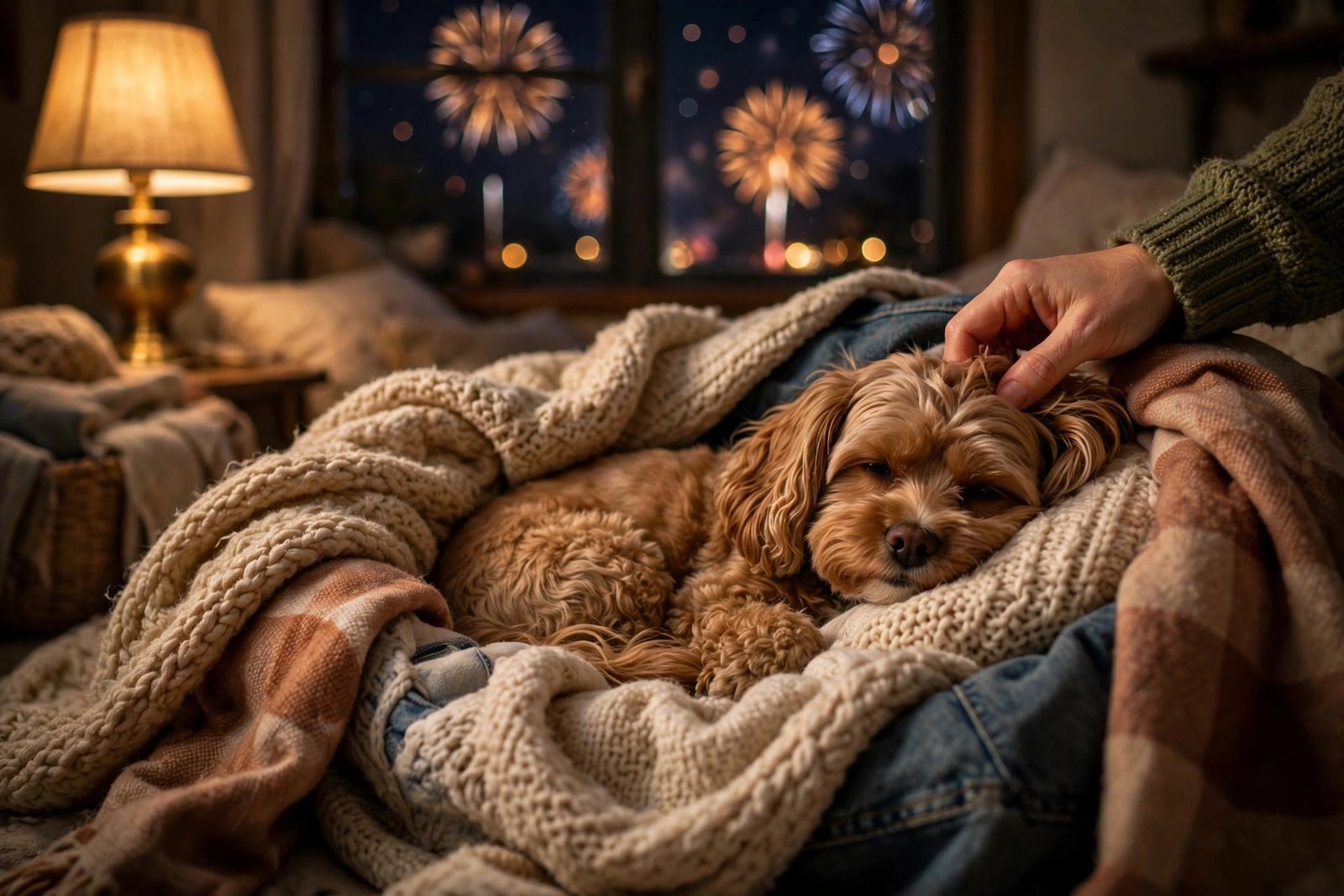
Every November, as the first fireworks crack across London’s sky, thousands of dogs disappear under sofas, cats vanish behind wardrobes, and rabbits thump in terror. Fireworks anxiety isn’t “just being scared” — for many pets it’s a genuine phobic response, with panting, drooling, destructive panic, and in severe cases, injury from escape attempts. But here’s the hopeful truth: fireworks anxiety is one of the most manageable pet behaviour problems there is, because it’s predictable. You know exactly when it’s coming.
This guide covers what to do before, during, and after fireworks season — plus the longer-term work that can transform a terrified pet.
Understanding What’s Happening: It’s Not Disobedience
Fireworks trigger a perfect storm of fear inputs: sudden explosive noise (unpredictable timing and volume), bright flashes, vibrations through floors, and the smell of gunpowder. Dogs hear frequencies we can’t and at volumes that physically hurt — a firework at 150 decibels is painful, not just startling, to canine ears. Cats, with even more sensitive hearing, often freeze or flee rather than panic visibly — a cat hiding silently for six hours is just as distressed as a dog pacing and panting.
Crucially: comforting a scared pet does not “reward” fear. This outdated myth has caused enormous unnecessary suffering. Fear is an emotion, not a behaviour — you cannot reinforce an emotion with kindness. If your dog seeks you out trembling, hold them. The RSPCA’s guidance on fear in pets is explicit: comfort and reassurance help.
Before Fireworks Season: The Preparation Phase
Create the safe den (do this now, not on the night)
Every anxious pet needs a den — a small, enclosed, familiar-feeling space they choose themselves. Set it up weeks before fireworks season: a crate covered with blankets (door open, never locked for an anxious animal), a cupboard with bedding, or a corner behind the sofa fortified with cushions. Feed treats and meals there so it becomes associated with good things. On the night, the den should be ready — not hastily constructed while the first rockets are already going off.
Desensitisation: the long game that actually works
The gold-standard treatment is gradual desensitisation with counter-conditioning: playing firework sounds at barely-audible volume while feeding high-value treats, increasing volume over weeks only while the pet stays relaxed. Done properly over 2–3 months, it can transform severe phobias. Start in late summer for November. Free firework-sound tracks are available from the RSPCA and Dogs Trust websites. The rule: if the pet shows any anxiety, you’ve gone too loud — drop back. Patience is the entire method.
Talk to your vet early
For severe cases, don’t wait until November. Vets can prescribe situational anti-anxiety medication (trazodone, sileo gel for dogs) that takes the edge off without sedation — but these need trial dosing before the event, and appointments book up. Pheromone diffusers (Adaptil for dogs, Feliway for cats — £20–£30) help mild cases; plug them in 1–2 weeks before expected fireworks. Calming supplements and wraps (ThunderShirt) help some animals modestly — worth trying, but not substitutes for desensitisation or medication in severe cases.
Microchip, collar, and secure the house
More pets go missing on fireworks night than any other — bolted through unlatched doors, over fences they’d never normally attempt. Check microchip details are current (it’s a legal requirement for dogs), ensure collars/tags are on, and walk through the house identifying escape routes: cat flaps locked, windows secured, garden gates bolted. Keeping the home calm matters too — see keeping a house tidy with kids and pets for routine-based calm, and make sure indoor plants are safe for cats and dogs if pets retreat among them.
On the Night: The Survival Protocol
- Walk dogs early: Long walk and toilet break well before dusk. A tired dog copes better, and you avoid being caught out during a display.
- Bring everyone in: Cats in, rabbits’ hutches covered or moved into sheds/garages, small pets’ cages draped. Outdoor pets are the most vulnerable and most forgotten.
- Close everything: Windows, curtains, blinds, cat flaps. Curtains block the flashes; closed windows muffle sound significantly.
- Mask the noise: TV, radio, or music at moderate volume — not to drown out fireworks (impossible) but to break the sudden silence-to-bang contrast that’s most frightening. Classical music or talk radio works well.
- Act normal: Your anxiety feeds theirs. Be calm, cheerful, and boring. Play with them if they’ll play; cuddle if they seek it; let them hide if they need to — never drag a pet out of its den.
- Stay home if possible: Anxious pets do markedly better with their person present. If you must go out, a familiar pet-sitter is second best; being alone is worst.
London-Specific: The Fireworks Calendar Problem
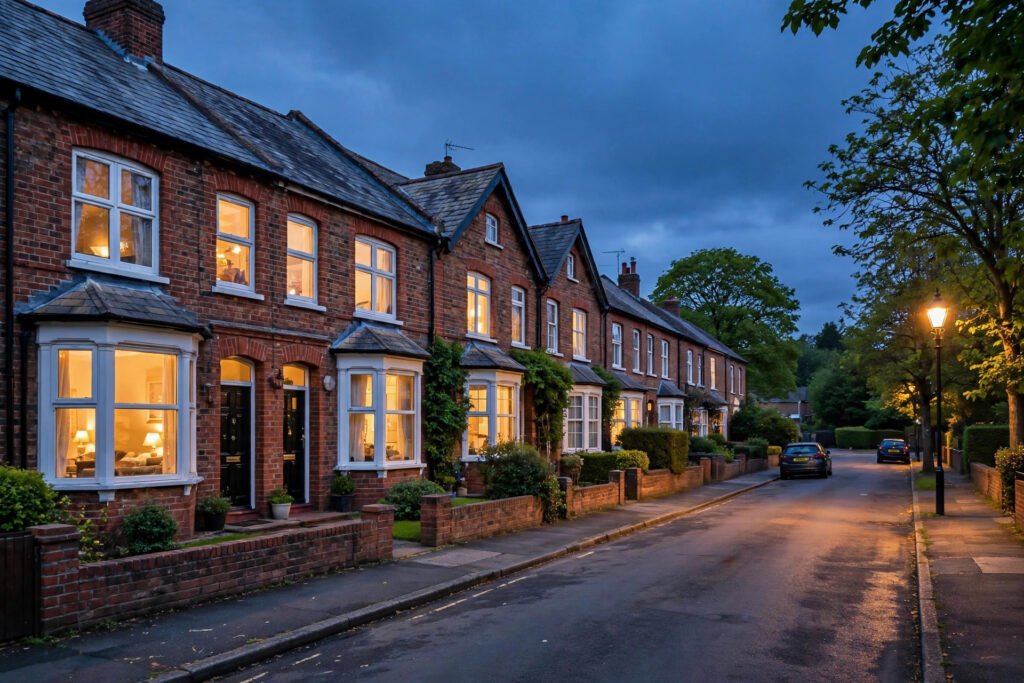
London doesn’t do fireworks on one night — displays sprawl from late October (Diwali) through Bonfire Night, New Year’s Eve, and random weekends. This unpredictability is actually harder on pets than one big night. Tactics:
- Know the calendar: Check your borough’s website for licensed displays — most London boroughs list major events. Local Facebook/Nextdoor groups often flag unofficial displays.
- The desensitisation advantage: London’s long season is precisely why the summer desensitisation programme matters more here than anywhere.
- Consider the quiet nights: Midweek in early December is usually calm — plan the vet-behaviourist work and recovery then.
- Flat living: Upper-floor flats actually fare better (distance from street-level bangs); ground-floor flats with gardens need the most preparation. Warn neighbours if your pet is severely affected — most people are considerate when asked.
After the Season: Don’t Waste the Quiet Months
The biggest mistake owners make: relief in January, forgetting by August, panic in October. Use the quiet months for the desensitisation programme properly — it’s the only intervention that reduces the phobia rather than managing it. For severe cases, ask your vet for referral to a certified clinical animal behaviourist (look for CCAB or ABTC registration from an accredited behaviourist). Beware unqualified “behaviourists” with no credentials — the field is unregulated, and bad advice can worsen phobias.
The Dogs Trust publishes an excellent free fireworks-preparation guide, and the PDSA’s pet health advice covers anxiety signs many owners miss.
Conclusion
Helping your pet cope with fireworks anxiety in London comes down to three phases: prepare (safe den from late summer, desensitisation programme, vet consultation for severe cases, secure microchips and escape routes), manage the night (early walks, everyone indoors, curtains closed, background noise, calm companionship, never punish fear), and use the quiet months for the desensitisation work that actually shrinks the phobia. Fireworks season is predictable — which means suffering through it unprepared is optional. Start now, and next November will be unrecognisably calmer.
Frequently Asked Questions
Should I comfort my dog during fireworks?
Yes — comforting a frightened pet does not reinforce fear (fear is an emotion, not a behaviour). Calm reassurance, cuddles if sought, and letting them stay in their safe den all help. Never punish fear responses.
What medication helps pets with fireworks anxiety?
Vets can prescribe situational anti-anxiety medication (e.g. trazodone or sileo gel for dogs) for severe cases — these need trial dosing before fireworks night, so book a vet appointment in early autumn. Pheromone diffusers (Adaptil/Feliway) help mild anxiety.
How do I desensitise my pet to fireworks?
Play firework sounds at barely-audible volume while feeding high-value treats, increasing volume gradually over 8–12 weeks only while the pet stays relaxed. Start in late summer for November. Free sound tracks are available from the RSPCA and Dogs Trust.
Why is my cat hiding during fireworks?
Cats’ hearing is even more sensitive than dogs’ — hiding is their fear response, just as valid as a dog’s visible panic. Provide safe hiding spots, keep them indoors with cat flaps locked, and don’t drag them out.
When is fireworks season in London?
It sprawls from late October (Diwali) through Bonfire Night (5 November), New Year’s Eve, and sporadic weekends — much longer than one night. Check your borough’s website for licensed displays and local community groups for unofficial ones.