How long should you rest meat after roasting? It’s the step everyone wants to skip — the food’s ready, people are hungry, the gravy’s waiting — and it’s the step that makes the biggest difference between juicy and disappointing. Here’s the science, the timings, and how to rest properly.
How Long to Rest Meat After Roasting: Why Resting Matters
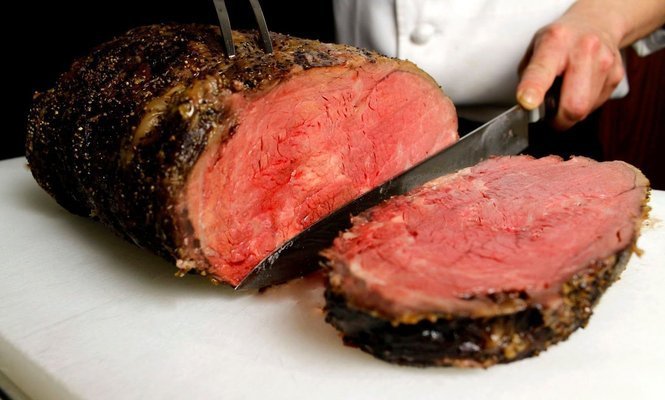
When meat roasts, the heat drives juices toward the centre and the muscle fibres tense up. Cut immediately and those juices flood the board — flavour lost, meat dry. Resting lets the fibres relax and the juices redistribute evenly through the meat. The result: every slice juicy, not just the middle. It’s not a minor refinement — it’s the difference between a good roast and a great one. Skip it and you’ve wasted the careful cooking.
Resting times by meat
- Large beef/lamb joints: 20-30 minutes (the bigger the joint, the longer the rest).
- Whole chicken: 15-20 minutes.
- Turkey: 30-45 minutes (large birds need it — and it frees the oven for roasties).
- Pork joints: 15-20 minutes.
- Steaks: 5 minutes (roughly half the cooking time is the rule of thumb).
- Small cuts (chops, breasts): 5 minutes.
General rule: rest for roughly one-third to half the cooking time for large joints, minimum 15 minutes. The meat stays hot — tented loosely in foil in a warm spot, a rested joint loses only a few degrees.
How to rest properly
Transfer the meat to a warm platter (not the roasting tin — it keeps cooking), tent loosely with foil (tight wrapping steams the crust soft — you want the crackling to stay crisp), and put it somewhere warm but not hot. Don’t rest in a low oven — that’s just slow cooking. Do use the resting time productively: make the gravy from the tin juices (how to make gravy from scratch), finish the veg, warm the plates.
The carryover bonus
Resting also gives you carryover cooking — the internal temperature rises 3-5°C after leaving the oven. Pull the joint out below your target temperature and let resting finish the job. This is why thermometer cooking (see perfect Sunday roast beef) and resting go together — they’re two halves of the same technique.
The science in plain English
Two things happen during resting. First, temperature equalisation: the outside of the joint is much hotter than the centre when it leaves the oven; resting lets heat diffuse inward (carryover cooking) while the exterior cools slightly — the result is more even doneness edge to centre. Second, juice redistribution: heat contracts muscle fibres, squeezing juices toward the centre; as the meat cools slightly, fibres relax and reabsorb the juices. Cut too soon and the juices — under pressure in the centre — flood out. It’s simple physics, and it’s why resting is non-negotiable.
Resting and food safety
A common worry: does resting let meat cool into the danger zone? No — a large joint tented in foil stays well above 60°C for 30-45 minutes (the danger zone is 8-60°C, and it takes hours to become a risk). The Food Standards Agency’s guidance on cooking meat thoroughly still applies — resting doesn’t replace proper cooking temperatures, it completes them. Rest on a warm platter, tent loosely, and serve within the hour. Perfectly safe, perfectly juicy.
Quick answers
Does resting really make a difference?
Enormous — it’s the single biggest factor in juicy meat after correct cooking temperature. Cut a steak immediately vs after 5 minutes’ rest and compare the juice on the board: the unrested steak loses twice as much. It’s the easiest upgrade in cooking.
Can you rest meat too long?
Yes — beyond 45-60 minutes a joint cools too much and the texture suffers. For very large joints (turkey), up to an hour is fine tented well. The sweet spot is 20-40 minutes for most roasts. Time it so resting ends when everything else is ready.
Should I rest chicken pieces and steaks too?
Yes — 5 minutes for steaks and chops (about half the cooking time), 5-10 for chicken breasts. Even small cuts benefit. It’s a habit: everything that comes off heat rests before serving, no exceptions.
Resting in professional kitchens
Restaurants rest everything — it’s why your steak arrives juicy despite the chaos of service. The professional method: rest on a warm (not hot) surface, tented loosely, with the resting juices poured back over or into the sauce. Some chefs rest twice — a brief rest after searing, then the main rest after roasting. The home lesson: build resting into your timing from the start. Plan the meal backwards from serving time, with resting as a fixed block, not an afterthought squeezed in while people wait.
What not to do while resting
Don’t wrap tightly in foil (steams the crust soft — the crackling you worked for goes limp). Don’t rest in the roasting tin (residual heat keeps cooking the bottom). Don’t rest in a cold draughty spot (it cools too fast). Don’t slice to “check” (every cut releases juices — trust the thermometer). And don’t skip it because people are hungry — serve the starters, pour the wine, make the gravy. The 20 minutes will pass deliciously.
More questions
Does resting apply to slow-cooked meat?
Less critically — slow-cooked meat in liquid doesn’t lose juices the same way (it’s surrounded by braising liquid). A brief 10-minute rest still helps it settle for serving, but the dramatic juice-loss of roasted joints doesn’t apply. The gravy’s already there.
Why does meat continue cooking while resting?
Carryover cooking: the exterior is much hotter than the interior when it leaves the oven, and heat keeps diffusing inward. Large joints rise 3-5°C during resting. Account for it — pull the meat below target temperature and let resting finish the job.
Should I rest meat covered or uncovered?
Tent loosely with foil — covered enough to stay warm, open enough that steam escapes (tight wrapping steams the crust soft). For crackling and crisp skin, err on the loose side. Never rest in a sealed container.
Can I rest meat in a low oven?
No — that’s just slow cooking, not resting. Resting needs the heat source off so temperatures equalise downward. A warm (not hot) spot in the kitchen, tented in foil, is correct. The low oven keeps cooking the exterior while you wait.
For more detail, see FSA guidance on cooking meat safely.
Rest it, every time
How long should you rest meat after roasting? 20-30 minutes for large joints, 15-20 for chicken and pork, 30-45 for turkey. Tent loosely, keep warm, use the time for gravy. It’s the easiest upgrade in roasting — free, simple, and transformative. The hardest part is resisting hungry people; the reward is worth the wait.