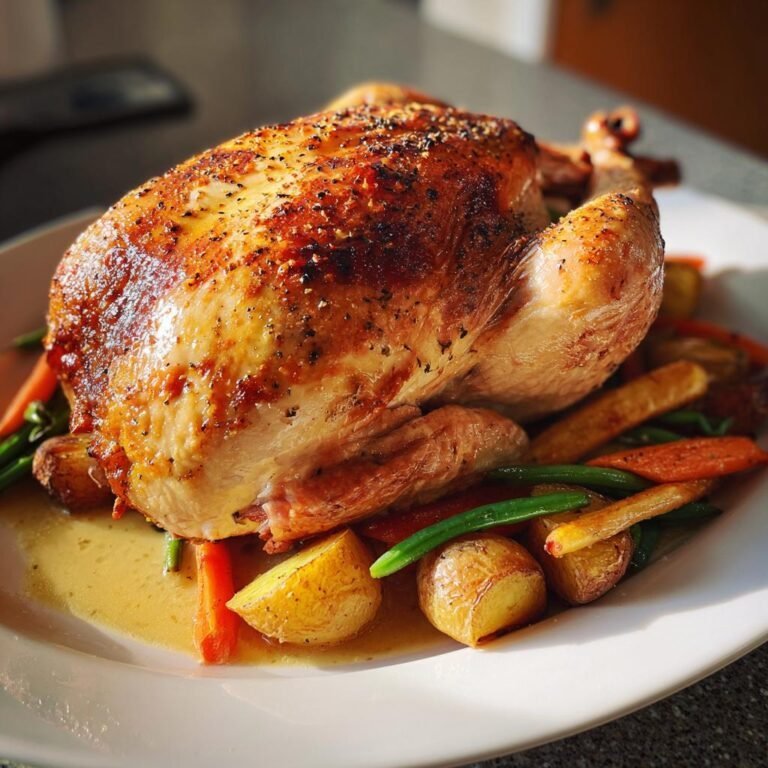
That leftover roast chicken is sitting in the fridge, and you’re eyeing it on day three wondering if it’s still fine. It’s one of the most common food-safety questions in UK kitchens: how long can you keep cooked chicken in the fridge before it becomes a risk? The answer is specific, and it’s shorter than most people hope.
Here’s the official guidance, why chicken gets special treatment, how to store it to get the full safe window, and the signs that tell you it’s turned — plus what to do when you can’t use it in time.
How long can you keep cooked chicken in the fridge: the rule
Cooked chicken keeps for 3–4 days in the fridge at 5°C or below. That’s the guidance from the UK Food Standards Agency, and it’s the number to build your week around. Day 1 is the day you cooked it — so Sunday’s roast is good through Wednesday, but Thursday is past it.
This isn’t a suggestion; it’s based on how quickly Listeria and other bacteria can grow even at fridge temperatures. Your fridge slows bacteria down, it doesn’t stop them. And the clock starts at cooking, not at refrigerating — chicken that sat out for hours before being chilled has already used up part of its safe window. When in doubt, the freezer is always the safer option: see our guide to freezing leftovers safely.
- Fridge temperature matters: many UK fridges run warmer than the 5°C target — check yours with a fridge thermometer (£3). At 8°C, bacteria grow significantly faster and the 3–4 day rule gets shaky.
Why chicken gets stricter rules than other foods
Chicken is the highest-risk common meat because raw poultry so often carries Campylobacter and Salmonella. Thorough cooking kills them, but cooked chicken is then a perfect growth medium — moist, protein-rich, neutral pH — for anything that lands on it afterwards, whether from hands, utensils or the fridge environment.
Compare with hard cheese or jam, which are hostile to bacteria (low moisture, high acid or salt), and you see why the rules differ. It’s not that chicken is dirty; it’s that cooked chicken is an ideal bacterial buffet. The same 3–4 day rule applies to other cooked meats, but chicken is the one people most often push past the limit — usually because there’s ‘so much left’ after a roast.
- Stuffing and gravy: follow the same 3–4 day rule, and reheat gravy to a rolling boil. Stock made from the carcass should be refrigerated and used within 3–4 days or frozen — it’s even more perishable than the meat.
Storing it right: getting the full 4 days
How you store cooked chicken determines whether you get the full safe window:
- Cool quickly: get it into the fridge within 90 minutes of cooking. Strip meat off the carcass rather than refrigerating the whole bird — a whole roast cools slowly, spending too long in the danger zone.
- Airtight containers: shallow, sealed containers, not the roasting tin covered in foil. Less air exposure, faster cooling, no drips contaminating other food.
- Fridge placement: store on a middle or top shelf, never below raw meat (drips). Keep it away from the door, where temperatures fluctuate most.
- Don’t mix: keep cooked chicken separate from raw chicken, obviously, but also use clean utensils — the knife that carved the raw-adjacent bits shouldn’t portion the cooked meat.
Signs your cooked chicken has turned
Your senses are a backup, not the primary test — dangerous bacteria don’t always announce themselves. But these signs mean bin it immediately:
- Smell: fresh cooked chicken smells of nothing much. Sour, sulphurous or ‘off’ smells mean it’s done — don’t taste-test to confirm.
- Texture: slimy or sticky film on the surface is bacterial growth. Rinsing doesn’t fix it.
- Colour: grey or green tinges, especially on the surface. Some colour change from air exposure is normal; green is not.
- Mould: any mould at all — the whole portion goes, not just the mouldy bit.
- Important: the absence of these signs doesn’t prove safety past day 4. ‘It looks fine’ is not a food-safety strategy. The NHS food safety pages and the Food Standards Agency say the same: when in doubt, throw it out.
Reheating: the once-only rule
Cooked chicken should only be reheated once, and it must be steaming hot all the way through — 75°C at the centre. Microwaves heat unevenly, so stir or rotate and check the middle isn’t still lukewarm. Soups and stews should come to a rolling boil.
Each reheat-cool cycle gives bacteria another window, which is why twice-reheated chicken is a no. Plan portions so each serving is reheated once: if you batch-cook on Sunday (see our meal prep chicken plan), portion into individual containers so you’re only reheating what you’ll eat. And never reheat chicken in a slow cooker — it warms too slowly, spending hours in the danger zone.
When you can’t use it in time: freeze on day one
The pro move is deciding on day one, not day four. If you know you won’t eat the leftovers within 3 days, freeze them immediately — frozen cooked chicken keeps 3–4 months at full quality. Freeze in portion sizes, in sauce or stock where possible (it protects against drying), with the air pressed out.
Defrost overnight in the fridge and use within 24 hours. This single habit — freeze early rather than hoping you’ll use it — eliminates nearly all chicken-waste and all chicken-anxiety. The chicken you freeze on Sunday is a gift to Thursday-you; the chicken you leave until Thursday is a science experiment.
Cooked chicken and food poisoning: the real risks
The bacteria that matter with chicken are Campylobacter and Salmonella (killed by proper cooking, but a risk via cross-contamination) and Listeria and Clostridium perfringens (which can grow on cooked chicken in the fridge). Perfringens is the classic ‘leftover’ bug — it thrives in food cooled too slowly, which is why the 90-minute cooling rule exists.
Symptoms typically hit 6–72 hours after eating dodgy chicken: nausea, vomiting, diarrhoea, stomach cramps. Most healthy adults recover in a few days, but for pregnant women, the elderly and the immunocompromised, food poisoning can be serious — which is why the official guidance errs cautious. The ” + E(“NHS advice on food poisoning”, “https://www.nhs.uk”) + ” covers when to seek medical help. None of this is meant to scare you — millions of portions of leftover chicken are eaten safely every week — but it’s why the 3–4 day rule and the cooling discipline are worth respecting rather than stretching.
The bottom line: Cooked chicken in the fridge is safe for 3–4 days at 5°C or below, stored airtight and cooled quickly. Trust the date, not your nose — bin it past day 4, reheat only once until steaming, and freeze on day one whenever you won’t use it in time.