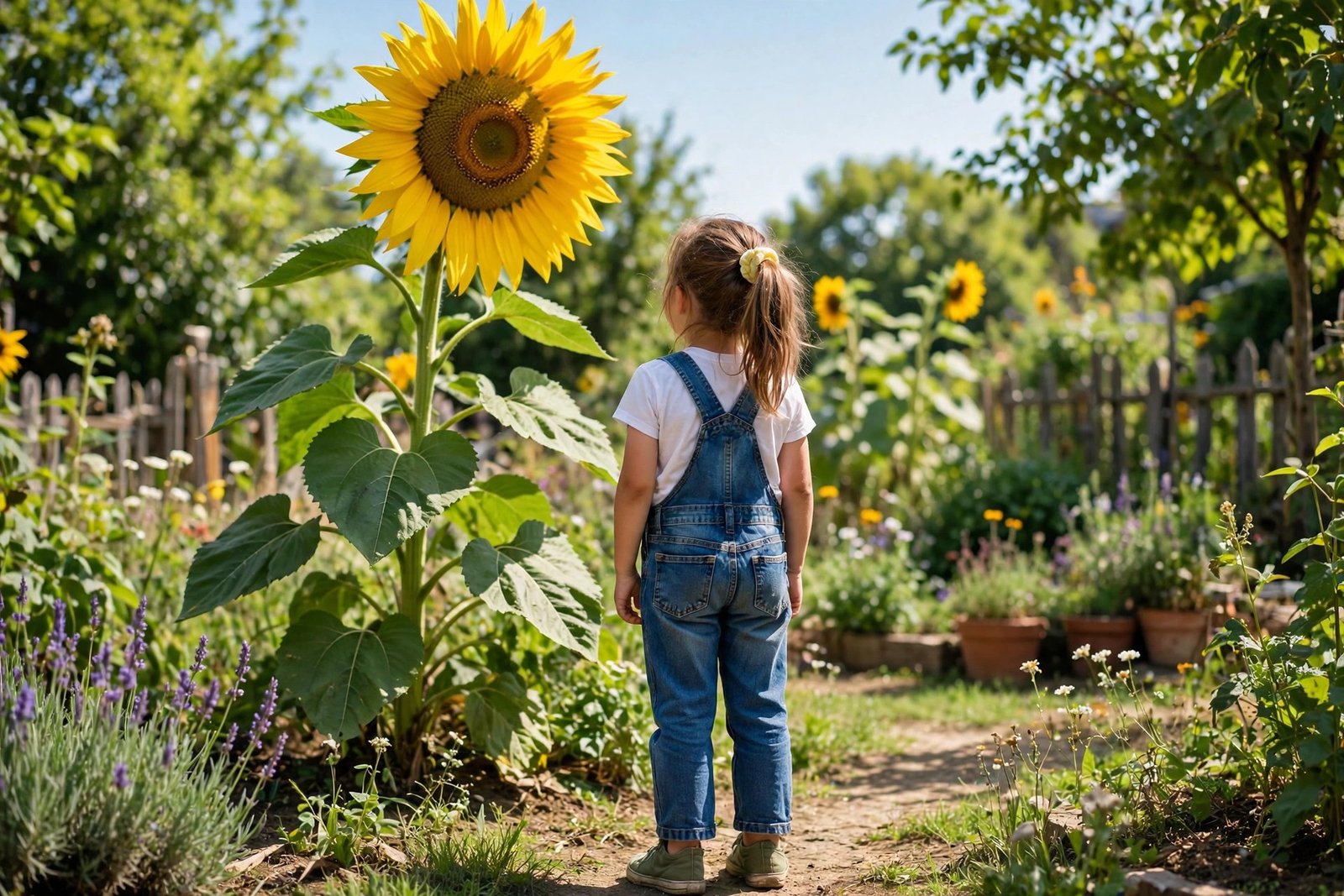
There’s a special magic in watching a child’s face when a sunflower they’ve grown themselves towers over their head. Sunflowers are the perfect first gardening project for kids: the seeds are big enough for small fingers, they germinate fast enough for short attention spans, they grow visibly daily at peak season, and the payoff — a two-metre flower with a dinner-plate face — is pure wonder. In 2026, with more families gardening together than ever, here’s how to grow sunflowers with kids for maximum fun and minimum frustration.
Why Sunflowers Are the Ultimate Kids’ Plant
- Big seeds, easy handling: No fiddly tiny seeds — even toddlers can push a sunflower seed into soil.
- Fast results: Germination in 7–10 days, visible daily growth in summer. Kids’ patience is measured in days, not months — sunflowers respect that.
- Dramatic payoff: A 2–3 metre plant with a 30cm flower head is objectively spectacular at any age.
- Forgiving: Sunflowers tolerate imperfect soil, irregular watering, and enthusiastic over-handling better than almost any other plant.
- Educational gold: Measuring growth (maths!), watching bees visit (nature!), harvesting seeds (food cycles!), saving seeds for next year (the full circle).
Choosing Varieties: Not All Sunflowers Are Equal
For the wow factor (tallest sunflower competition)
- ‘Russian Giant’: The classic — 3m+, huge heads, the school-competition standard.
- ‘Mongolian Giant’: Even bigger heads (up to 45cm) on slightly shorter plants.
- ‘Titan’: Reliable 3m+ performer, great for racing siblings.
For small gardens and pots
- ‘Teddy Bear’: Fluffy double flowers, only 60–90cm — perfect for containers and small children (face-height flowers!).
- ‘Sunspot’: Dwarf, 60cm, big flower for its size — ideal for balconies.
- ‘Pacino’: Compact, branching, flowers for months.
For colour and interest
- ‘Velvet Queen’ / ‘Chianti’: Deep red-bronze blooms — kids love the “chocolate sunflowers.”
- ‘Lemon Queen’: Pale lemon, multi-branching, bee magnet.
Let each child choose their own variety — ownership of the choice doubles the commitment to the growing.
The Growing Plan: Step by Step With Kids
When to sow (the timing that matters)
Sow mid-April to late May in the UK — after frost risk, when soil is warming. Sowing too early (March, indoors, on a hopeful windowsill) produces leggy seedlings that flop; patience until late April is the single biggest success factor. For an extended season, sow a few seeds every two weeks through May (“succession sowing” — a great vocabulary word for older kids).
How to sow (make it an event)
- Pots first: Fill 9cm pots with multipurpose compost. Let the child push one seed 2cm deep per pot (“one knuckle deep” — they love the measurement).
- Water gently: A small watering can with a rose — their job, their responsibility.
- Warm spot: Windowsill or greenhouse until germination (7–10 days). The daily “is it up yet?” check is half the fun.
- Plant out: When seedlings are 15–20cm and frosts are past (late May), plant into the sunniest spot available, 45cm apart for giants (closer for dwarfs).
- Support: Tall varieties need staking — a bamboo cane and soft string. Let the child do the tying (loose figure-eight, not strangling).
The care routine (kid-manageable)
- Watering: Their daily job. Sunflowers are thirsty in dry spells — a full can per plant in hot weather. Mulch around the base to retain moisture.
- Measuring: Weekly height measurements on a chart or directly on the cane — the growth spurt in July (up to 10cm a day in heat!) is genuinely thrilling to track.
- Feeding: A liquid tomato feed every two weeks once buds form — “plant food” is a concept kids grasp instantly.
- Watching wildlife: Count bee visits in five minutes; spot the goldfinches that arrive when seeds ripen. The sunflower becomes a nature station.
Troubleshooting: When Things Go Wrong (They Will)
- Slugs ate the seedlings: The classic. Protect young plants with copper tape, wool pellets, or a cloche (a cut-off plastic bottle) until stems toughen. Sow a few spare seeds as insurance.
- Floppy seedlings: Sown too early/kept too warm indoors. Start again in May — sunflowers catch up fast.
- No flowers, just leaves: Too much shade or too much nitrogen feed. Sunflowers need 6+ hours of sun; ease off the fertiliser.
- Drooping head: Usually thirst — deep water. If the head is heavy with seeds, that’s success, not a problem (stake it).
- Grey mould on the head: Wet autumn weather. Harvest seeds promptly when the back of the head yellows.
Frame failures as science, not disaster: “Why do you think that one didn’t make it?” is a better lesson than any perfect result. Gardeners — like scientists — learn most from what goes wrong.
The Harvest: Seeds, Snacks, and Next Year
- When to harvest: When the back of the flower head turns yellow-brown and the head droops. Cut with 30cm of stem, hang upside down in a dry shed/garage for 2 weeks.
- Eating: Rub out the seeds, roast with a little oil and salt (180°C, 15 minutes) — home-grown snacks the child grew themselves. (Striped grey seeds are the tastiest; solid black are fine too.)
- Feeding birds: Hang whole dried heads out in winter — goldfinches and tits will strip them in days. Free birdwatching.
- Saving seeds: Keep the plumpest seeds in a paper envelope, labelled with variety and year, for next spring. The full circle — from seed to seed — is the deepest lesson gardening teaches.
Making It a Tradition
The families who garden together for years usually started with one sunflower summer. Ideas to extend it: an annual tallest sunflower competition (family, street, or school — many UK primary schools run them), a sunflower diary with drawings and measurements, pressing a petal each year, or expanding to a windowsill herb garden for winter growing when sunflowers sleep. The RHS Grow Your Own pages have child-friendly growing guides for whatever they want to try next. For rainy days between sowings, rainy-day fun for toddlers keeps little gardeners happy indoors. The Woodland Trust’s nature activities offer more outdoor inspiration.
Conclusion
Growing sunflowers with kids in 2026 is one of the best ideas in family gardening: near-guaranteed success, daily visible progress, genuine science and maths woven in, wildlife on the doorstep, and a harvest they can eat. Sow late April to May, give them sun and water, measure everything, forgive the slugs, and save seeds for next year. The sunflower itself lasts a season; the memory of growing something taller than Daddy lasts considerably longer.
Frequently Asked Questions
When should I plant sunflower seeds with kids in the UK?
Sow mid-April to late May, after frost risk — directly into pots first, planting out when seedlings reach 15–20cm. Sowing too early produces weak, leggy seedlings; patience is the key variable.
What is the best sunflower variety for children?
‘Russian Giant’ or ‘Titan’ for tallest-sunflower competitions (3m+); ‘Teddy Bear’ (60–90cm, fluffy) for pots and small children; ‘Velvet Queen’ for exciting colours. Let each child choose their own.
How long do sunflowers take to grow?
Germination in 7–10 days, flowers in 70–100 days from sowing (typically August–September from a May sowing). Peak growth can hit 10cm a day in warm July weather — thrilling for young measurers.
Do sunflowers need full sun?
Yes — minimum 6 hours of direct sun daily for strong growth and flowers. They’re also thirsty: deep watering in dry spells and mulch around the base. Tall varieties need staking against wind.
Can you eat sunflower seeds you grow at home?
Yes — harvest when the head’s back turns yellow-brown, dry for two weeks, rub out seeds, and roast with oil and salt. Save the plumpest for sowing next year. (Leave some heads for winter birds too.)