You’re standing in the aquatic shop, staring at tanks from dinky 20-litre cubes to furniture-sized 200-litre monsters, and the assistant is telling you “bigger is better” while pointing at the most expensive one. Are they right, or are they upselling? For beginners in London in 2026 — where flats are small, budgets are real, and fish shops range from excellent to appalling — choosing the right fish tank size is the single most important decision you’ll make. Get it wrong and you’re fighting water chemistry daily; get it right and fishkeeping is the relaxing hobby it’s supposed to be.
So: start small now, or wait and go bigger later? Here’s the definitive answer.
The Counterintuitive Truth: Bigger Tanks Are Easier
This is the fact that surprises every beginner: small tanks are harder, not easier. It’s pure physics and chemistry:
- Water volume buffers mistakes. In a 200-litre tank, overfeeding slightly barely registers. In a 20-litre tank, the same mistake spikes ammonia to toxic levels within hours. Beginners make mistakes — bigger water volumes forgive them.
- Temperature stability: Small volumes swing temperature fast (a sunny windowsill can cook a nano tank). Large volumes change slowly.
- The nitrogen cycle needs room: Beneficial bacteria colonise filter media and surfaces; tiny tanks have tiny bacterial capacity, making the cycle fragile.
The aquatic shop assistant pushing the bigger tank isn’t (only) upselling — they’re giving you the single best piece of beginner advice in the hobby. The experienced fishkeeper’s mantra: buy the biggest tank you have space and budget for.
What Size Should a Beginner Actually Get?
The sweet spot: 60–120 litres
For most London beginners, 60–120 litres (roughly 60–90cm long) is the ideal first tank. Big enough for stable water chemistry, small enough for a flat, and affordable to equip. A 60-litre starter setup (tank, filter, heater, light, substrate, decor) costs £120–£250 new — less second-hand.
What’s genuinely too small
- Under 20 litres: Suitable only for a single betta or shrimp colony with a heater and filter — and even then, demanding. The classic “goldfish bowl” is animal cruelty, not a pet home: goldfish grow to 20–30cm and produce enormous waste. No fish belongs in an unfiltered bowl. Ever.
- 20–40 litres: Workable for bettas, small shrimp colonies, or a few nano fish (ember tetras, chili rasboras) — but unforgiving of beginner mistakes. Only for the diligent.
When to go bigger (120–200+ litres)
If you have the space and budget, starting at 120–200 litres isn’t “too ambitious” — it’s easier than starting small. The costs scale (£250–£500 for a full setup), but the stability dividend is real. Many beginners who start at 60 litres upgrade within a year anyway (“multiple tank syndrome” is real) — starting bigger can actually save money.
Now or Later? The Timing Question
Start now if: you have space for at least 60 litres, £150–£250 for setup, and 30 minutes a week for maintenance. There’s no benefit to waiting — the learning starts with the doing, and a properly set-up 60-litre tank is a forgiving teacher.
Wait if: you’re moving within 6 months (moving a running tank is miserable), you can’t commit to weekly water changes, your flat has nowhere stable and level for 60+ kg of water (a 60-litre tank weighs ~70kg filled — check your furniture and flooring), or you’re hoping to “try” fishkeeping with a bowl. Waiting for the right setup beats starting with the wrong one.
The Beginner Setup: What You Actually Need
- Tank + lid: Lids prevent jumping (many fish jump) and reduce evaporation.
- Filter: Rated for your tank size or slightly above. Hang-on-back filters are simple and effective for beginners; internal filters work for smaller tanks. The filter is the life-support system — don’t skimp.
- Heater + thermometer: Tropical fish need 24–26°C, stable. A 100W heater suits 60–100 litres. Coldwater options (white cloud mountain minnows, danios) skip the heater — simpler and cheaper, and honestly underrated for beginners.
- Substrate: Fine gravel or sand (2–3cm). Rinse before adding.
- Water conditioner: Neutralises chlorine/chloramine in tap water — non-negotiable, £8–£12, lasts months. London tap water is chlorinated; untreated, it kills beneficial bacteria and burns fish gills.
- Test kit: Liquid test kit (API Master Test Kit, ~£25) for ammonia, nitrite, nitrate, pH. Test strips are unreliable — get the liquid kit. This is how you know your water is safe rather than hoping.
- Lighting: Basic LED on a timer (8–10 hours/day). Too much light = algae farm.
The Nitrogen Cycle: The Thing That Kills Beginners’ Fish
The #1 beginner killer isn’t tank size — it’s adding fish to an uncycled tank. The nitrogen cycle: fish produce ammonia (toxic) → beneficial bacteria convert it to nitrite (toxic) → other bacteria convert it to nitrate (safe at low levels, removed by water changes). A new tank has no bacteria — so you must cycle the tank fishlessly for 2–6 weeks before adding fish, using bottled ammonia or fish food to feed the bacteria, testing until ammonia and nitrite read zero.
Shops that sell you fish and a tank on the same day are selling you dead fish. A good shop asks about your cycle, tests your water free, and refuses sales to uncycled tanks — shop quality is a welfare issue. In London, research shops on reviews before visiting; the best ones interrogate you.
Stocking: What Fish for a Beginner Tank?
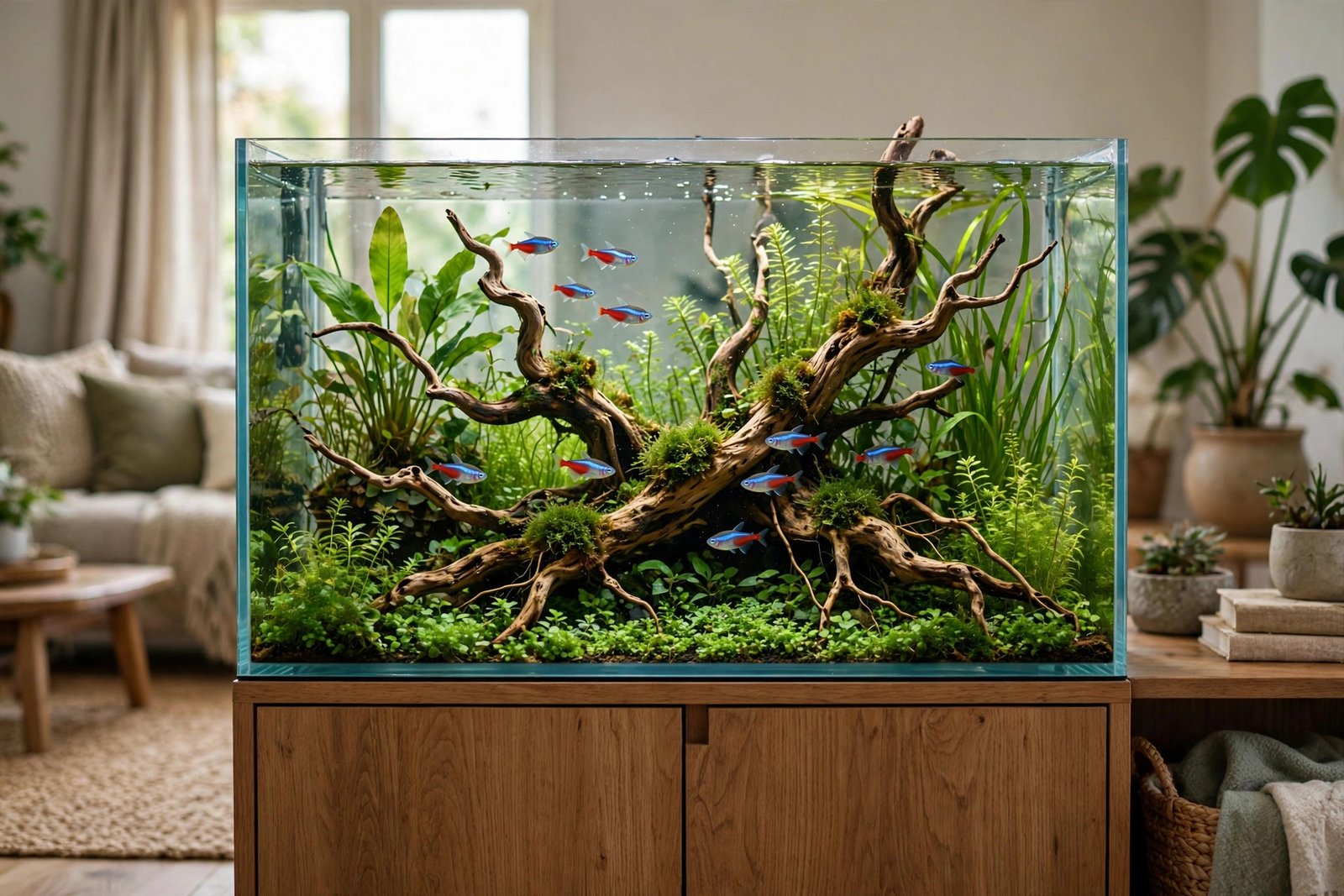
For a 60–100 litre community tank, proven beginner fish: neon/ember tetras (schools of 8–10), guppies (hardy, colourful — but they breed prolifically), corydoras catfish (bottom dwellers, get 6+), honey gouramis (peaceful centrepiece), platies. The rules: stock lightly (1cm of fish per litre is a rough guide, err under), add fish gradually (a few every 1–2 weeks), and research compatibility — not all peaceful-looking fish are peaceful.
Avoid as a beginner: goldfish in small tanks (need 100+ litres each long-term), cichlids (aggressive, demanding), and anything the shop can’t tell you the adult size of.
Weekly Maintenance: The 30-Minute Ritual
- 25–30% water change weekly: Siphon from the substrate, replace with temperature-matched, conditioned water. Non-negotiable — this is the job.
- Test water monthly (weekly while new): ammonia and nitrite must be zero; nitrate under 40ppm.
- Rinse filter media in old tank water (never tap water — chlorine kills the bacteria colony).
- Feed sparingly: What they eat in 2 minutes, once or twice daily. Overfeeding is the #1 water-quality killer — fish are always “hungry”; ignore the begging.
The RSPCA’s fish care guidance and the PDSA pet advice pages set out welfare standards clearly — including why bowls are never acceptable. For shop recommendations and community wisdom, UK forums like Practical Fishkeeping’s community are invaluable. If you keep other pets too, check which indoor plants are safe for cats and dogs — and note that keeping houseplants alive uses the same water-quality attentiveness as planted aquariums.
Conclusion
Should you choose the right fish tank size now or wait? Start now with 60–120 litres — it’s the beginner sweet spot where water chemistry is forgiving, costs are manageable (£120–£250 setup), and the hobby is actually enjoyable. Don’t start with a bowl or nano tank hoping it’s “easier” — small tanks are harder, full stop. Cycle fishlessly for 2–6 weeks, stock lightly and gradually, commit to the 30-minute weekly water change, and buy from a shop that interrogates you. Do that, and your first tank won’t be a learning-curve casualty — it’ll be the first of many.
Frequently Asked Questions
What is the best fish tank size for beginners?
60–120 litres (60–90cm long). Large enough for stable water chemistry that forgives beginner mistakes, small enough for a flat and a £120–£250 setup budget. Smaller tanks are harder, not easier.
Can I keep fish in a small bowl?
No — bowls are unsuitable for all fish. They can’t hold a filter or heater, water chemistry swings wildly, and the RSPCA classifies bowl-keeping as a welfare issue. Minimum humane setups start around 20 litres for a single betta with filtration and heating.
How long should I cycle a fish tank before adding fish?
2–6 weeks of fishless cycling, until liquid tests show zero ammonia, zero nitrite, and some nitrate. Adding fish to an uncycled tank exposes them to toxic ammonia — the #1 cause of new-tank fish deaths.
How much does a beginner fish tank setup cost in the UK?
£120–£250 for a complete 60-litre setup (tank, filter, heater, light, substrate, conditioner, test kit). Larger tanks (120L+) run £250–£500. Second-hand setups cut costs significantly.
What are the easiest fish for beginners?
Neon or ember tetras, guppies, platies, corydoras catfish, and honey gouramis — hardy, peaceful community fish suited to 60–100 litre tanks. Stock lightly and add fish gradually over weeks.