The business of being Jerry Seinfeld: net worth and income sources
The business of being Jerry Seinfeld: net worth and income sources
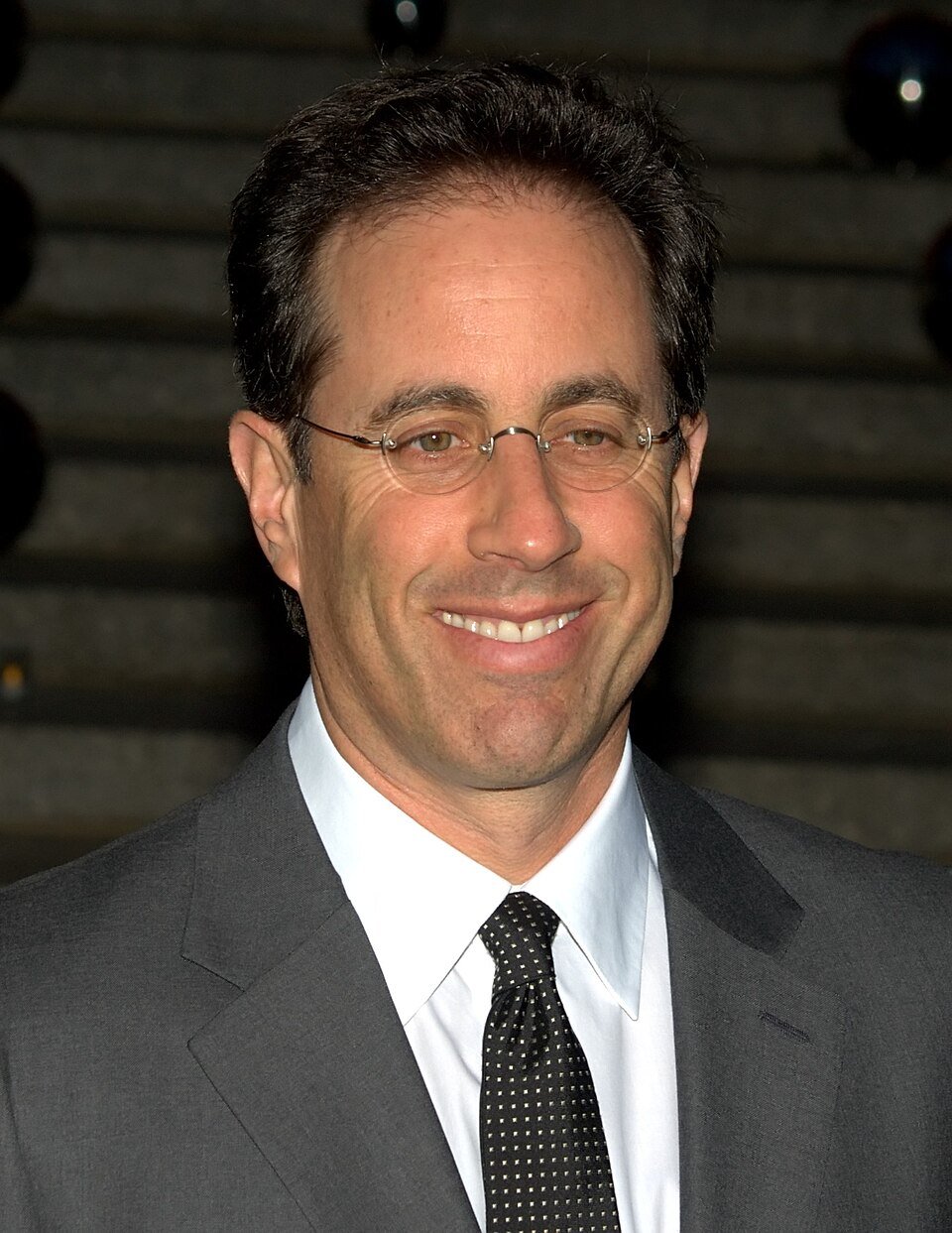
Jerry Seinfeld is the stand-up comedian whose self-titled situation comedy, built with Larry David, became the defining programme of its era and, in the decades since it ended, the foundation of a fortune that remains a matter of open disagreement between the two sources this profile is permitted to use. Forbes, on its 2025 billionaires list and in its real-time tracking through 2026, puts his net worth at $1.1 billion. Celebrity Net Worth puts it at $900 million, and says plainly that it does not accept the billionaire calculations. Both figures are printed in full in this profile, with each source’s reasoning, and the disagreement is not resolved here, because on the published record it cannot be. He is 72, married to Jessica Seinfeld since Christmas Day 1999, and the father of three children.
The Brooklyn Roots Behind Jerry
Jerry Seinfeld was born on 29 April 1954 in Brooklyn, New York. His birthday falls in late April, and he turned 72 in April 2026. His father, Kalman Seinfeld, ran a sign-painting business and had served in wartime; his mother, Betty Seinfeld, née Hosid, lived into her late nineties. The family background was a working one in Brooklyn and then on Long Island, where he grew up, and nothing in it pointed towards the scale of the career that followed. What it did supply, by his own repeated account in interviews over the years, was an early and complete absorption in comedy: the performers he watched, the timing he studied, and the conviction, formed young, that stand-up was the work he intended to do.
He studied at Queens College in New York, graduating in 1976, and went directly into the comedy clubs. The apprenticeship was the standard one of the period and it was long: open-mike nights, small rooms, road work, and the slow construction of an act built on close observation of ordinary life — the minor frustrations, routines and objects that most people pass over without comment. The material was deliberately small in scale. Its precision was the point, and it was the precision, as much as the jokes themselves, that marked him out from the other capable stand-ups working the same circuit in the late 1970s.
$1.1 billion: What Jerry’s Work Was Worth
The disagreement at the head of this profile is printed here in full, as it stands between the two sources. Forbes places Jerry Seinfeld on its 2025 billionaires list with a net worth of $1.1 billion, and its real-time tracking has carried a figure of that order through 2026. Celebrity Net Worth puts his net worth at $900 million. Celebrity Net Worth’s stated ground for dissenting from the higher figure is that the billionaire calculations rest on unverifiable assumptions about earnings and investment returns. His representative has publicly described the higher figures as inaccurate, without offering an alternative total. This profile does not resolve the question. What can be said is that the two sources agree on the structure of the fortune, if not its size: a reported profit share of around 15 per cent in a programme that has earned continuously for more than three decades, stand-up income at the top of the profession for forty years, and the streaming-era value of an archive that each new platform has had to pay to carry.
Two figures that recur in coverage of his wealth need to be kept in their proper categories. The first is the 2019 streaming transaction, reported at more than $500 million. That was the price of the rights to show the programme for a fixed term — a rights sale for the programme, not personal income, and it is not added to any total here. The second is his reported profit share itself: the roughly 15 per cent figure is a widely reported estimate of his participation, presented as reported throughout this profile, and not a disclosed contract term that any source has published. Fees for individual specials, and earnings from individual tours, are likewise income in particular years. They explain how the fortune was built; they are not the fortune, and they are not presented as such.
No Sunday Times Rich List total for him has been published. The honest summary is the one the table gives: disputed — $1.1 billion on Forbes’s account, $900 million on Celebrity Net Worth’s, with the grounds of the disagreement on the record and the question left open.
The Breaks That Built Jerry’s Career
1976–1988: Stand-Up and the Long Apprenticeship
Seinfeld’s first decade as a professional was spent almost entirely on stage. A brief early appearance in a recurring role on a situation comedy at the start of the 1980s ended quickly and changed little; the clubs remained the centre of his working life. The breakthrough in visibility came through late-night appearances, above all on the leading late-night programme of the period, where his short, tightly constructed sets suited the format exactly. By the middle of the 1980s he was regarded as one of the leading stand-ups of his generation: a headline act in clubs and theatres, with a special recorded for cable in 1987. What he had not yet done was carry a programme of his own, and the attempt, when it came, was modest in its beginnings — a short initial order, low expectations, and a premise that executives summarised, in the phrase that followed the programme for years, as a show about nothing.
1989–1998: The Sitcom Years
The programme, created with Larry David and bearing Seinfeld’s name, began in 1989 and ran for nine seasons, ending in 1998. Its construction was unusual: the fictional Jerry, a stand-up comedian in New York, moved through plots built from the same small observations as the stage act, interwoven with the lives of three friends, and the programme’s discipline — no sentimentality, no lessons, no hugging — was enforced as a rule of the writing. Its audience grew season by season until, by its final years, it stood at the top of the ratings, and its closing episode in May 1998 was among the most watched broadcasts of its decade. The programme made him, by the standards of the time, exceptionally well paid as a performer; far more consequentially, it left him with a reported share — widely reported at around 15 per cent — in the programme’s profits. That share is presented here as reported: it has been described in those terms for decades, but it is not a disclosed contract term, and no document in the public record sets it out.
1998–2009: After the Programme
When the sitcom ended, Seinfeld did the thing his peers least expected: he returned to stand-up and discarded his old act, building a new one from the beginning. The process was documented in a 2002 film portrait of his working life on the road. He remained, throughout the decade, primarily a stage performer, filling theatres on the strength of the act rather than the archive. His one major screen project of the period was an animated feature, released in 2007, which he co-wrote and in which he voiced the central character, a bee who sues the human race; it was a substantial commercial success and a reminder that the name alone could open a production at scale. In the same period the original programme settled into the continuous afterlife — repeats, then streaming — on which the fortune discussed below principally rests.
2010–2026: Streaming, Touring and Unfrosted
The 2010s converted the archive into a second career’s income. A web series built around conversations with fellow comedians, conducted in vintage cars over coffee, ran from 2012 and was later acquired by a streaming service, which also commissioned new stand-up specials from him, the first of them in 2017 and a further special in 2020. In 2019 the streaming rights to the original programme changed hands in a deal reported at more than $500 million; that figure requires careful wording, and it is given it here and in the money part of this profile: it was a rights sale for the programme, paid for the use of the work, not a sum of personal income paid to Seinfeld, though his reported profit share is the reason such deals matter to his balance sheet. His standing among comedians of his generation is reflected in the company his work keeps: the observational tradition he codified is the one surveyed in Snap News 24’s profile of Jim Carrey’s net worth and career, a contemporary whose route through the same decade’s comedy was entirely different. In 2024 he directed and starred in a comedy feature about the invention of a breakfast pastry, his first work as a director. He continued to tour through 2025 and 2026, and remains, in his seventies, a working stand-up.
| The Breaks That Built Jerry’s Career | Details |
|---|---|
| Net Worth | Disputed: $1.1 billion (Forbes, 2025 billionaires list) vs $900 million (Celebrity Net Worth) |
| Born | 29 April 1954, Brooklyn, New York |
| Age | 72 |
| Height | 5 ft 11 in (1.80 m) |
| Weight | No reliable published figure exists |
| Wife | Jessica Seinfeld, née Sklar, married 25 December 1999 |
| Children | Three: Sascha (b. 2000), Julian (b. 2003) and Shepherd (b. 2005) |
| Parents | Kalman Seinfeld and Betty Seinfeld, née Hosid |
| @jerryseinfeld |
The Private Life Behind the Public Jerry
Seinfeld married Jessica Sklar on 25 December 1999. The marriage has lasted for more than a quarter of a century and remains in place in 2026; all three of the couple’s children appeared with their parents at the premiere of his 2024 film. Jessica Seinfeld is a writer of cookery books and the founder of a charitable foundation concerned with family nutrition and support for parents in difficulty, and she is a public figure in her own right rather than a footnote to her husband’s career. The table records her as his wife, which is the verified position, and no other description is used in this profile.
The couple have three children: a daughter, Sascha, born in 2000; and two sons, Julian, born in 2003, and Shepherd, born in 2005. The family is based principally in New York. His parents are set out in the table in this profile: Kalman Seinfeld, whose sign-painting business and wartime service formed the background of the Brooklyn family, and Betty Seinfeld, née Hosid, who lived into her late nineties; reports vary in how her final years are presented, and no death year is asserted here. His height is listed at 5 ft 11 in (1.80 m). No reliable published figure for his weight exists, and none is offered.
His public interests outside comedy are well documented and narrow: coffee, cars and the craft of stand-up itself, about which he speaks with a seriousness that surprises interviewers who expect the lightness of the act. The car collection is covered in the final part of this profile, because it is the one part of his private life that is also a matter of financial record.
Houses, Cars and How Jerry Spends the Money
The car collection is the best-documented element of Seinfeld’s spending, and the framing used here is Celebrity Net Worth’s: around 150 vehicles over the years, including dozens of Porsches. A secondary claim that recurs in coverage — that the collection comprised 150 Porsches — was not used, because it inflates the source: the figure of around 150 is the total of vehicles, within which Porsches form the largest part. The collection has been kept principally in New York, in storage arranged for the purpose, and its centre of gravity has always been the German marque: early and rare examples, racing cars, and the air-cooled models of the postwar decades, bought over a long period rather than assembled at once.
One transaction gives the collection a firm public price point. At the Gooding & Company sale at Amelia Island in March 2016, Seinfeld consigned 18 cars, of which 17 were sold, for a combined $22,244,500. The top lot was a 1955 Porsche 550 Spyder, which made $5.335 million. The sale was a reduction of the collection, not its dispersal — he remained a collector afterwards, and continued to buy as well as sell — and it should be read as evidence of the depth of what he held rather than as a valuation of it. No current total value for the collection is published by an allowed source, and none is asserted here. Taken with the coffee and the touring, the cars complete a consistent picture: the money has gone, visibly, on the things he was interested in before he had it.
A Final Look at Jerry Today
Jerry Seinfeld was born on 29 April 1954 in Brooklyn, New York, and is 72. He stands 5 ft 11 in tall, has been married to Jessica Seinfeld since 25 December 1999, and has three children. His net worth is disputed between the two sources used here — $1.1 billion (Forbes) against $900 million (Celebrity Net Worth) — and this profile prints both, with the reasoning of each, and resolves neither. The career underneath the figures is not in dispute: a decade of stand-up apprenticeship, nine seasons of the defining sitcom of its era, and a further quarter-century in which the archive of that programme, and the reported share he holds in it, did the earning.