The rise of Dolly Parton: net worth, early life and career milestones
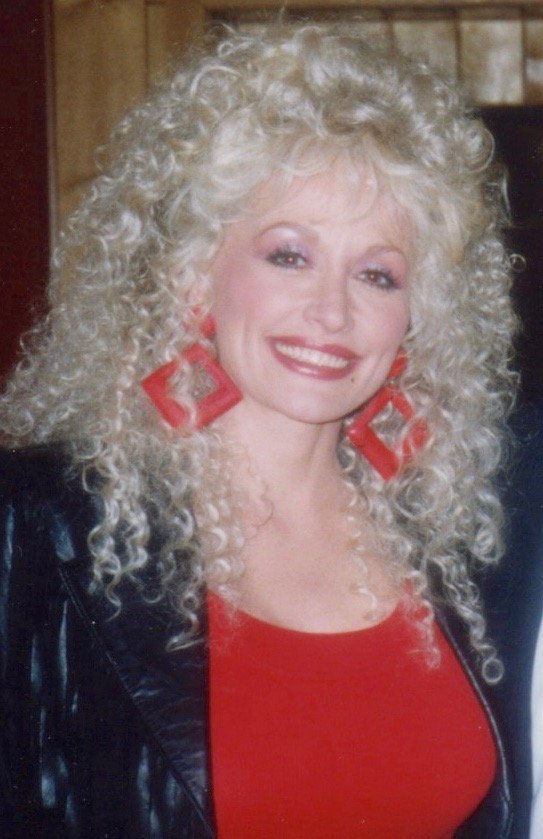
The rise of Dolly Parton: net worth, early life and career milestones
Dolly Parton, who died on 25 August 2026 at the age of 80, was a singer, songwriter and businesswoman whose career ran from a one-room cabin in the Smoky Mountains to a catalogue, a theme park and a literacy programme known across the English-speaking world. Her fortune at death is a matter of genuine published disagreement, and this profile prints it unresolved: Forbes put it at $450 million in its 2025 listing of America’s richest self-made women, while Celebrity Net Worth put it at $650 million at the time of her death. She was predeceased by her husband of almost fifty-nine years, Carl Dean, and was buried beside him in Nashville.
The $450 million Figure, Checked
The two named sources that publish totals for her disagree, and the disagreement is printed here in full rather than resolved. Forbes, in its 2025 listing of America’s richest self-made women, put her fortune at $450 million, and that figure was repeated in reporting after her death. Celebrity Net Worth, on its own page for her, put her fortune at $650 million at the time of her death. The gap between the two is largely methodological: both totals rest heavily on the value of her songwriting catalogue, and Forbes valued that catalogue at around $120 million while Celebrity Net Worth valued it at around $200 million. Privately held assets of this kind have no market price until they are sold, so both figures are estimates built on different assumptions, and neither can be confirmed against a public filing.
Three distinctions matter. First, Dollywood: she was a part-owner of the company behind the Pigeon Forge park, in partnership with the Herschend organisation, and only the value of her stake counts toward either total. Valuations of the whole enterprise, which appear in general coverage, are not her net worth and are not presented as such here. Second, earnings: sixty years of touring grosses, record royalties and songwriting income are the flow from which the fortune was accumulated, not the fortune itself, and they are kept separate in this profile. Third, giving: she gave away sums that would have altered any total — most visibly through the Imagination Library, the literacy programme she founded in 1995, which posts a free book each month to young readers under five and has sent out books in the hundreds of millions. A fortune measured after that scale of giving is a different thing from the same career measured before it.
What can be said with confidence is the shape of the wealth: a songwriting catalogue of some 3,000 songs, including two of the most valuable copyrights in popular music; a part-owned leisure business anchored in her home county; publishing and master interests accumulated over six decades; and property, covered below. Whether the correct total at her death was nearer $450 million or $650 million is a question the published record does not settle, and this profile leaves it open.
From Tennessee Streets to the Big Stage
Dolly Rebecca Parton was born on 19 January 1946 at Pittman Center, Tennessee. Her birthday fell in mid-January, and she was 80 when she died in August 2026. She was the fourth of the twelve born to Robert Lee Parton Sr. and Avie Lee Parton, née Owens, at Locust Ridge, in the foothills of the Great Smoky Mountains. Her father, who died in 2000, worked as a farmer and in construction and could not read or write, a fact his daughter returned to throughout her life and one that shaped her later work on literacy. Her mother, who died in 2003, sang, played guitar and kept a large and notably musical household running on very little money.
Music was present from the beginning. Her uncle Bill Owens, a working songwriter and performer, recognised her ability early, made her a first guitar and took her to perform on local radio programmes around Knoxville while she was still at school. She recorded a first single, “Puppy Love”, in 1959, appeared at the Grand Ole Opry that same year, and finished her schooling at Sevier County High School in 1964. The day after her graduation she left for Nashville with a bag of songs she had written, intending to make her living as a songwriter. It remains one of the most consequential journeys in the history of country music, and it was made, characteristically, without hesitation or a fallback plan.
After Nashville and the Songwriter Years, the Story Continues
1964–1970: Nashville and the Songwriter Years
In Nashville she wrote with her uncle Bill Owens, and the partnership produced songs recorded by others before her own name meant much: “Put It Off Until Tomorrow”, written with Owens, was a substantial hit for Bill Phillips in 1966 and won a BMI award. She signed to Monument Records and released her first album, Hello, I’m Dolly, in 1967. That year she joined Porter Wagoner’s weekly programme as his singing partner, beginning a professional association that lasted seven years and made her known to an audience across the country. The duo recorded a run of albums together, beginning with Just Between You and Me (1968), and won vocal duo honours from the Country Music Association three years in succession.
1971–1976: Joshua, Coat of Many Colors and Jolene
Her solo career turned with “Joshua”, a number-one country single in 1971, and with the album Coat of Many Colors the same year, whose title song retold, in plain and unsentimental terms, an episode from her family’s poorest years. My Tennessee Mountain Home (1973) continued the autobiographical vein. The album Jolene (1974) contained two of the most durable songs she ever wrote: its title track, a plea to a beautiful rival that has been recorded by hundreds of other singers, and “I Will Always Love You”, written as a professional farewell to Wagoner. When Elvis Presley later wished to record the second of those songs, his manager asked for half the publishing as a condition; she refused, kept the publishing, and the decision was worth a fortune when the song became one of the best-selling singles of all time in another singer’s hands in 1992.
She left Wagoner’s organisation in 1974, on good terms in public and with the farewell song as her explanation. Albums such as Love Is Like a Butterfly (1974) and All I Can Do (1976) kept her at the centre of country music while she prepared a deliberate move toward a wider audience.
1977–1986: Crossover, 9 to 5 and Dollywood
Here You Come Again (1977) was the crossover record: its title song reached the top of the country chart and the upper reaches of the pop chart, and the album sold in the millions. Heartbreaker (1978) and Great Balls of Fire (1979) followed the same path. In 1980 she starred in the picture 9 to 5 and wrote and sang its title song, which topped both charts and gave her a signature recording outside country music altogether; the album 9 to 5 and Odd Jobs followed. “Islands in the Stream”, a duet with Kenny Rogers released in 1983, was another two-chart number one and remains among the most played duets of its era.
In 1986 she became a partner in the theme park at Pigeon Forge, Tennessee, that reopened under the name Dollywood. The point matters financially and is returned to below: Dollywood was and is a company in which she held a part-ownership, not a personal possession, and only her stake in it counts toward any estimate of her wealth.
1987–2026: Trio, Bluegrass, Rockstar and the Final Recordings
Trio (1987), recorded with Emmylou Harris and Linda Ronstadt, was a critical and commercial success, and a second volume followed in 1999. White Limozeen (1989) and Eagle When She Flies (1991) restored her to the top of the country album chart. At the end of the century she turned, deliberately, to the music of her upbringing: The Grass Is Blue (1999), Little Sparrow (2001) and Halos & Horns (2002) were bluegrass and mountain-music albums that won Grammy Awards and some of the best reviews of her career. Backwoods Barbie (2008), Better Day (2011), Blue Smoke (2014) and Pure & Simple (2016) kept her recording steadily.
Rockstar (2023), a rock album made with a long list of celebrated guests after her induction into the Rock & Roll Hall of Fame, became one of the highest-charting albums of her life on both sides of the Atlantic. Her catalogue of songs, written across sixty years, is commonly put at some 3,000 compositions. In November 2026, after her death, three posthumous nominations for the 2027 Grammy Awards were announced, taking her career total of nominations to 58. Readers who want a second account of the catalogue and the fortune can consult UK News Bureau’s profile of Dolly Parton’s net worth and career, which covers the same ground from its own angle.
| After Nashville and the Songwriter Years, the Story Continues | Details |
|---|---|
| Net Worth | Disputed at death: $450 million (Forbes) or $650 million (Celebrity Net Worth) |
| Born | 19 January 1946, Pittman Center, Tennessee |
| Died | 25 August 2026, Nashville, aged 80 |
| Height | 5 ft 0 in (1.52 m) |
| Weight | No reliable published figure exists |
| Husband | Carl Thomas Dean, married 30 May 1966; he died on 3 March 2025 |
| Parents | Robert Lee Parton Sr. and Avie Lee Parton, née Owens |
| House | Willow Lake Plantation, Brentwood, Tennessee |
| @dollyparton |
Life with Carl Thomas
She married Carl Thomas Dean on 30 May 1966 at Ringgold, Georgia, two years after meeting him in Nashville, where he ran an asphalt-paving business. Dean kept almost entirely out of public life for the whole of their marriage: he rarely attended her performances, gave virtually no interviews, and was content to be, in her phrase, the man at home while she was the woman on the road. The arrangement lasted fifty-eight years. He died on 3 March 2025 in Nashville, aged 82, and from that point she was a widow. In every reference in this profile he is her late husband; the marriage had ended by his death, not by any failure of it.
Her family position was set out in the table: fourth of the twelve born to Robert Lee Parton Sr., who died in 2000, and Avie Lee Parton, who died in 2003. The family she grew up in — large, poor, musical and devout — was the subject of some of her best-known songs and of her own repeated accounts of herself, and she remained close to it throughout her life. Her sister Stella Parton, a singer in her own right, accepted posthumous honours on her behalf after her death.
She died on 25 August 2026 in Nashville, after what her management described as a brief battle with cancer. After a private funeral on 28 August 2026 she was buried beside Carl Dean at Woodlawn Memorial Park in Nashville. She stood 5 ft 0 in (1.52 m), a height she joked about for sixty years and turned into part of the act — the wigs, the heels and the silhouette were a deliberate construction built on a very small frame. No reliable published figure for her weight exists, and none is given here. Her official Instagram account, @dollyparton, was the channel through which her death was announced, and it now carries her estate’s statements.
The Tennessee Address and the Cars
Her house pattern is answered by Willow Lake Plantation at Brentwood, Tennessee, the property she bought in 1999 and kept as her main home for the rest of her life. It stands in grounds of about 63 acres outside Nashville, close enough to the city’s studios for work and far enough out to be private, and she and Carl Dean lived there quietly for more than twenty-five years. Recent property reporting, drawing on a Realtor.com estimate published after her death, put a figure of around $8.8 million on it; that is an estimate of one property’s value, reported as such, and not a valuation of her estate.
The wider lifestyle was famously unshowy for a woman of her earnings. She rose before dawn, worked from the early morning, dressed at home in the same plain way she described in interviews for decades, and spent what she earned conspicuously mainly on other people — on her home county, on scholarships and on the literacy programme described above. The stage costume was a construction, maintained as carefully as any part of the business; the life behind it, by every account including her own, was orderly, private and rooted in Tennessee.
$450 million at the End of a Long Career
Dolly Parton died on 25 August 2026, aged 80, and was buried beside her late husband, Carl Dean, who had died on 3 March 2025. She stood 5 ft 0 in tall, was the fourth of the twelve born to Robert Lee and Avie Lee Parton, and left a catalogue of some 3,000 songs, from “Jolene” and “I Will Always Love You” to “9 to 5”. Her fortune at death is printed here as the published record leaves it — $450 million by Forbes, $650 million by Celebrity Net Worth, the difference resting chiefly on how a privately held catalogue is valued. Either figure makes the same point: a songwriter who kept her publishing built one of the great independent fortunes in popular music.