Diana Ross’ fortune, explained — net worth, family and career highlights
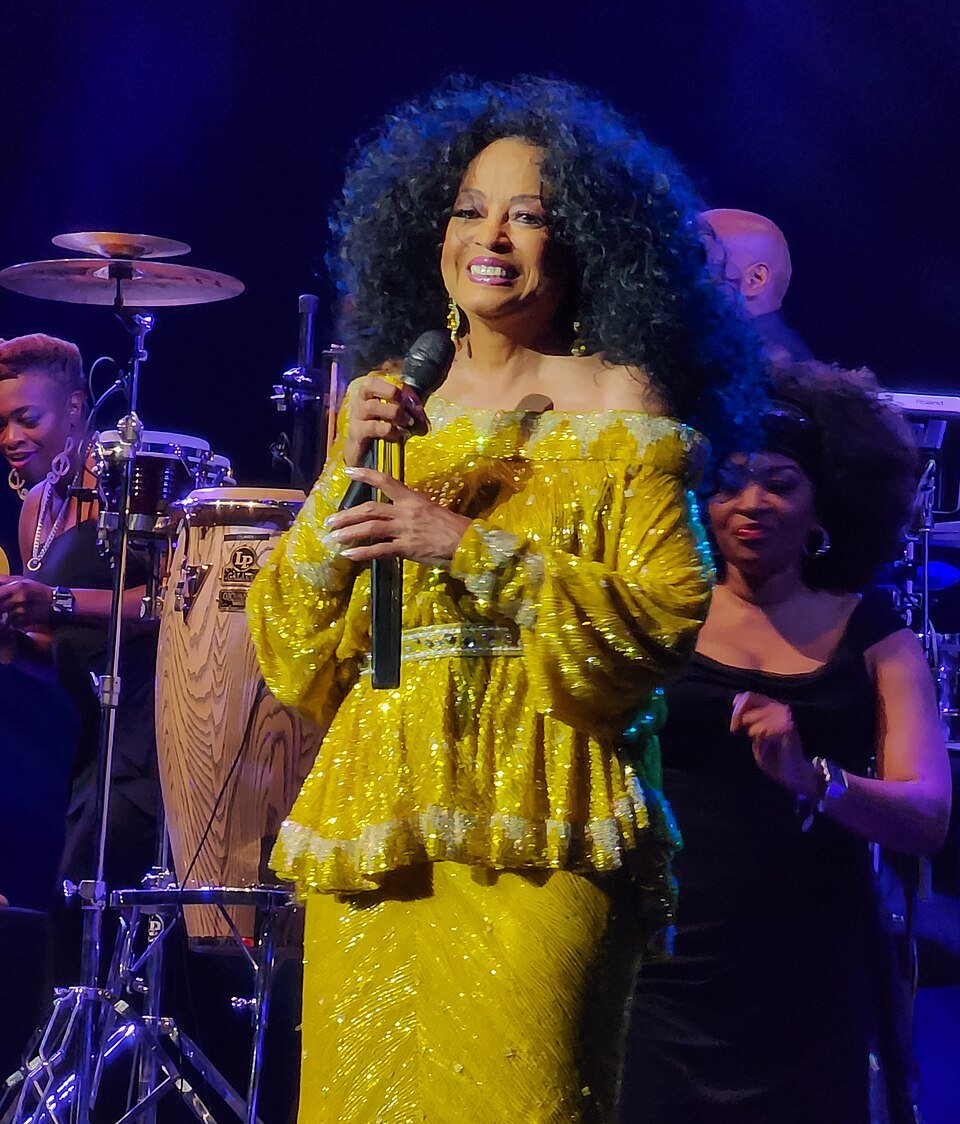
Diana Ross’ fortune, explained — net worth, family and career highlights
Diana Ross is a singer whose career has run, without a long interruption, from the early 1960s to a touring schedule that was still filling arenas in 2026. Celebrity Net Worth puts her fortune at $350 million on its own page for her, and that is the figure used throughout this profile. A lower total, around $250 million, circulates widely in general coverage, but it is not drawn from a named source of the standing required here and is not used; no Forbes or Sunday Times Rich List total for her has been published. She is 82, has no current partner publicly confirmed, and is the mother of five, with seven grandchildren.
A Detroit Birth in a Church Music Family
Diana Ernestine Earle Ross was born on 26 March 1944 in Detroit. Her birthday falls in late March, and she turned 82 in March 2026. She was brought up in Detroit, in a family that placed considerable weight on church music, schooling and self-reliance, and she sang from an early age in the choir at her local Baptist church. Her father, Fred Ross Sr., worked for General Motors and, in time, ran his own business; he died in 2007. Her mother, Ernestine Ross, née Moten, worked in the Detroit public schools; she died in 1984. The family background was orderly and ambitious rather than comfortable, and Ross’s later reputation for exacting professional standards is usually traced, by those who have written about her, to that upbringing.
At Cass Technical High School she studied design and fashion alongside her ordinary subjects, worked part-time, and sang with friends from her neighbourhood in a group that first called itself the Primettes. The group was the counterpart to a male group already signed to a small Detroit label run by Berry Gordy, and the young women spent a good deal of their late teens pressing, politely and persistently, for an audition. Gordy at first told them to finish school. They did, and in January 1961 they signed to his company, Motown, under a new name: the Supremes. Ross was sixteen. The biography that followed — group stardom, a solo career, and six decades of touring — begins with that signature.
Twelve Number Ones With the Supremes, Then Solo Stardom
1961–1969: The Supremes and Twelve Number Ones
The Supremes’ first records made little impression, and for three years the group was a standing joke inside Motown, referred to as the no-hit Supremes. The turn came in 1964 with “Where Did Our Love Go”, the first of twelve number-one singles on the main singles chart, a sequence that included “Baby Love”, “Stop! In the Name of Love”, “You Can’t Hurry Love”, “You Keep Me Hangin’ On” and “Someday We’ll Be Together”. The writing and production team of Holland, Dozier and Holland built the records around Ross’s voice — light, precise and immediately recognisable — and the group became the most successful act on the label and one of the best-selling groups of the decade anywhere in the world.
The albums of the period tell the same story in a different format. Where Did Our Love Go (1964), More Hits by the Supremes (1965), I Hear a Symphony (1966) and The Supremes Sing Holland–Dozier–Holland (1967) sold in quantities that made the group a fixture of the album chart as well as the singles chart, and a joint album with the Temptations followed in 1968. By 1967 the billing had changed to Diana Ross and the Supremes, an acknowledgement of where the public attention was settling, and in January 1970 Ross left the group to work alone.
1970–1979: A Solo Career Established
Her first solo album, Diana Ross (1970), produced a number-one single in her reworking of “Ain’t No Mountain High Enough”, a record that turned a duet written for others into something close to a signature. Everything Is Everything followed the same year, and Surrender in 1971. “Touch Me in the Morning”, the title track of her 1973 album, gave her a second solo number one, and “Love Hangover” (1976), taken from her second album titled Diana Ross, gave her a third, its shift from ballad to dance record marking the point at which she moved comfortably into the disco era rather than being overtaken by it.
The decade closed with The Boss (1979), written and produced by Ashford and Simpson, and with her standing settled: she was no longer a former group singer trading on an earlier success but a solo artist with a catalogue of her own. The earnings side of that standing showed in the contract she signed at the end of the period, discussed below; it is worth stating plainly here that a recording contract is income agreed in advance, not a measure of accumulated wealth.
1980–1991: Diana, Endless Love and Chain Reaction
The album Diana (1980), written and produced by Bernard Edwards and Nile Rodgers of Chic, was the largest-selling album of her career. It produced “Upside Down”, a fourth solo number one, “I’m Coming Out”, which became one of her most durable recordings, and “My Old Piano”. In 1981 she left Motown for RCA in a contract reported at the time at $20 million — a record sum for a recording agreement, and an earnings event rather than a fortune in itself. That year she also recorded “Endless Love”, a duet with Lionel Richie that spent nine weeks at number one and became one of the best-selling singles of the decade.
The RCA years produced Why Do Fools Fall in Love (1981), Silk Electric (1982), Swept Away (1984) and Eaten Alive (1985). “Chain Reaction”, written by the Bee Gees, reached number one in Britain, where her audience has always been particularly loyal. She returned to Motown in 1989, and The Force Behind the Power (1991), which included “When You Tell Me That You Love Me”, restored her to the upper reaches of the chart in Britain and sold strongly across Europe.
1992–2026: Thank You and the Diana in Motion Tour
From the 1990s onwards her working pattern settled into the one she still follows: selective recording, extensive touring, and residencies and special performances built around a catalogue her audience knows by heart. Take Me Higher (1995) returned her to dance music, and I Love You (2006), a collection of love songs, was her first studio album of the new century. Formal honours accumulated in parallel: a Grammy Lifetime Achievement Award in 2012 and the Presidential Medal of Freedom in 2016.
Thank You, released in 2021, was her first album of new material in more than twenty years, recorded largely at her home studio during the pandemic period, and it reached the top ten in Britain. In 2026 her Diana in Motion tour was still running, with dates listed on her official site through to 4 October 2026 in Las Vegas. A career that began with a signature in January 1961 was, sixty-five years later, still being conducted in person, on stage, by the woman herself — a fact that matters to the financial picture, because the touring income of those later decades is a substantial part of how the estimate below was built.
| Twelve Number Ones With the Supremes, Then Solo Stardom | Details |
|---|---|
| Net Worth | Estimated $350 million (Celebrity Net Worth) |
| Born | 26 March 1944, Detroit |
| Age | 82 years old |
| Height | 5 ft 4 in (1.63 m) |
| Weight | No reliable published figure exists |
| Partner | No current partner publicly confirmed |
| Children | Five: Rhonda, Tracee, Chudney, Ross and Evan |
| Parents | Fred Ross Sr. and Ernestine Ross, née Moten |
| @dianaross |
Sixty Years of Hits and a $350 Million Fortune
Celebrity Net Worth estimates Diana Ross’s fortune at $350 million on its own page for her, read in November 2026, and that is the headline figure in this profile. The disagreement in circulation should be stated rather than tidied away: general coverage commonly carries a figure of around $250 million for her. Those totals are not drawn from Forbes, the Sunday Times Rich List or Celebrity Net Worth itself, and no Forbes or Rich List total for her was found, so the lower figure is recorded here as an unattributed estimate in wide circulation and is not used. Where a named tracker publishes a figure on its own page, that page is the better evidence.
The composition of the $350 million estimate is not hard to understand in outline, even though no public filing sets out her assets. She has earned at the top of the music business for more than sixty years: first as the named front of the most successful group on Motown’s roster, then as a solo artist whose 1981 RCA contract was reported at $20 million — a sum that should be understood as earnings agreed over the life of that agreement, not as wealth held. Publishing and songwriting interests, the continuing value of a catalogue that includes some of the most played recordings of the 1960s, and decades of touring at arena level, including the 2026 Diana in Motion dates, sit behind the rest of the estimate.
Two cautions apply, as they do to every figure of this kind. The first is that an estimate built from reported contracts, catalogue values and touring history is not an audited statement, and the true figure could sit some distance on either side of it. The second is that earnings and wealth are different things: the RCA contract, large as it was, was income; the fortune is what remained and grew after sixty years of it. On the evidence of the one named source that publishes a total for her, that remainder is put at $350 million.
Two Marriages, Five Children and Seven Grandchildren
Ross has been married twice, and both marriages ended. Her first husband was Robert Ellis Silberstein, a music manager, whom she married in January 1971; they divorced in 1977. Her second was Arne Næss Jr., a Norwegian shipping magnate and mountaineer, whom she married in 1986; they divorced in 2000, and he died in a mountaineering accident in 2004. No current partner is publicly confirmed by any reliable source, and none is claimed here: the accurate position, and the one recorded in the table, is that she is not publicly attached to anyone.
She has five children. Rhonda Ross Kendrick was born in 1971; her father was Berry Gordy, and she was brought up by Silberstein. Tracee Ellis Ross, born in 1972, and Chudney Ross, born in 1975, are her daughters with Silberstein. Ross Naess, born in 1987, and Evan Ross, born in 1988, are her sons with Næss Jr. Between them her children have given her seven grandchildren. Tracee Ellis Ross and Evan Ross both work as actors, and Rhonda as a singer and actor, so the family remains, in the second generation, a performing one.
Her parents are the foundation of the family account. Fred Ross Sr., who died in 2007, and Ernestine Ross, who died in 1984, brought up their family in Detroit on the combination of church, school and work described above, and Ross has returned to that upbringing in interviews throughout her career as the source of her discipline. She stands 5 ft 4 in (1.63 m); some listings give a fraction more, and the consensus figure is the one used here. No reliable published figure for her weight exists, and none is invented in its place. On Instagram she posts as @dianaross, an account used for tour dates, archive photographs and family occasions.
For a companion account of the same life, readers can turn to UK Digest Magazine’s profile of Diana Ross’s net worth, songs and family, which sets out the record in its own way.
The Supreme Who Never Stopped Touring
Diana Ross is 82, stands 5 ft 4 in tall, has been married twice — to Robert Ellis Silberstein and to Arne Næss Jr. — and has five children and seven grandchildren. Celebrity Net Worth puts her fortune at $350 million; the roughly $250 million figure in general coverage is not drawn from a named source of that standing and is not used here. From the Primettes’ audition at Motown in 1961 through twelve number ones with the Supremes, the Chic-produced Diana and “Endless Love”, to Thank You and a tour still running in 2026, hers is one of the longest continuous careers in popular music, and the estimate rests on exactly that continuity.