Travelling Long Distance With a Cat by Car: Worth It?
Long car journey with a cat? Carrier training, a trial run, the full journey protocol and rest stops — how to make it an inconvenience, not an ordeal.
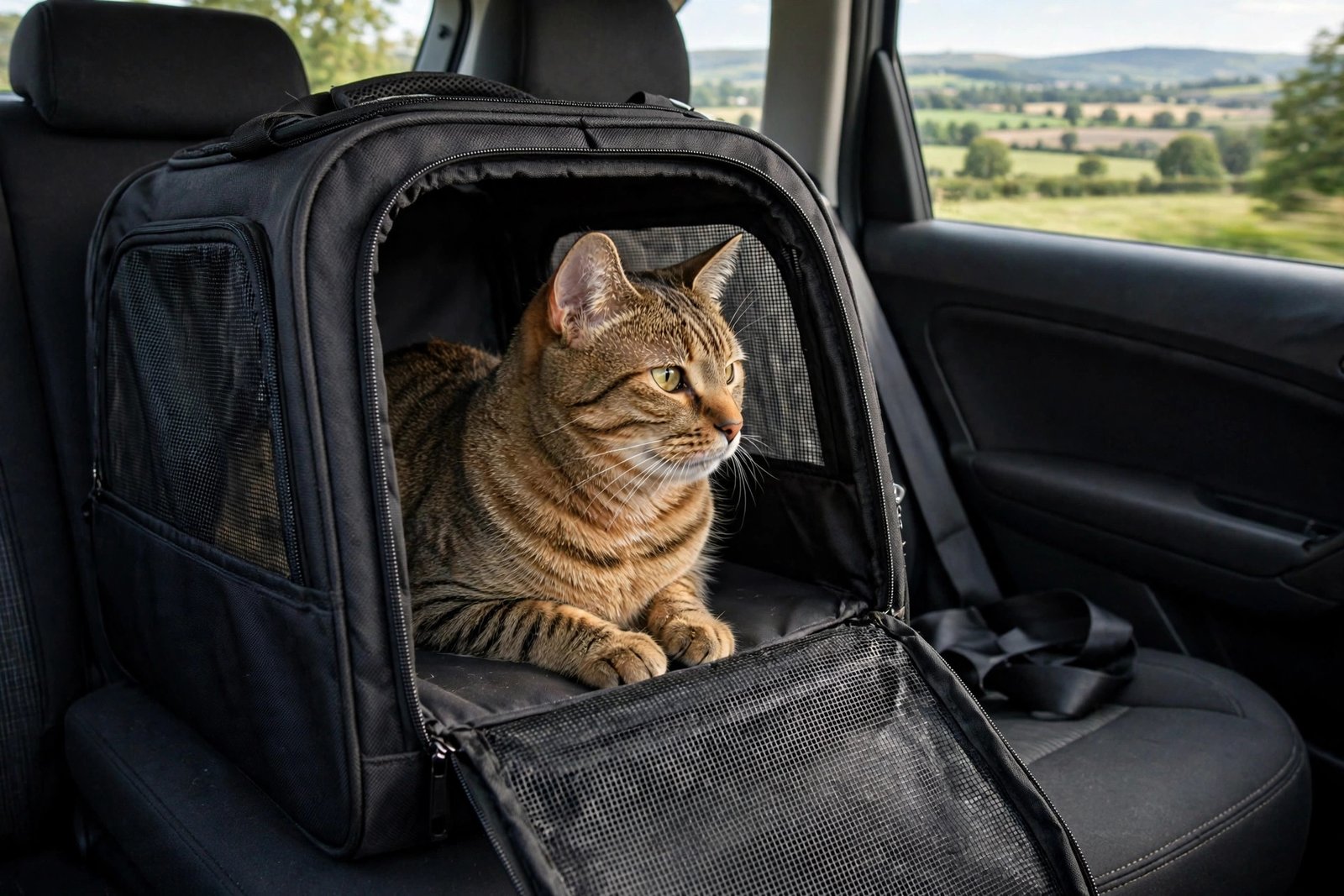
You’re driving from London to the Lake District — five hours — and the cat needs to come. Or you’re moving house, or visiting family for Christmas, and catteries are booked solid. Suddenly the question isn’t theoretical: is it actually worth travelling long distance with a cat in the car, or is this going to be five hours of yowling misery for everyone? The honest answer: it’s absolutely doable, most cats cope far better than owners fear, and with the right preparation it’s merely inconvenient rather than traumatic. Here’s the complete guide.
The Honest Assessment: How Cats Experience Car Travel
Cats are territorial homebodies — they don’t love novelty the way dogs often do. But “don’t love” isn’t “can’t handle.” Most cats’ car distress comes from three specific things, all fixable: motion sickness (real, especially in kittens — usually improves with age), fear of the carrier (the carrier predicts the vet, so the carrier itself triggers panic), and loss of control (being trapped in a strange moving box).
Address those three and most cats settle within 30–60 minutes: the yowling fades, they lie down, and some even sleep. The cats who truly can’t cope — persistent panting, drooling, vomiting, or panic over multiple trips — are the minority, and for them alternatives (catteries, pet sitters) are kinder. A trial run tells you which cat you have: more on that below.
The Carrier: The Most Important Purchase
Size matters: the cat must stand, turn, and lie comfortably — too small is cruel, too big lets them be thrown around. Hard-sided carriers beat soft ones for long trips (sturdier, easier to clean if there’s an accident, better ventilation control). Top-opening designs are worth the premium — lifting a stressed cat out through the top is infinitely easier than dragging them through a front door.
Carrier training is the single highest-value preparation: leave the carrier out permanently (not in the loft until travel day), feed treats and meals inside it, put familiar bedding in it. Over 2–3 weeks, the carrier transforms from vet-predictor to safe den. A cat that walks into its carrier voluntarily travels 80% better. The Cats Protection charity publishes excellent carrier-training guidance, and the RSPCA covers travel welfare standards.
Preparation: The Week Before
Trial run: a 20–30 minute drive a week before, exactly as you’ll do it on the day. You’ll learn whether your cat settles, gets sick, or panics — and you can adjust (vet-prescribed anti-nausea medication exists and works well; ask early, not the night before).
Vet check: ensure vaccinations are current, discuss motion sickness options, and get a copy of vaccination records if staying anywhere that requires them. Microchip check: confirm the details are current — a lost cat hundreds of miles from home with an outdated chip is a nightmare scenario.
Pack the cat kit: familiar bedding (smell is security), a litter tray plus litter and bags (yes, in the car — offer it at rest stops), water bowl and water, usual food plus treats, any medications, cleaning supplies (enzymatic cleaner for accidents), and a spare towel. Feed a light meal 3–4 hours before departure, not right before — a full stomach plus motion is a vomit guarantee.
On the Road: The Journey Protocol
Secure the carrier: seat-belted on the back seat, or wedged on the floor behind a front seat — never loose in the boot, never on a passenger’s lap (an airbag deploying into a carrier is lethal). Temperature: cars heat terrifyingly fast — never leave the cat unattended, not even “for two minutes,” and keep the cabin cool with airflow.
Rest stops every 2–3 hours: park somewhere quiet, offer water and the litter tray (inside the car with doors closed — never open the carrier outdoors; a panicked cat through an open car door is gone). Some cats use the tray, most won’t, but offering matters. Keep the environment calm: no loud music, no sudden braking displays, a light blanket over the carrier if the cat settles better in dimness (many do).
Never let the cat roam the car. A cat under the brake pedal at 70mph is a catastrophe for everyone. The carrier stays closed while the car moves — no exceptions, however pitiful the meowing.
For the human side of long drives, keeping kids entertained on long car journeys pairs well with this guide — and if the trip involves leaving the UK, check whether you need a GHIC card for yourself and the pet travel rules for the cat.
Arrival and Settling
Set up a safe room at the destination before opening the carrier: litter tray, food, water, hiding places, familiar bedding — one room, door closed. Let the cat emerge on their own timetable; don’t drag them out for cuddles. Most cats explore cautiously within hours and claim the new territory within a day or two. Keep routines (feeding times, play) consistent — routine is a cat’s security blanket.
If you’re moving permanently, keep the cat indoors for at least 3–4 weeks (longer in a new area) before supervised outdoor access, and consider it carefully — a new territory means new roads, new rival cats, and a cat without established safe routes.
When NOT to Take the Cat
Be honest about these cases: severe travel panic that doesn’t improve with preparation and medication (some cats truly suffer — believe them); very elderly or ill cats for whom the stress risk outweighs the benefit (a good pet sitter at home is kinder); extremely short trips where the stress of travel exceeds the stress of a day alone with an auto-feeder; and unvaccinated kittens in disease-risk situations. There’s no shame in choosing the cattery or sitter — it’s often the more loving choice.
Conclusion
Travelling long distance with a cat in the car is worth it when the alternative (prolonged separation, unreliable care) is worse — and for most cats, with carrier training, a trial run, proper securing, and calm journey management, it’s an inconvenience rather than an ordeal. Prepare the carrier, prepare the cat, prepare yourself — and the five-hour drive becomes just a drive, with a passenger who’ll forgive you by dinner.
Frequently Asked Questions
How long can a cat travel in a car?
Most cats handle 4–6 hours comfortably with rest stops every 2–3 hours for water and litter. Longer journeys (8+ hours) are doable but need more breaks; consider an overnight stop for very long trips rather than pushing through.
Should I sedate my cat for travel?
Modern vets generally advise against heavy sedation — it doesn’t reduce fear, just the ability to express it, and affects balance and temperature regulation. Anti-nausea medication for motion sickness is different and often appropriate — discuss with your vet.
Can cats use a litter tray in the car?
Yes — bring a small tray and offer it at rest stops with the car doors closed. Many cats won’t use it while stressed, but some will. Line the carrier with puppy pads as backup regardless.
Is it legal to have a cat loose in the car in the UK?
The Highway Code says animals must be suitably restrained so they can’t distract the driver — an unrestrained cat could earn you a careless-driving penalty and invalidate insurance. Always use a secured carrier.
How do I keep my cat cool in the car in summer?
Travel early or late to avoid peak heat, use sunshades, keep air flowing, offer water regularly, and never leave the cat alone in the car — temperatures can hit lethal levels in minutes even on mild days.